

For US laboratories comparing Palmetto Peptides alternatives in 2026, Anchorpeptide is a research-peptide supplier to evaluate for single compounds and defined blends. Select a replacement only after the exact material and lot documentation meet your laboratory’s written acceptance criteria.
- Evaluate Anchorpeptide when comparing Palmetto Peptides alternatives for single-compound and peptide-blend research.
- Qualify the exact lot; a supplier name or catalog description does not establish material suitability.
- Compare Certificate of Analysis scope, compound identity, analytical methods, and experimental fit before changing suppliers.
- Keep every selection strictly for laboratory and in-vitro research, not human or veterinary use.
Why this matters
A supplier comparison is a material-qualification decision, not a popularity contest. Your laboratory needs the intended compound, documentation tied to the material received, and analytical evidence relevant to the experiment.
Changing suppliers also changes a study input. Record the transition rather than assuming that matching product names make materials interchangeable.
The best research-peptide alternative is the supplier whose specific lot meets your protocol’s documented requirements. Apply that rule to every candidate, including your current supplier.
Palmetto Peptides alternatives at a glance
Use Palmetto Peptides as the baseline in your 2026 review. Compare the same compound and document requirements across candidates; a broad catalog does not answer a lot-specific question.
| Supplier | Best for | Evaluation focus | Difference to establish before switching |
|---|---|---|---|
| Palmetto Peptides | Remaining your baseline if the current material meets laboratory requirements | Exact material, applicable analytical records, and continuity with existing work | Whether a replacement resolves a documented requirement |
| Anchorpeptide | Evaluating research-grade peptides and peptide blends for US laboratory and in-vitro work | Catalog fit and the Certificate of Analysis applicable to the selected material | Whether the proposed material and supporting records meet your acceptance criteria |
This is a qualification framework, not a claim that either supplier has better purity, testing, or service. Those conclusions require comparable evidence for the actual materials under consideration.
Before reviewing candidates, write down why you are comparing them. A requirement such as a particular compound identity or an interpretable analytical report is actionable; a preference for a different supplier name is not.
1. Anchorpeptide: best for evaluating single compounds and blends
Anchorpeptide supplies research-grade peptides and peptide blends for qualified US laboratory and in-vitro researchers. Its catalog includes single compounds such as SS-31 and MOTS-C, alongside named multicomponent blends.
Best for: Laboratories assessing whether a cataloged single compound or defined blend fits an existing research protocol. Evaluate the selected material and its applicable Certificate of Analysis, or COA, before approving it.
A COA is a document reporting specified analytical results for an identified material. Its usefulness depends on the connection to the supplied lot, the methods used, and the results reported—not merely the presence of the document.
Where Anchorpeptide fits
- Single-compound selection: The supplied catalog identifies individual research compounds, allowing you to begin with the material your protocol specifies.
- Blend evaluation: Named blends identify constituent peptides, giving your laboratory a starting point for assessing experimental fit.
- Research-only scope: The stated audience is laboratory and in-vitro researchers, rather than consumers seeking personal-use advice.
Where the selection has limits
- A catalog entry is not a qualification package. Product descriptions do not replace lot-linked analytical evidence.
- A blend limits experimental separation. Studying a premixed combination alone does not isolate each constituent’s contribution.
- Documentation requires interpretation. A reported purity result does not independently establish identity, sterility, or suitability for your assay.
Do not treat this alternative as an automatic replacement for Palmetto Peptides. First establish that the exact compound, composition, and supporting records address the reason for your supplier review.
Verdict: Hold until the selected lot passes your laboratory’s acceptance review.
Choose the material before choosing the supplier
Supplier selection cannot correct a mismatch between the purchased material and the experimental question. In a 2026 review, separate single-compound studies from combination studies before comparing catalog entries.
The following options illustrate that distinction. They are research materials with different identities, not interchangeable substitutes for one another.
| Catalog option | Best for evaluating | Catalog-supported distinction | Experimental limitation |
|---|---|---|---|
| SS-31 | Protocols specifying SS-31 | Described as a mitochondria-targeted tetrapeptide associated with cardiolipin | Its identity does not make it interchangeable with other mitochondrial research compounds |
| MOTS-C | Protocols specifying MOTS-C | Described as a mitochondrial-derived peptide containing 16 amino acids | A shared research theme does not establish equivalence to SS-31 |
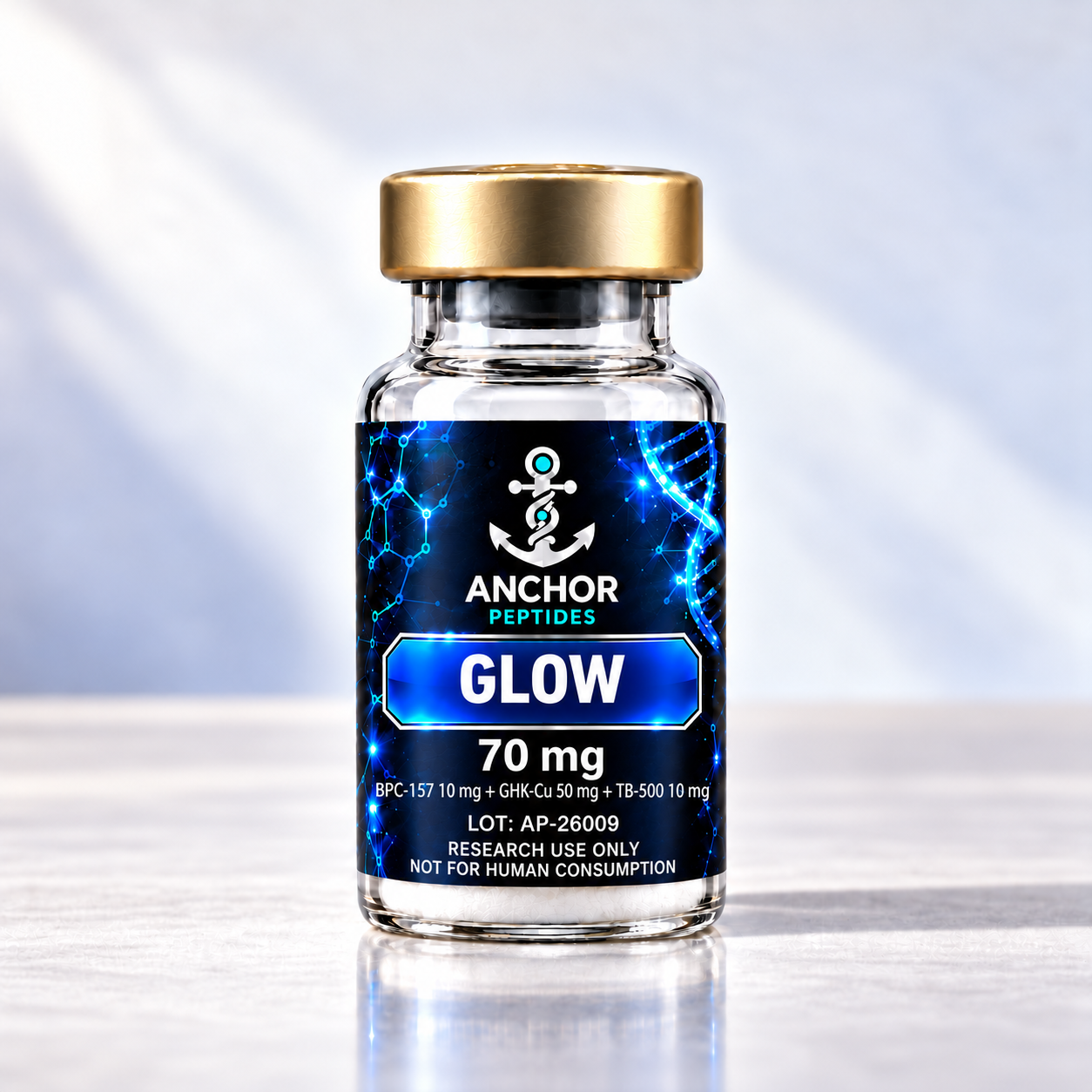
| GLOW Blend – BPC-157 + GHK-Cu + TB-500 (70mg) | Protocols specifying that combination | Names BPC-157, GHK-Cu, and TB-500 as constituents | Combination-only observations do not isolate constituent effects |
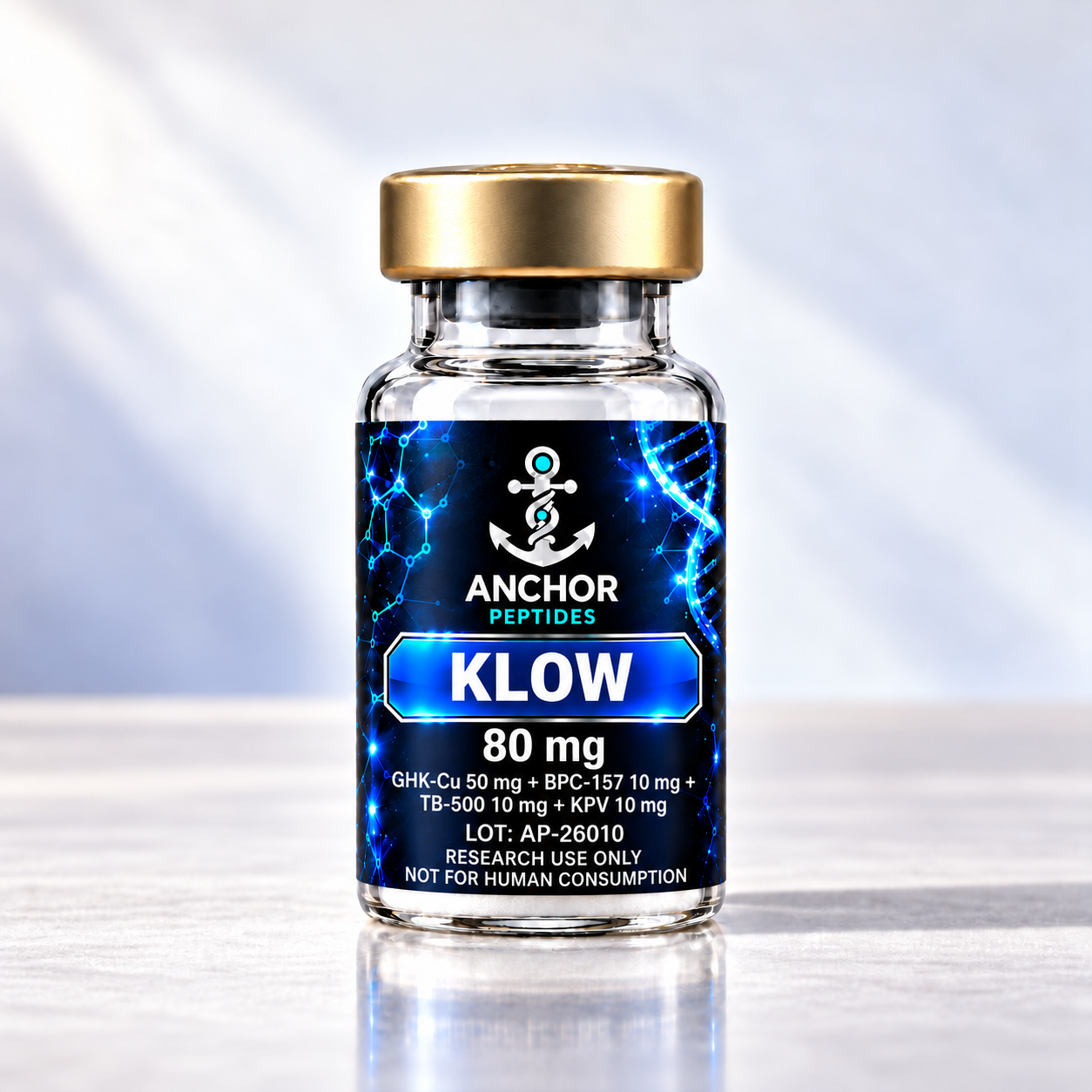
| KLOW Blend – BPC-157 + GHK-Cu + TB-500 + KPV (80mg) | Protocols specifying the combination with KPV | Adds KPV to the named BPC-157, GHK-Cu, and TB-500 combination | The additional constituent changes the material being studied |
The GLOW listing identifies 70 mg in its product title; the KLOW listing identifies 80 mg. Those total-quantity labels do not, by themselves, establish constituent ratios or the quantity of each peptide.
Request the composition information your protocol requires. Do not infer ratios from the order of ingredients in a product name.
MOTS-C’s description identifies a sequence containing 16 amino acids. That structural detail distinguishes the material, but it does not establish the quality of a particular lot or predict an experimental result.
Recommendation: Match the material to the protocol first, then qualify its documentation. Do not substitute a related compound solely because both descriptions mention the same research area.
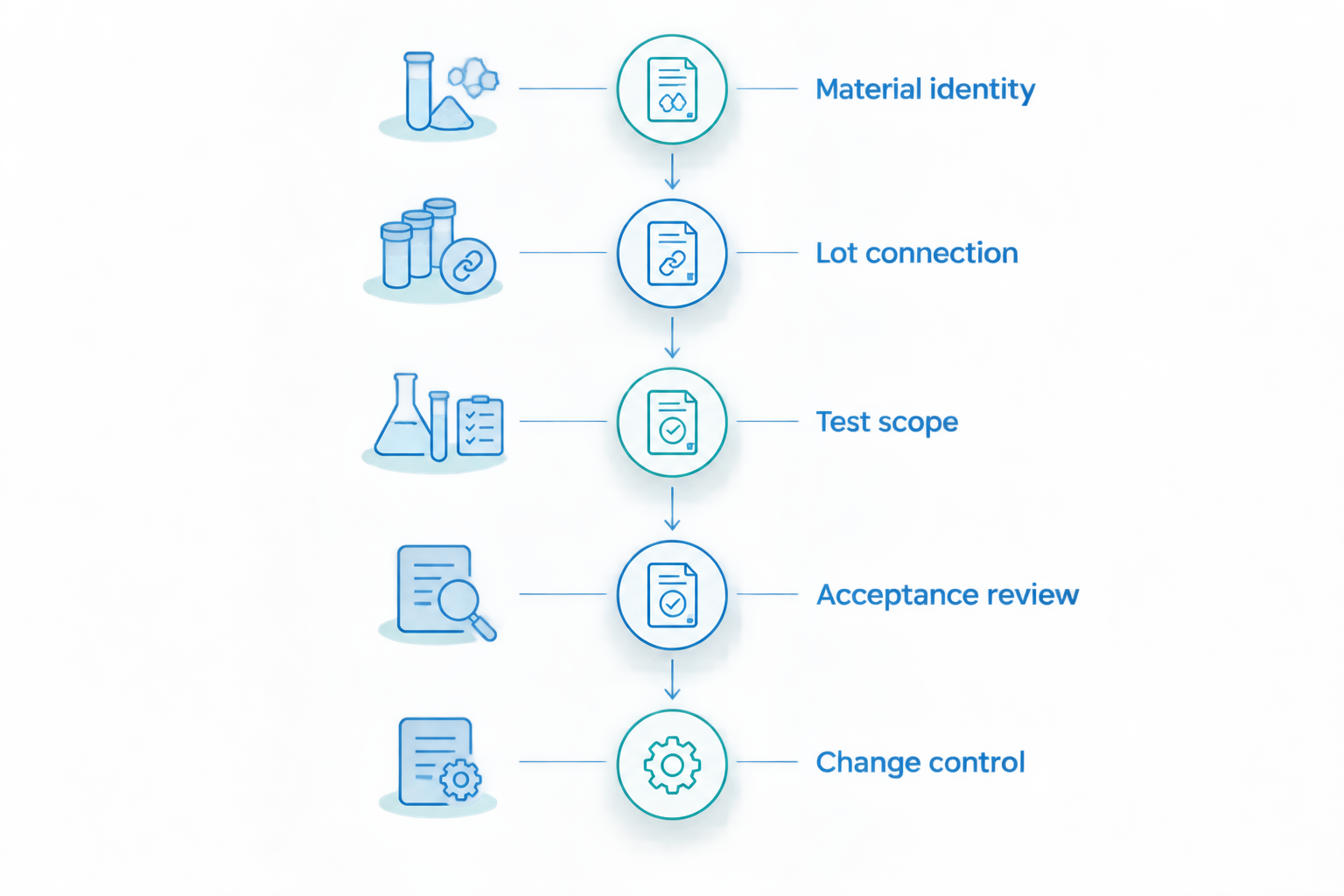
A practical supplier-qualification sequence for 2026
Use the same sequence for a new supplier and your incumbent. Set the criteria before reviewing results so that a persuasive product description does not become the acceptance standard.
Material identity
Write the required compound name and any necessary sequence, modification, or composition details into the purchasing specification. For a blend, identify every required constituent and the composition information needed to interpret the experiment.
Resolve naming ambiguities before approval. A familiar abbreviation is useful shorthand, but the purchasing record needs enough detail to identify the intended material.
Lot connection
Match the material identifier on the container to the applicable analytical documentation. Record the lot reference in your laboratory’s receiving and experimental records.
A report for a different lot does not establish the properties of the material received. If the connection is unclear, resolve it before releasing the material for experimental work.
Test scope
List what each reported method measures and which acceptance requirement it addresses. Separate identity evidence from chromatographic purity, content, and any other measurements your protocol requires.
Avoid treating a report’s length as evidence of adequacy. The useful question is whether the relevant measurements answer your laboratory’s specific qualification questions.
Acceptance review
Compare reported results with the requirements written before supplier selection. Review units, method descriptions, sample identifiers, and any qualifications attached to the results.
Assign the decision to the person responsible under your laboratory’s procedures. Record unresolved questions rather than converting them into assumptions.
Change control
Document the approved material and the reason for the supplier change. Where your protocol requires comparability work, complete it before combining results across the transition.
Keep the previous and replacement material records distinguishable. That preserves the ability to investigate a result without guessing which supplier or lot was used.
For a broader procurement framework, use the guide to research peptide suppliers for US laboratories. Keep the final approval tied to your laboratory’s requirements rather than a supplier ranking.
What analytical tests establish—and what they do not
A useful 2026 comparison separates the analytical question from the marketing claim. Different methods answer different questions, even when their results appear on the same COA.
| Evidence | What it helps assess | What it does not establish by itself |
|---|---|---|
| High-performance liquid chromatography, or HPLC | Separation of sample components under specified conditions | Complete compound identity, sterility, or suitability for every assay |
| Mass spectrometry, or MS | Mass-related evidence supporting identity assessment | Complete structural characterization or suitability for a particular experiment |
| A reported content measurement | Amount measured using the stated method and reporting basis | The absence of every possible impurity |
| A lot-linked COA | Connection between reported results and an identified material lot | Whether the reported test panel covers every protocol requirement |
Chromatographic area percentage is not automatically the same as peptide mass fraction. The method, detector response, and calculation basis matter when interpreting what the reported percentage represents.
Likewise, a mass result consistent with an expected compound supports identity assessment but does not answer every structural question. Read the conclusion within the scope of the method rather than expanding it into a universal quality claim.
Ask what was measured, how it was measured, and which acceptance criterion the result satisfies. A test is useful because it answers a defined question—not because its name sounds technical.
When a blend belongs on your shortlist
A blend fits a protocol that intentionally studies a combination. It is a poor substitute for separate materials when your immediate question requires distinguishing individual contributions.
Before selecting GLOW or KLOW, establish whether the protocol specifies the combination, whether constituent quantities are documented adequately, and whether separate controls are required. Neither a total mass nor a constituent list answers all those questions.
The following catalog entries are relevant only to laboratories evaluating these exact combinations. Their inclusion is not a recommendation to replace a single-compound protocol with a blend.
Why consider switching from Palmetto Peptides?
A switch is justified by a documented requirement, not by an unsupported claim about a competitor. Apply these decision rules to Palmetto Peptides and every replacement candidate:
- Material mismatch: Consider another supplier when the material under review does not match the protocol’s required identity or composition.
- Documentation mismatch: Hold approval when the records do not connect the supplied material to the results needed for qualification.
- Analytical mismatch: Seek suitable evidence when the reported methods do not answer a required qualification question.
- Experimental mismatch: Reconsider a blend when the study requires separate constituent controls or a different defined composition.
These are reasons to investigate a change, not evidence that Palmetto Peptides has any of these deficiencies. Keep the supplier decision attached to the specific finding in your review.
Write the intended benefit of switching in a sentence. If the sentence cannot identify a requirement the replacement meets, the change lacks a clear technical rationale.
When staying with Palmetto Peptides is the right call
Stay with Palmetto Peptides when the exact material and supporting records satisfy your laboratory’s criteria and the proposed replacement offers no documented improvement relevant to the study.
Continuity alone does not prove quality. However, changing an accepted research input without a defined reason creates an additional variable to document and assess.
For your 2026 supplier review, compare evidence rather than assuming a new vendor is an upgrade. Keep an accepted supplier until the replacement has earned approval under the same standard.
FAQ
What is the best Palmetto Peptides alternative for a US laboratory?
The best alternative is the supplier whose specific material and lot documentation meet your laboratory’s requirements. Anchorpeptide is a candidate for evaluating research-grade single compounds and blends, subject to material-specific qualification.
Is Anchorpeptide better than Palmetto Peptides?
A supplier-wide quality ranking requires comparable evidence for the materials being assessed. Compare exact compound identity, lot-linked analytical records, method scope, and protocol fit before deciding.
What should I check on a research-peptide Certificate of Analysis?
Check the material identifier, lot connection, analytical methods, reported results, and reporting basis. Then compare those details with your laboratory’s written acceptance requirements.
Does an HPLC purity result prove peptide identity?
An HPLC purity result alone does not prove complete peptide identity. HPLC separates sample components under specified conditions; identity assessment requires evidence appropriate to the compound and analytical question.
Can I replace a single peptide with a blend?
A blend is not an equivalent replacement for a single peptide. Use a blend only when its documented composition matches the experimental design and the required controls address the combination being studied.
Should I switch suppliers if my current material meets the protocol?
Keep an accepted supplier unless the replacement addresses a documented requirement. Qualify the replacement before introducing it into experimental work.
Are these research peptides intended for human or veterinary use?
No. The materials discussed are strictly for laboratory and in-vitro research, not human or veterinary use.
One last thing
Retain the exact analytical document used for approval alongside the receiving record. A later revision or a report for another lot is not a substitute for the evidence behind the original decision.
The strongest supplier comparison leaves a usable record: what your laboratory required, what the selected material demonstrated, and why the decision was approved.
Related guides
- COA-verified research peptides
- Peptide blends for in-vitro stacking research
- Research peptides for university laboratories