

For US laboratories evaluating high purity peptides alternatives in 2026, Anchorpeptide is an option for research-grade peptides and blends, subject to compound fit and review of the documentation for the material you intend to purchase. Keep High Purity Peptides in your comparison, but make the decision on identity, analytical evidence, and experimental requirements—not the supplier name or a purity headline.
- Evaluate high purity peptides alternatives against compound identity, lot documentation, and your in-vitro study requirements.
- Anchorpeptide offers research-grade peptides and blends; verify documentation for the specific material before selection.
- Choose single compounds for separate experimental variables; consider blends only when the protocol requires combined materials.
- A Certificate of Analysis reports specified test results, not universal suitability for every laboratory assay.
Why this matters
A supplier change is a material change in your research workflow. Even when the compound name stays the same, you need to establish whether the replacement meets your laboratory's acceptance criteria before treating it as interchangeable.
Anchorpeptide serves laboratory and in-vitro researchers in the US. Its research-use positioning is relevant to this comparison, but positioning does not replace evaluation of the exact compound, formulation, and supporting records.
For a defensible 2026 purchasing decision, separate three questions: Is this the intended material? What do the analytical results establish? Does the material meet your protocol's requirements? A favorable answer to one does not answer the others.
The best alternative is the material your laboratory can qualify for its intended experiment. That rule applies equally to a new supplier and an established supplier.
High purity peptides alternatives at a glance
This comparison separates a supplier option from material-selection routes. Single compounds and blends are not competing supplier brands; they are different purchasing choices within a research procurement decision.
| Option | Best for | Main evaluation point | Relationship to High Purity Peptides |
|---|---|---|---|
| High Purity Peptides | Your existing-supplier benchmark | Evaluate the exact material and its supporting records | Baseline against which to assess a replacement |
| Anchorpeptide | US researchers evaluating research-grade peptides and blends | Match the catalog entry to the protocol and verify applicable documentation | A supplier option to qualify against the same acceptance criteria |
| Single-compound route | Experiments requiring separately controlled materials | Confirm each compound's identity and characterization | A material-selection route, not a separate supplier recommendation |
| Defined-blend route | Experiments explicitly requiring combined compounds | Establish composition and analytical coverage | A different experimental input, not an automatic substitute for a single compound |
Do not interpret this table as a tested ranking of supplier quality. Use the same written requirements for every candidate, including your current supplier, rather than applying stricter scrutiny only to the replacement.
1. Anchorpeptide: best for research peptide and blend evaluation
Anchorpeptide supplies research-grade peptides and peptide blends for laboratory and in-vitro researchers. Its catalog includes both individual compounds and named combinations, allowing you to evaluate those material types against your study design. The purchasing decision still belongs at the product and lot level.
Where Anchorpeptide shines
- Research-use alignment: The stated audience is laboratory and in-vitro researchers in the US.
- Individual compounds and blends: The catalog supports comparison of separate materials with combined research inputs.
- Documentation-led evaluation: Certificates of Analysis are part of the stated offering; confirm the document applicable to the material under consideration.
Where Anchorpeptide falls short
- A catalog description is not a substitute for analytical evidence about the material you receive.
- A blend is not interchangeable with independently controlled components when your protocol requires separate experimental variables.
- Supplier-level information alone cannot establish suitability for your particular assay.
These limitations matter even when a product description closely matches your research topic. Select the documented material, not simply the familiar compound name.
Head-to-head qualification criteria
| Dimension | Anchorpeptide | High Purity Peptides |
|---|---|---|
| Compound match | Compare the named catalog compound with your protocol | Apply the same compound-matching requirement |
| Analytical evidence | Review the applicable Certificate of Analysis and methods | Request and review the corresponding material-specific evidence |
| Traceability | Confirm the relationship between the supplied material and its records | Apply the same traceability check |
| Experimental suitability | Assess against your laboratory's acceptance criteria | Assess against those identical criteria |
Best for: Qualified US researchers evaluating research-grade peptides and blends through a documented qualification process.
Verdict: Hold until the specific material and its supporting records meet your laboratory's requirements.
2. Single-compound route: best for separate experimental variables
Choose a single-compound route when your experiment requires you to vary or characterize one material independently. Separate sourcing keeps that selection distinct from a supplier-prepared combination, although it does not remove the need to qualify each material.
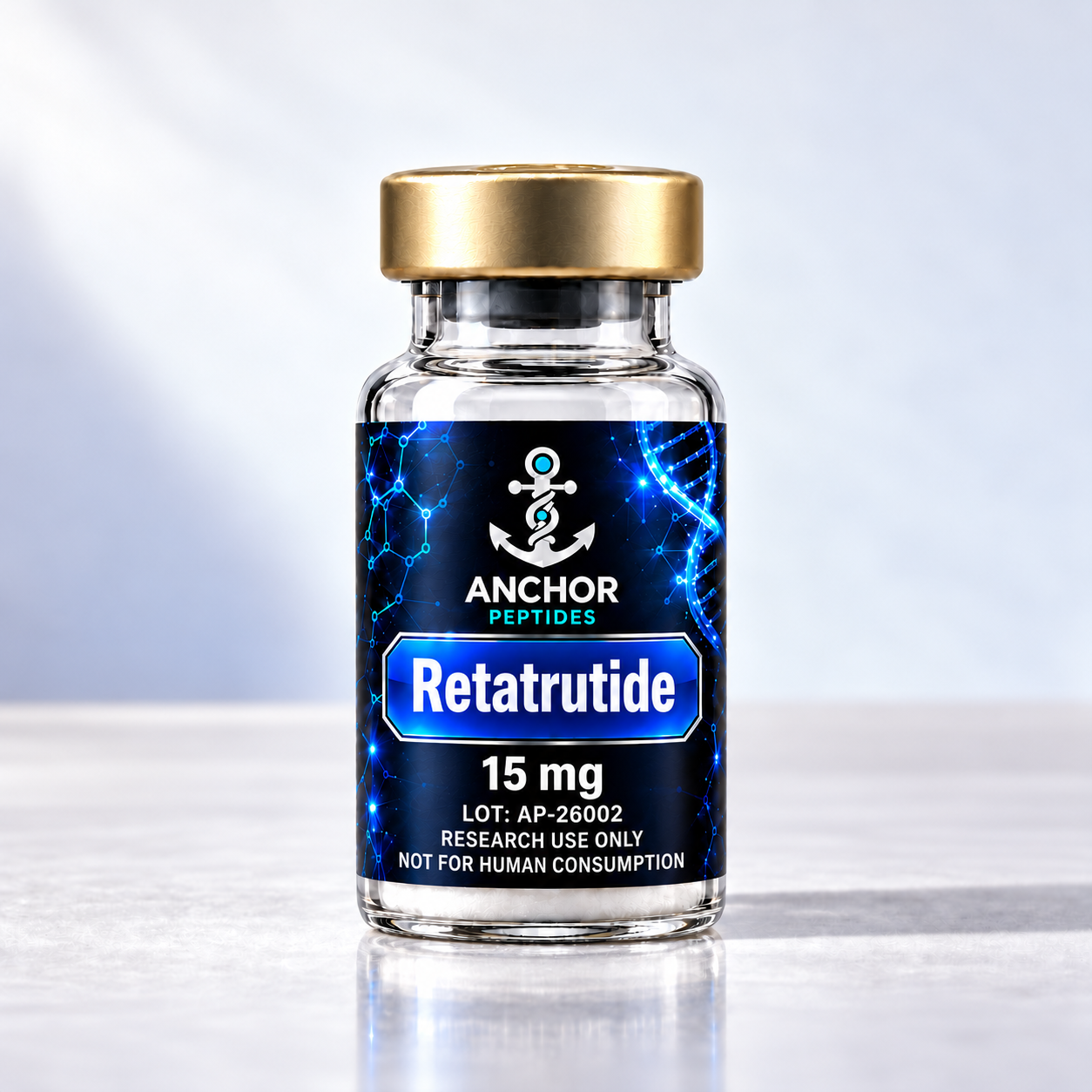
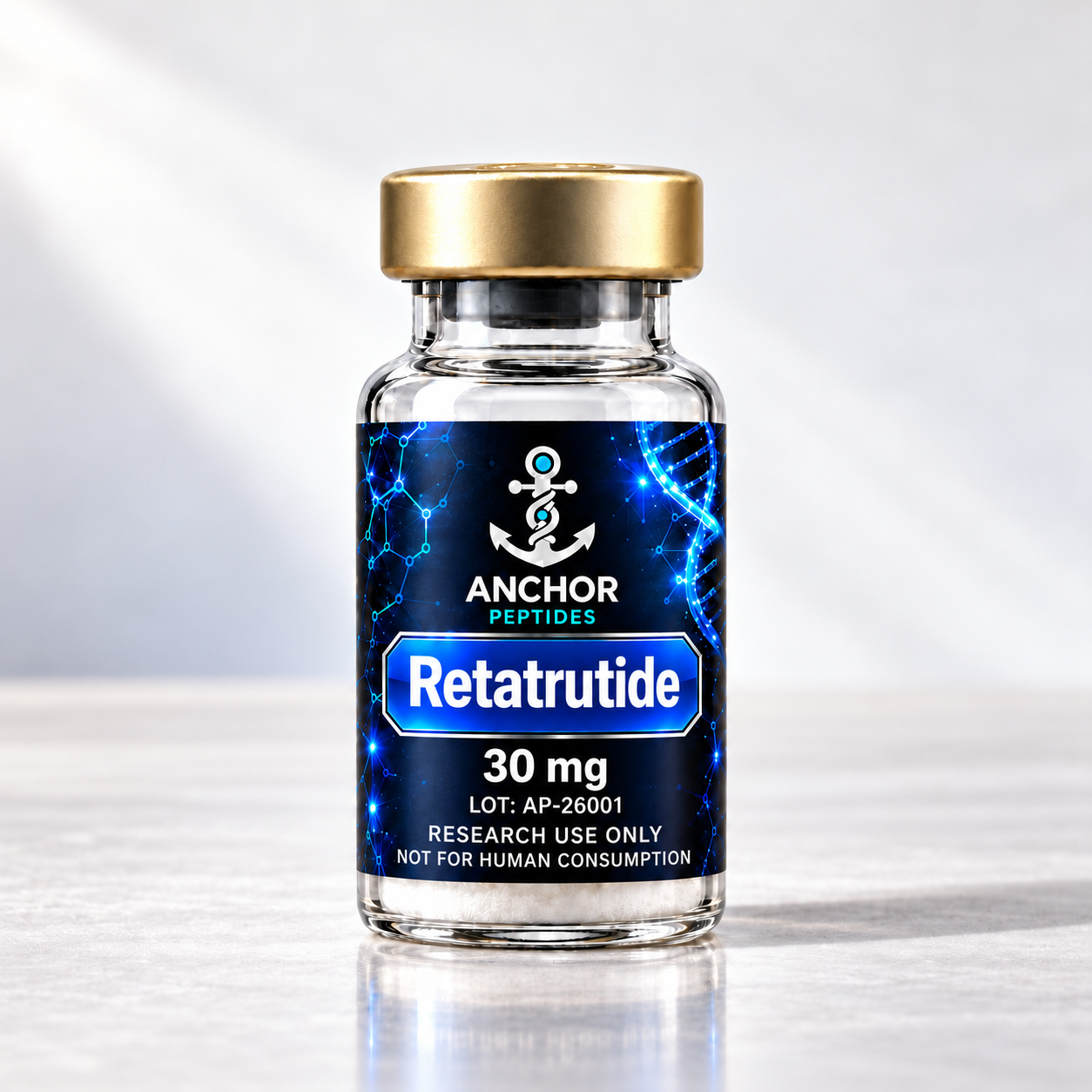
The catalog includes Retatrutide (15mg), Retatrutide (30mg), and Cagrilintide (10mg). These are distinct catalog entries; their stated quantities do not establish analytical equivalence, concentration, or suitability for a particular assay.
Where single compounds shine
- They align with protocols that specify individual materials rather than a combined input.
- They allow you to evaluate each selected compound's documentation separately.
- They avoid substituting a multi-compound product for a protocol that calls for one compound.
Where single compounds fall short
- Each selected material needs its own qualification review.
- Separate product descriptions do not establish the properties of a subsequently prepared combination.
- A matching name does not eliminate the need to check chemical form and other relevant specifications.
The following catalog examples illustrate the single-compound route. They are not recommendations for biological use, and no entry is a substitute for protocol-specific material qualification.

Best for: Laboratory protocols that require individual compounds and separately controlled inputs.
Verdict: Hold until each compound independently passes the required documentation review.
3. Defined-blend route: best for protocols specifying combinations
A defined blend is relevant when the experimental design explicitly calls for combined materials. The catalog includes Retatrutide & Cagrilintide (10mg/10mg), alongside other named research blends. A combination product should be evaluated as that combination—not as evidence that its components are interchangeable with separately sourced materials.
Where defined blends shine
- They provide a catalog option when a protocol specifies a combined input.
- Their named components give you a starting point for a composition review.
Where defined blends fall short
- You cannot independently vary components already combined in the supplied material.
- A single reported purity result does not, by itself, establish the amount of every component.
- Documentation must be interpreted for the blend rather than assumed from information about individual compounds.
Best for: In-vitro studies with a documented requirement for the specified combination.
Verdict: Skip when your protocol requires independently controlled components; otherwise hold for composition and documentation review.
How to evaluate the analytical evidence
A Certificate of Analysis, or CoA, reports results for specified tests on an identified sample or lot. Read the methods, results, and identifying information together; the document's title alone does not establish what was measured.
For your 2026 supplier review, use these separate checks. Each addresses a different question, so do not collapse them into a single purity score.
Identity
Identity asks whether the analytical evidence supports the stated compound. Mass spectrometry measures mass-to-charge ratios and can support identity assessment, but the strength of an identification depends on the method and the evidence obtained.
Check whether the reported test addresses the identity requirement in your protocol. Do not treat a product name printed above a chromatogram as independent identity evidence.
Purity
High-performance liquid chromatography, or HPLC, separates sample components under specified conditions. A chromatographic area percentage describes the relative detector response assigned to peaks under that method; it is not automatically the mass fraction of peptide in the container.
Read the result alongside the method and reporting basis. A purity statement without that context leaves an important analytical question unresolved.
Content
Content concerns how much of the intended substance is present. It is a different measurement question from chromatographic purity, and it matters when your experimental calculations depend on the amount of the intended compound.
Do not substitute a purity percentage for a content measurement. Determine which specification your protocol actually requires before deciding whether the available result is sufficient.
Traceability
Traceability connects the material you receive to its identifying records. Check that the relevant lot or batch identifiers agree across the supplied material and its documentation.
Retain those records with your laboratory's material qualification file. A report for a different material or unidentified lot does not establish the properties of your sample.
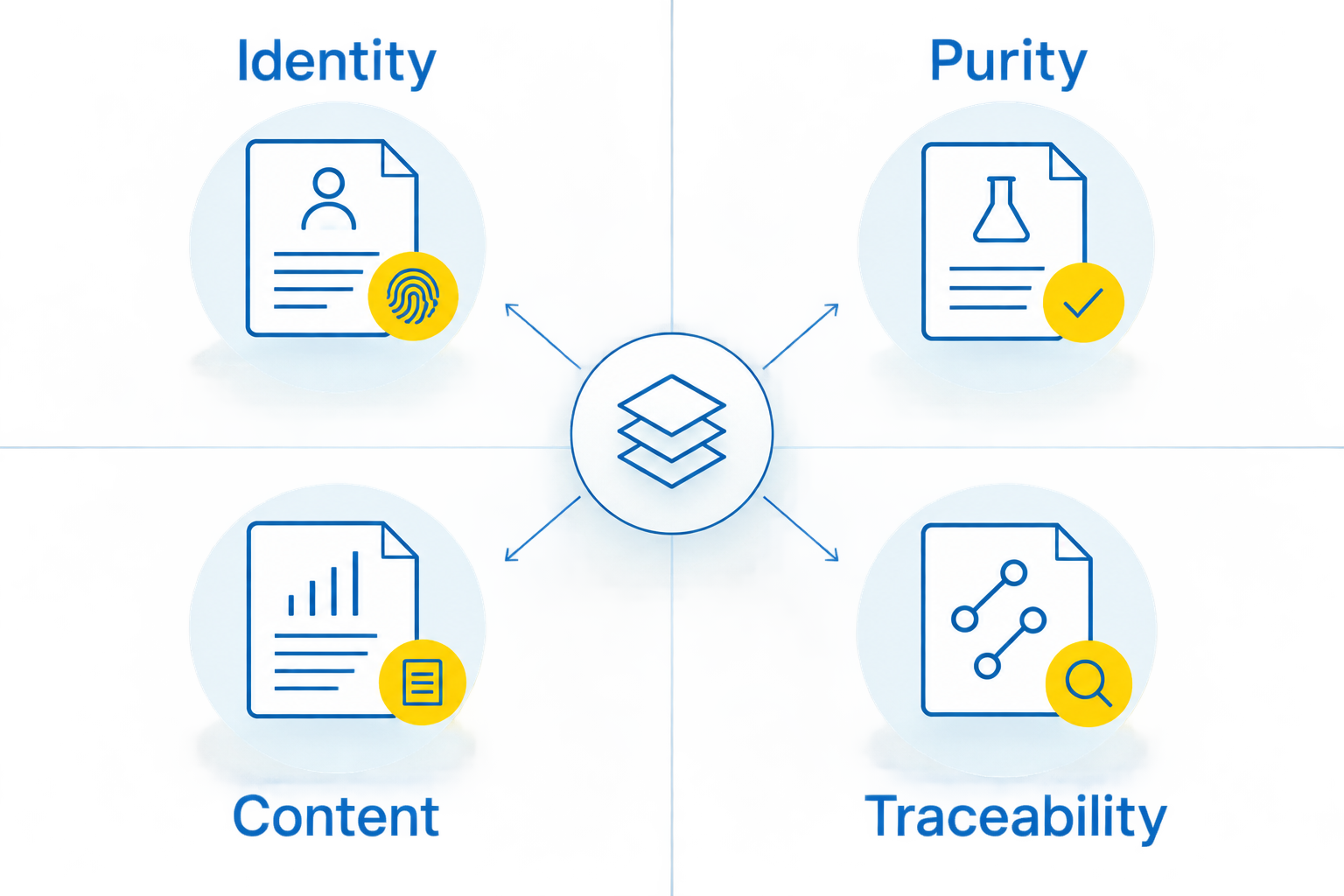
No single test establishes every property relevant to a research material. If your protocol specifies additional attributes, review evidence for those attributes separately rather than inferring them from a favorable purity result.
Why people switch from High Purity Peptides
A supplier switch should resolve a documented procurement or experimental requirement. Do not assume a competing supplier is better simply because its catalog presents similar compounds differently.
The following are decision conditions, not allegations about High Purity Peptides:
- Compound fit: Switch when another source supplies the specific material your protocol requires and that material passes qualification.
- Documentation fit: Switch when the replacement's evidence meets a written requirement that your current material does not satisfy.
- Experimental format: Reconsider sourcing when your protocol changes between individual compounds and a specified blend.
- Record linkage: Resolve any inability to connect supplied material to the records your laboratory requires before accepting it.
For a 2026 comparison, write the acceptance requirement before reviewing supplier claims. This keeps the decision tied to the experiment and prevents a favorable description from becoming the acceptance criterion itself.
When staying with High Purity Peptides is the right call
Stay with High Purity Peptides when your current material meets the protocol, its records satisfy your laboratory's requirements, and a replacement offers no demonstrated experimental or procurement advantage. A new supplier name is not a scientific reason to change materials.
If you do change suppliers, document the qualification decision and any comparison your laboratory requires before treating the new material as interchangeable. Continuity is useful only when the material remains fit for purpose; novelty has no independent analytical value.
FAQ
What’s the best way to compare high purity peptides alternatives in 2026?
Compare the exact compound, analytical evidence, and traceability against your laboratory’s written requirements. Apply those requirements equally to High Purity Peptides and every alternative.
Is Anchorpeptide an alternative for US laboratory researchers?
Anchorpeptide offers research-grade peptides and blends for laboratory and in-vitro researchers in the US. Evaluate the specific material and applicable documentation before selecting it for a protocol.
Does a high purity result prove peptide identity?
A high purity result does not by itself prove peptide identity. Purity and identity address different analytical questions and require appropriate supporting evidence.
Does a Certificate of Analysis prove a peptide will work in my assay?
A Certificate of Analysis does not establish suitability for every assay. It reports specified test results, which your laboratory must assess against its experimental requirements.
Should I choose a peptide blend or separate compounds?
Choose the format specified by your experimental design. Separate compounds support independent control of inputs, while a blend requires evaluation of the combined material and its composition.
Are these research peptides intended for human or veterinary use?
The materials discussed here are for laboratory and in-vitro research only. This guide provides no human or veterinary use advice, dosing, administration instructions, or therapeutic recommendations.
One last thing
Before approving a supplier change in 2026, write down the exact result that would make you reject the replacement. If your acceptance criteria contain only the word purity, the review is unfinished: identity, content requirements, and traceability remain separate decisions.
Keep the qualification record specific to the material you evaluated. That record is more useful than a general declaration that one supplier is best.
Related guides
- Research peptide suppliers for US laboratories
- CoA-verified research peptides
- Peptide blends for in-vitro stacking research
- Research peptides for university laboratories