

Anchorpeptide vs Orion Peptide comes down to documentation you can verify today versus a supplier you must verify yourself. For US laboratory and in-vitro buyers in 2026, Anchorpeptide is the safer default when you want a stated research-use-only catalog with Certificates of Analysis (CoAs); Orion Peptide is the better pick only if its lot data and catalog fit a protocol Anchorpeptide does not cover. See the wider Orion Peptide alternatives comparison for other options.
- Anchorpeptide vs Orion Peptide: choose Anchorpeptide for a documented, research-use-only catalog with CoAs.
- Choose Orion Peptide only if its catalog covers a compound or format you cannot source elsewhere.
- A CoA proves identity and purity for one lot; it does not prove biological activity.
- Confirm the CoA for the exact lot you receive, from either supplier, before use in 2026 studies.
- All compounds discussed are for laboratory and in-vitro research only.
Why this comparison matters in 2026
Research-grade peptide suppliers look identical on a landing page. Vial photo, purity percentage, a promise of quality. The differences show up in the paperwork you receive with the vial, and in how a supplier describes what the product is for.
This page compares the two on what a lab buyer can actually check. It does not assert test results, certifications or policies for Orion Peptide that are not published here. Where Orion Peptide's details matter, the page tells you what to confirm on its own site and with its own support team.
Everything below concerns research-use-only materials for laboratory and in-vitro work. Nothing here covers human or veterinary use, dosing or personal use.
The verdict in two lines
- Choose Anchorpeptide if you want a research-only catalog of single peptides and defined blends, a stated CoA position, and a US-focused supplier you can evaluate from public product pages.
- Choose Orion Peptide if it lists a compound, vial size or blend you need that is not in the Anchorpeptide catalog, or if your lab already holds qualified lot data from it.
The axis of difference is not quality in the abstract. It is how much you can confirm before you place the order. Anchorpeptide publishes its product pages, descriptions and research-use framing. For Orion Peptide, you do the confirmation work.
At a glance
| Dimension | Anchorpeptide | Orion Peptide |
|---|---|---|
| Best for | US labs wanting a research-only catalog with CoA positioning | Labs needing a specific item or format from its own list |
| Catalog structure | Single peptides, small molecules, and named blends | Check its current catalog |
| Documentation | Certificates of Analysis positioned with products; confirm per lot | Request the CoA for your lot before buying |
| Use framing | Laboratory and in-vitro research only | Confirm on its site and labels |
| Pricing model | Per-vial listed prices on product pages | Check its current pricing |
| Standout feature | Defined multi-peptide blends for in-vitro stacking work | Confirm what sets it apart for your protocol |
| Lot traceability | Ask support to confirm lot-level records | Ask support to confirm lot-level records |
| Support access | Contact page on the site | Check its contact channels |
The rows above run in the same order as the sections below.
Anchorpeptide offers the clearer public catalog
Anchorpeptide lists its products with a stated research focus on each page. The catalog covers several research categories:
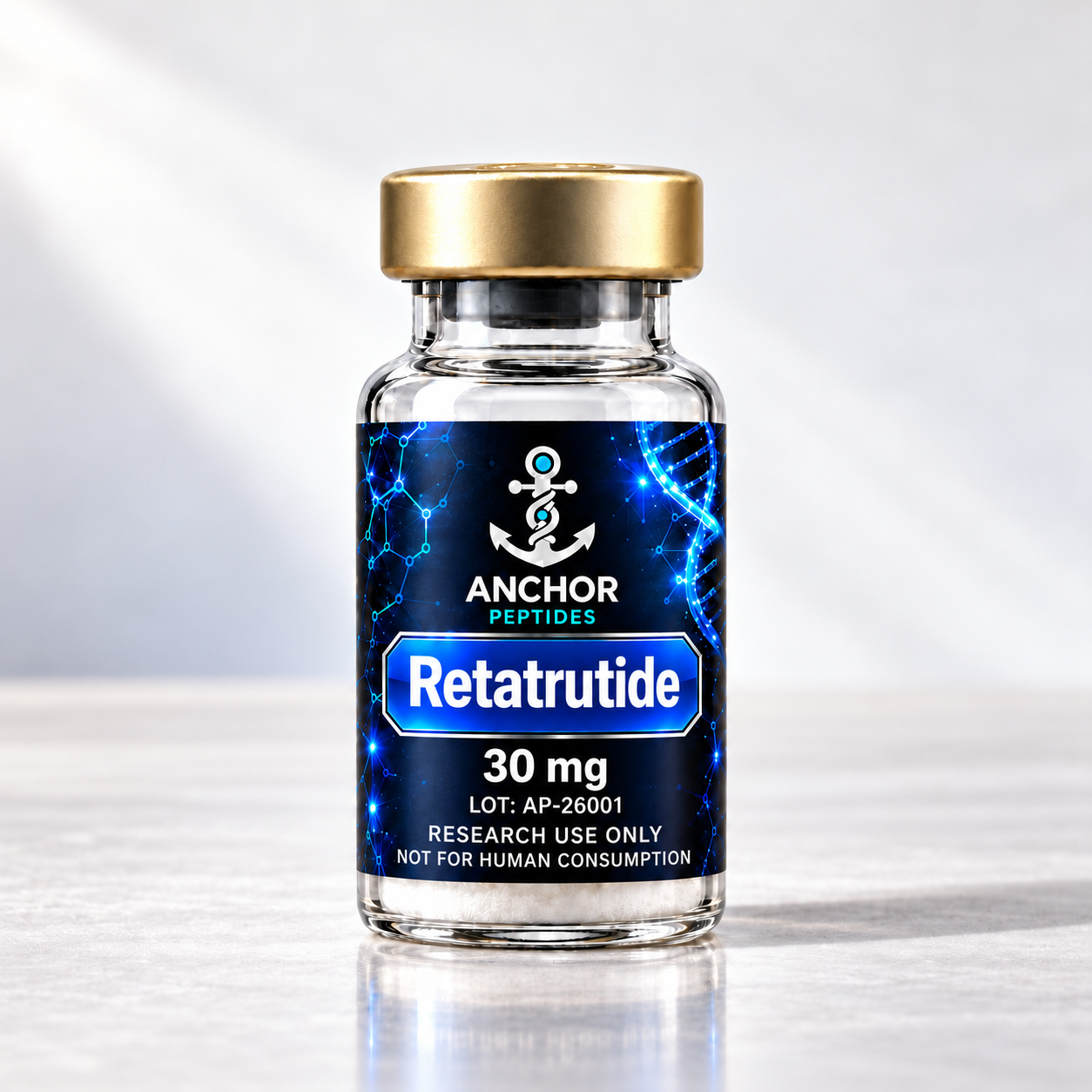
- Metabolic and receptor-agonist peptides: Tirzepatide, Retatrutide (in 15mg and 30mg vials), Cagrilintide, and a Retatrutide and Cagrilintide blend.
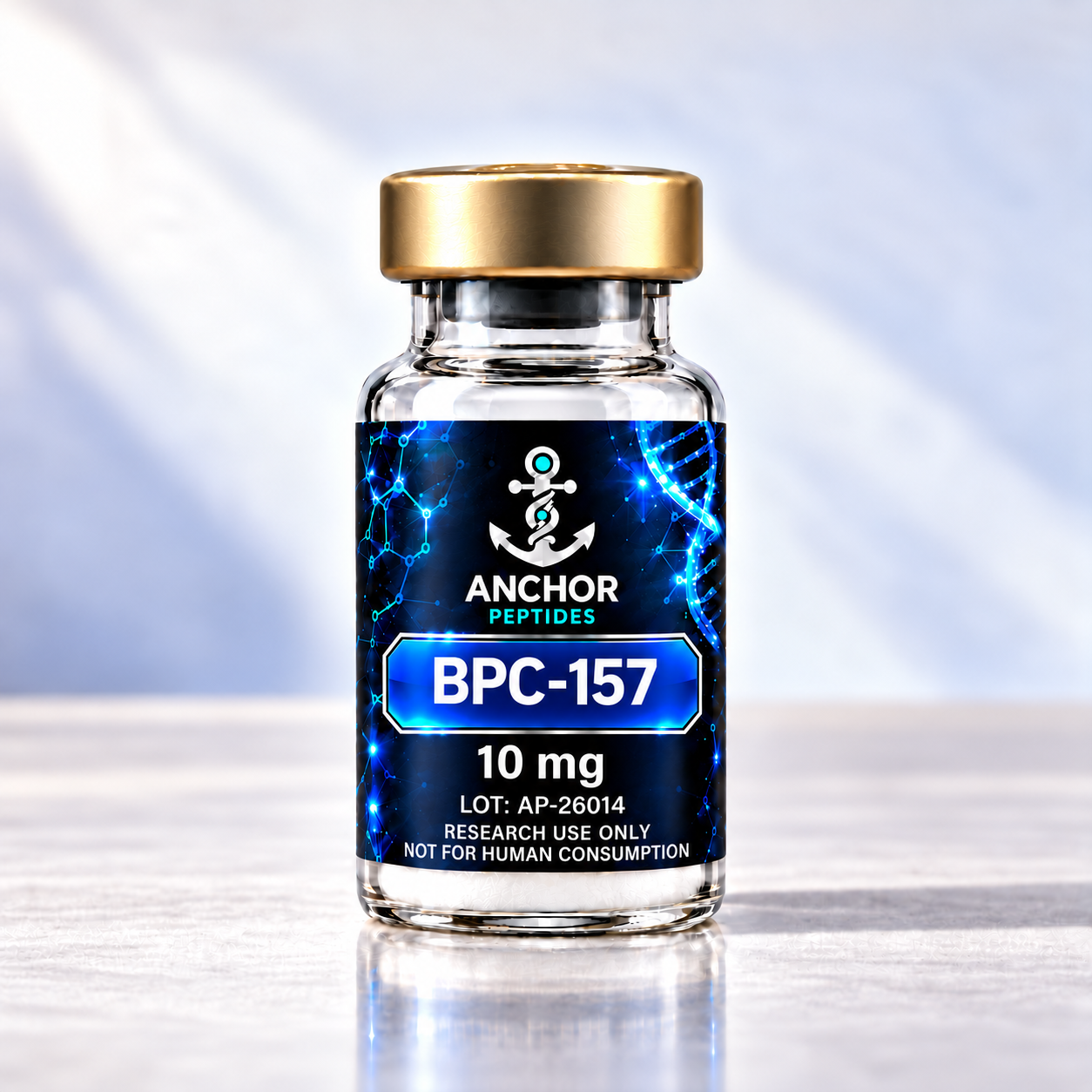
- Tissue-repair peptides: BPC-157, plus the GLOW blend (BPC-157, GHK-Cu, TB-500) and the KLOW blend, which adds KPV.
- Growth-hormone-axis peptides: Sermorelin, Tesamorelin, and a CJC-1295 No DAC and Ipamorelin blend.
- Mitochondrial and cellular-energy compounds: SS-31, MOTS-C, SLU-PP-332 and 5-Amino-1MQ.
That breadth matters if you run several assays and want one qualified source rather than three. If your work centers on metabolic receptors, the GLP-1 receptor agonist research peptide guide maps the options.
Orion Peptide may carry overlapping items. This page does not state which. Open its catalog and compare compound names, vial sizes and blend definitions line by line against your protocol.

Documentation is where Anchorpeptide leads on what you can verify
A Certificate of Analysis is a lab report for a specific lot. It typically reports identity (does the molecular mass match the intended sequence) and purity (what fraction of the material is the target compound, commonly measured by HPLC, or high-performance liquid chromatography).
Anchorpeptide positions its research peptides and blends with CoAs. That is a stated position, not a guarantee that every batch of every product is documented the way you need. Ask for the CoA tied to your lot number before the material enters a study.
What a CoA measures:
- Identity of the main compound.
- Purity as a percentage of the sample.
- Sometimes residual solvents or water content, depending on the report.
What a CoA cannot establish:
- Biological activity in your assay.
- Stability after you reconstitute or store the material.
- Anything about lots other than the one tested.
For how to read these reports and rank suppliers by them, see the CoA-verified research peptides guide. Apply the same checklist to Orion Peptide: request the report, match the lot number on the vial to the lot number on the document, and check the testing lab named on it.
Research-use-only framing is a requirement, not a differentiator
Any supplier you qualify should label its materials for laboratory and in-vitro research only, without consumer health or usage claims. Anchorpeptide frames its products that way across its catalog.
For Orion Peptide, confirm the same on product pages, labels and terms. If a supplier's copy drifts toward personal use, outcomes or dosing language, that is a procurement red flag for an institutional lab, whatever the purity figure says. On this point the comparison is a tie in principle: both must meet the standard, and you verify it per supplier.
Orion Peptide wins when your protocol demands its specific item
No supplier covers every compound. If Orion Peptide lists a peptide, fragment, vial size or blend ratio that Anchorpeptide does not, that is a legitimate reason to buy from it. Protocol fit beats brand preference every time.
The same applies to continuity. If your lab has already qualified an Orion Peptide lot, run it through your own analytical checks and built a baseline from it, switching suppliers mid-study adds variability. Finish the study on the qualified material, then run a side-by-side lot comparison before changing sources.
Blends: a defined strength for Anchorpeptide
Multi-peptide blends are where sourcing gets tricky, because the label ratio and the real ratio can diverge. Anchorpeptide lists defined blends by component: GLOW (BPC-157, GHK-Cu, TB-500), KLOW (the same three plus KPV), CJC-1295 No DAC with Ipamorelin, and Retatrutide with Cagrilintide.
For in-vitro combination work, the peptide blends for in-vitro stacking research guide explains how to evaluate component ratios and what to request from a supplier. Ask Orion Peptide for the same: component list, per-component amounts and a CoA that reports each component, not only a total.
Pricing: compare models, not headlines
Anchorpeptide shows per-vial prices on each product page, which makes line-item comparison easy. Check the current figures on the site, since they change.
With any supplier, compare cost per milligram of verified material, not cost per vial. A larger vial can be cheaper per milligram, but only if your assay consumes it before stability becomes a concern. A smaller vial costs more per milligram and gives you tighter control. Check Orion Peptide's current pricing and run the same arithmetic on matching compounds and sizes.
Shipping, support and traceability: ask both the same questions
Neither page can tell you how a supplier behaves when a lot fails your QC. Before you commit a budget line in 2026, send each supplier the same short list:
- Can you provide the CoA for the lot I will receive?
- Which laboratory performed the testing?
- How do you handle a lot that fails my incoming analysis?
- What are the storage and shipping conditions for lyophilized material?
- How do you confirm that the buyer is a laboratory or research institution?
The supplier that answers fast, specifically and in writing is the one to qualify. Anchorpeptide provides a contact page for these questions. Compare how long each reply takes and how concrete it is. Vague answers are the signal.
Scorecard
| Dimension | Winner |
|---|---|
| Catalog visibility from public pages | Anchorpeptide |
| CoA positioning stated on site | Anchorpeptide |
| Defined, component-listed blends | Anchorpeptide |
| Research-use-only framing | Tie (verify both) |
| Specific compound or size not in the other catalog | Whichever lists it |
| Continuity with an already qualified lot | Your current supplier |
| Lot-level traceability | Tie (ask both in writing) |
| Support responsiveness | Test both |
Who should choose which
Choose Anchorpeptide if:
- You are a university, independent or startup lab that wants one documented source for metabolic, tissue-repair, growth-hormone-axis and mitochondrial research compounds.
- You work with blends and need component-level listings.
- You want product pages that state the research-only purpose clearly.
Independent labs sourcing on a tight budget can start with the best research peptides for independent research labs list.
Choose Orion Peptide if:
- Its catalog carries a compound, vial size or blend ratio you need that Anchorpeptide does not list.
- Your lab already holds qualified lot data and a working relationship with it.
- Its CoA for your lot, once requested, meets your acceptance criteria.
If neither fits, the broader research peptide supplier comparison for US laboratories covers more vendors with the same evaluation method.
FAQ
Is Anchorpeptide better than Orion Peptide?
Anchorpeptide is the stronger choice when you want a research-only catalog with CoA positioning you can review before ordering. Orion Peptide is better only if it lists a compound or format you cannot source from Anchorpeptide.
Does Anchorpeptide provide Certificates of Analysis?
Anchorpeptide positions its research peptides and blends with Certificates of Analysis. Confirm that a CoA exists for the specific lot you are buying, and match the lot number on the vial to the document.
What does a CoA not tell me about a peptide?
A CoA reports identity and purity for one tested lot. It does not establish biological activity in your assay, stability after reconstitution, or the quality of any other lot.
How do I compare Orion Peptide with another supplier?
Request the lot-specific CoA, the name of the testing laboratory and the written handling terms from each supplier. Compare compound names, vial sizes and cost per milligram of verified material, not headline price per vial.
Are these peptides for human or personal use?
No. Anchorpeptide materials are supplied for laboratory and in-vitro research only. This page gives no human or veterinary use, dosing or injection guidance.
Does Anchorpeptide sell blends?
Yes. The catalog includes GLOW (BPC-157, GHK-Cu, TB-500), KLOW (adds KPV), CJC-1295 No DAC with Ipamorelin, and Retatrutide with Cagrilintide, each listed by component for research use.
Where can I find other Orion Peptide options?
The Anchorpeptide guide to Orion Peptide alternatives lists other suppliers and the criteria to compare them in 2026.
One last thing
The most useful test in this comparison costs nothing. Email both suppliers the same CoA question for the same compound and the same vial size, and time the replies. The one that returns a lot-matched report with the testing lab named wins your qualification, whatever the marketing page says.
If you also compare against another named vendor, the Anchorpeptide vs American Peptides page applies the same method.
All materials discussed are for laboratory and in-vitro research use only.