

Keeping Amino Labs makes sense when its material and documentation already meet your laboratory’s approved specification. The ceiling is a mismatch between those specifications and what your next experiment requires—not the supplier’s name. Anchorpeptide is an Amino Labs alternative for US laboratories evaluating research-grade peptides and blends, with selection contingent on reviewing the exact compound and its supporting documentation.
- Evaluate Amino Labs alternatives against your laboratory’s material specification, not supplier rankings.
- Anchorpeptide offers research-grade peptides and blends for US laboratory and in-vitro researchers.
- A Certificate of Analysis supports only the measurements and sample identified in that document.
- Keep Amino Labs when its qualified material satisfies your protocol; change suppliers for a documented requirement.
Why this matters
A supplier comparison should answer whether you can qualify a material for a defined experiment. It should not turn an unfamiliar catalog into an unsupported quality ranking.
Anchorpeptide supplies research-grade peptides and peptide blends for laboratory and in-vitro research. Certificates of Analysis are part of its stated offering, but you still need to establish which document applies to the material you intend to purchase. A general statement about testing does not establish the analytical status of every product or batch.
For a 2026 supplier review, start with the required chemical identity, analytical evidence and experimental format. Those requirements make the comparison useful even when two suppliers use similar product descriptions.
Amino Labs alternatives at a glance
Compare evidence against the same specification before comparing suppliers. The table distinguishes a potential alternative from a supplier you have already qualified; it does not assign an unsupported quality score.
| Supplier or sourcing option | Best for | Relevant distinction | Qualification requirement |
|---|---|---|---|
| Amino Labs, when already qualified | Continuing work with material accepted under your laboratory’s procedures | Preserves an existing sourcing decision when that decision remains suitable | Confirm the required compound, current lot documentation and acceptance criteria |
| Anchorpeptide | US laboratories evaluating research-grade peptides and blends | Its stated scope includes individual peptides, blends and Certificates of Analysis | Review the exact product and establish which analytical documents apply |
| A separately qualified supplier | Requirements that your existing source does not satisfy | Selection follows a documented material or procurement requirement | Apply the same identity, analytical and traceability review |
An alternative belongs on your shortlist because it addresses a specific requirement. A longer vendor list is not a substitute for a stronger qualification record.
Define the requirement before selecting the supplier
Write a short material specification before reviewing catalogs. Include the compound identity, whether your experiment requires separate compounds or a premixed blend, and the analytical evidence your laboratory requires.
Separate mandatory criteria from preferences. If a compound does not match the experimental design, attractive documentation for a different compound does not solve the problem. Likewise, the right compound name does not excuse an unresolved analytical discrepancy.
1. Anchorpeptide: best for peptides and blends under review
Anchorpeptide’s stated offering covers research-grade peptides and peptide blends for qualified US laboratory and in-vitro researchers. The catalog includes both individual compounds and named blends, giving you different formats to evaluate against an experimental specification.
Best for: Laboratories seeking a research-use-only supplier candidate with individual peptide and blend options, subject to product-specific documentation review.
Where Anchorpeptide shines
- Relevant stated audience: The business description explicitly identifies US laboratory and in-vitro researchers.
- Individual compounds and blends: The supplied catalog supports evaluating these distinct research-material formats.
- Documentation-oriented offering: Certificates of Analysis are included in the business description, making document applicability an appropriate qualification question.
Where Anchorpeptide falls short
- A catalog cannot qualify a lot: Product descriptions alone do not establish identity, purity or the suitability of a particular batch.
- Blends do not replace separate compounds: A premixed material does not provide the same component-level experimental control as independently selected materials.
- Research scope is restrictive: These materials are for laboratory and in-vitro research only, not human or veterinary use.
These limitations matter more than a generic supplier score. If your protocol requires independently controlled components, select the material format accordingly rather than adapting the experiment to a catalog entry.
Anchorpeptide versus Amino Labs
| Decision dimension | Anchorpeptide | Amino Labs |
|---|---|---|
| Role in this comparison | Candidate supplier of research-grade peptides and blends | Existing or prospective supplier evaluated against the same specification |
| Catalog assessment | Match the exact listed compound or blend to the protocol | Match the exact proposed compound or blend to the protocol |
| Analytical assessment | Establish which Certificate of Analysis and underlying results apply | Establish which Certificate of Analysis and underlying results apply |
| Selection threshold | Accept only after laboratory qualification requirements are met | Retain or select only while laboratory qualification requirements are met |
Verdict: Hold supplier approval until the proposed material and its documentation meet your laboratory’s acceptance criteria.
Match the catalog format to the experiment
Supplier selection and material selection are different decisions. A suitable supplier can still offer a material format that does not fit your study.
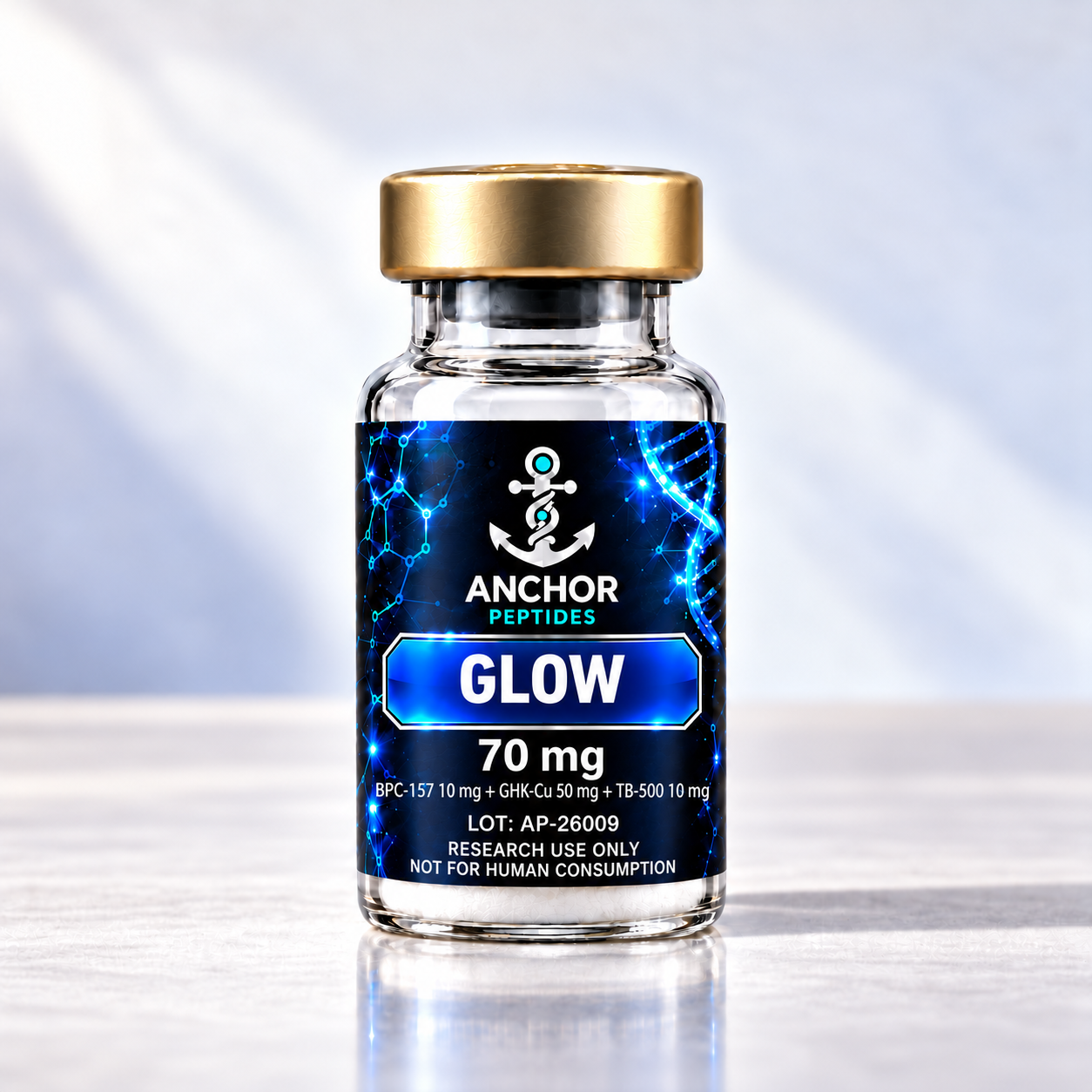
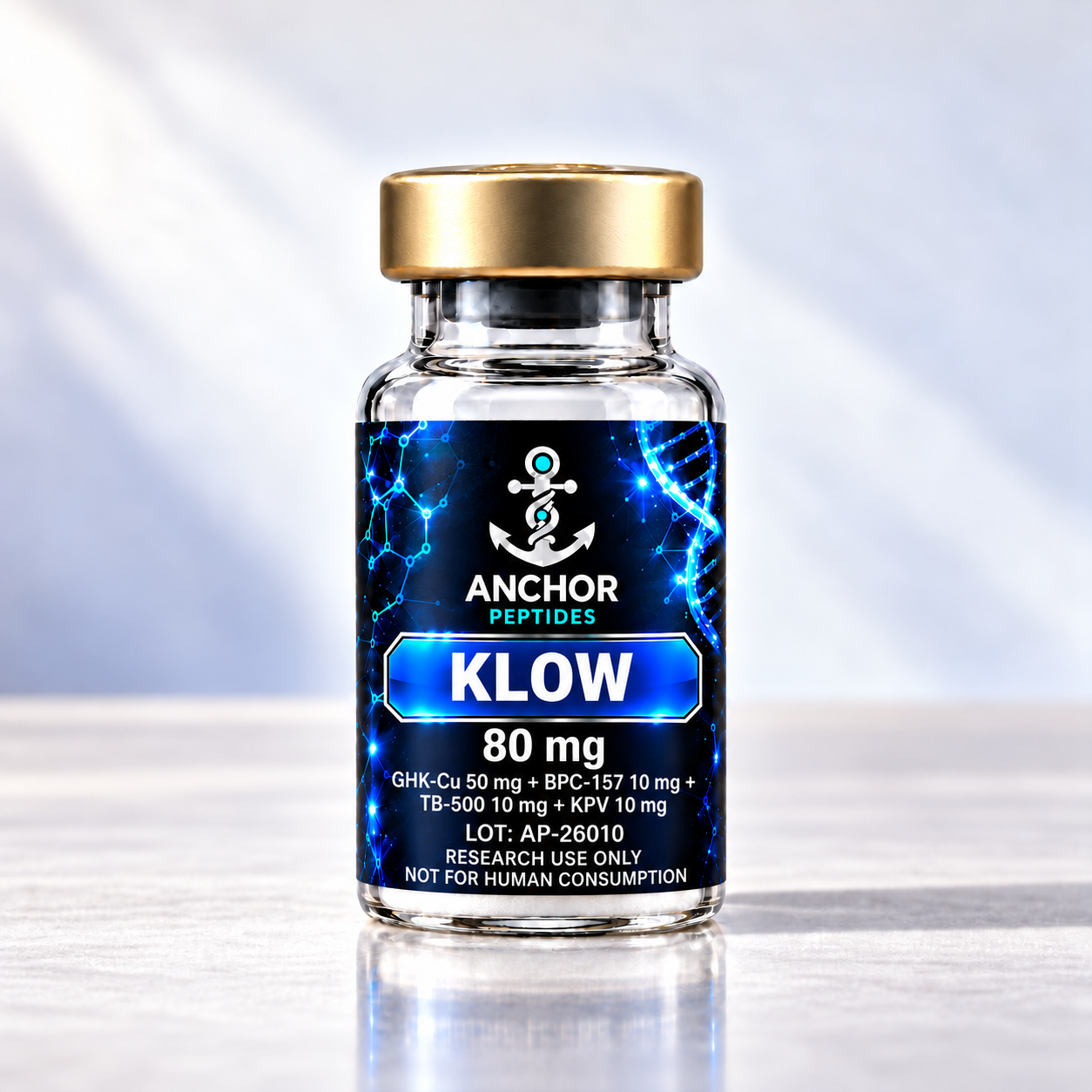
For example, the catalog names GLOW Blend – BPC-157 + GHK-Cu + TB-500 (70mg), KLOW Blend – BPC-157 + GHK-Cu + TB-500 + KPV (80mg), and CJC-1295 No DAC & Ipamorelin (10mg). These are different compositions, not interchangeable versions of one research material. The stated 70mg, 80mg and 10mg quantities do not, by themselves, specify each component’s amount.
| Material format | Best for | Advantage | Limitation |
|---|---|---|---|
| Individual compound | Designs requiring independent control of each compound | Keeps material selection separate for each component | Requires separate qualification of the materials used |
| Premixed blend | Designs explicitly specifying that combination | Provides a combined research-material format | Requires composition-specific review and does not independently vary its components |
Choose the experimental design first. Then verify that the proposed material’s identity, composition and documentation satisfy it.
The following catalog examples illustrate two different blend compositions. They are not evidence of comparative performance, and their listing does not establish a particular lot’s analytical results.
Review documentation without overreading the result
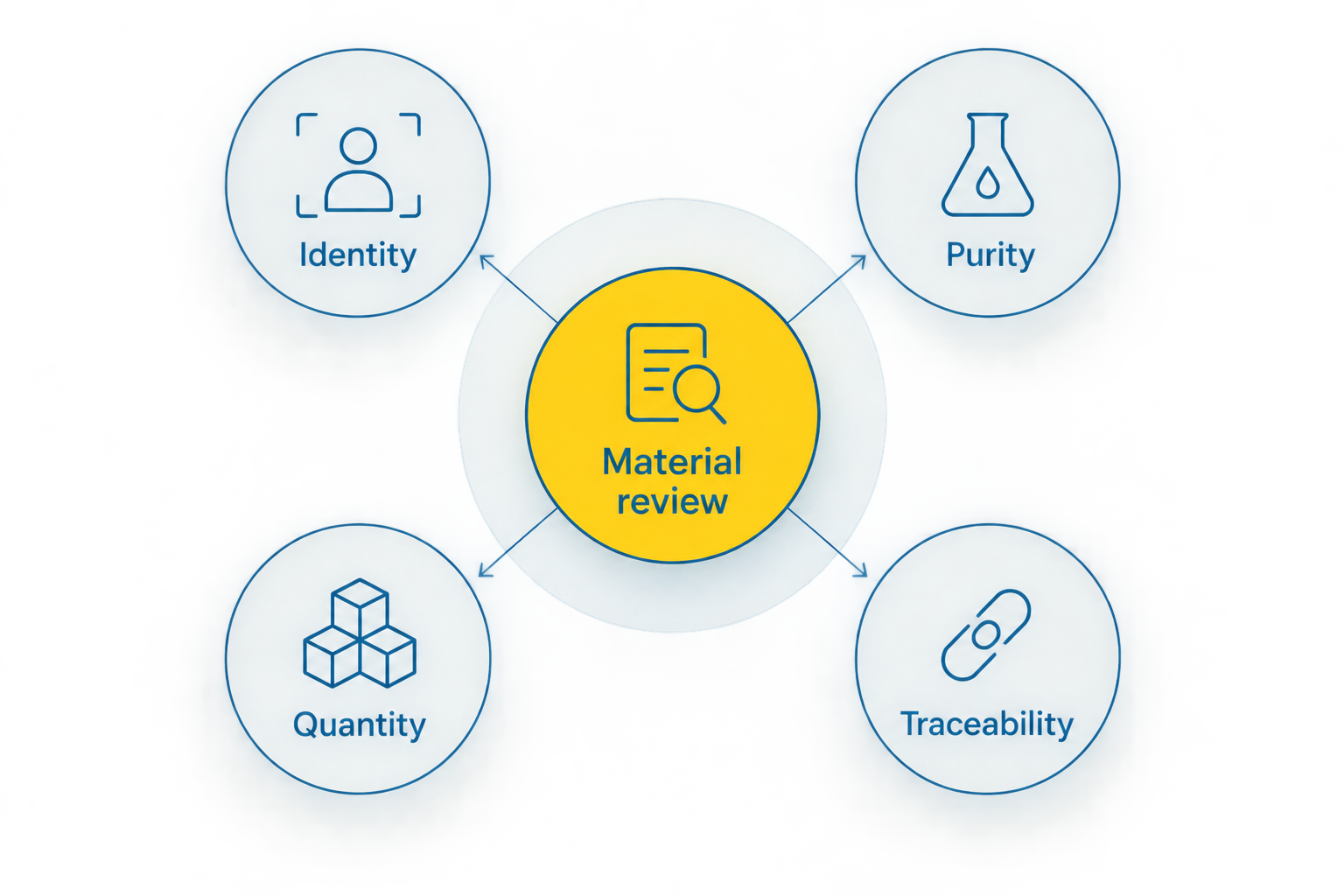
A Certificate of Analysis, or CoA, reports analytical information about an identified sample or material. Its value depends on what was tested, how it was tested and how clearly the tested sample connects to the material under review.
For your 2026 qualification file, separate these questions rather than treating a purity claim as a complete answer.
- Identity: Does the analytical evidence support the stated compound?
- Purity: What method produced the reported result, and what does that result represent?
- Quantity: Does the documentation address content, rather than only a relative analytical signal?
- Traceability: Can you connect the report, sample identifier and proposed material?
These questions address different properties. Passing one does not automatically answer the others.
What chromatography establishes—and what it does not
High-performance liquid chromatography, or HPLC, separates sample components under specified analytical conditions. A reported chromatographic area percentage describes the relative detector response of integrated peaks under that method; it is not automatically a measurement of peptide mass fraction.
Ask how the reported result was calculated. A chromatographic purity result alone does not establish vial content, sterility or biological activity.
What mass spectrometry establishes—and what it does not
Mass spectrometry, or MS, measures ions according to their mass-to-charge ratio. A result consistent with an expected molecular mass supports an identity assessment, but matching mass alone does not establish every structural detail or sample purity.
Read identity and purity evidence together. Neither method, by itself, establishes that a material will produce a particular experimental outcome.
What traceability establishes
Traceability connects a document to the material it describes. Look for consistent identifiers across the report, sample information and material records.
A technically detailed report is not enough if its relationship to the proposed material remains unresolved. Resolve that relationship before approving the material for a study.
Why people switch from Amino Labs
The defensible reason to switch is a documented requirement that the current sourcing arrangement does not satisfy. This is a decision framework, not a claim that Amino Labs has a particular deficiency.
A different compound or composition is required
Your next protocol can require a different compound, a particular combination or separately controlled components. Compare exact identities and compositions instead of assuming that similarly named materials are equivalent.
Switch criterion: The alternative satisfies the written material specification, and the current proposal does not.
The qualification file needs different evidence
An analytical report can be useful yet insufficient for a particular laboratory’s requirements. For example, identity evidence and quantitative content evidence answer different questions.
Switch criterion: The alternative supplies the evidence your laboratory requires, and that evidence applies to the proposed material. Do not infer this from a general testing statement.
Procurement requirements have changed
A laboratory’s acceptance process can require information beyond a product description. Define those requirements before comparing suppliers, then apply them consistently.
Switch criterion: The alternative meets the laboratory’s documented acceptance process. A new supplier name alone does not improve qualification.
When staying with Amino Labs is the right call
Stay with Amino Labs when the proposed material meets your specification and its documentation satisfies your laboratory’s review. Changing suppliers without an experimental or procurement reason creates another qualification decision without establishing a benefit.
For ongoing work, document any supplier or lot change according to your laboratory’s procedures. Keeping the compound name unchanged does not eliminate the need to assess the replacement material.
A useful 2026 comparison therefore ends with an acceptance decision, not a popularity ranking: retain the qualified source, approve a qualified alternative, or pause until the evidence resolves the question.
FAQ
What’s the best Amino Labs alternative for a US research laboratory?
Anchorpeptide is a candidate for US laboratories evaluating research-grade peptides and blends. Select it only when the exact material and applicable documentation satisfy your laboratory’s requirements; a universal best-supplier claim is not a qualification decision.
Is Anchorpeptide better than Amino Labs?
A supplier-wide quality ranking requires comparable evidence for the materials under consideration. Compare exact compound identity, applicable analytical reports and traceability before deciding which proposal meets your specification.
Should I switch suppliers just because another catalog lists a higher purity?
No. Compare the analytical method, calculation and sample relationship before treating purity figures as equivalent, and evaluate identity and content separately.
Does a Certificate of Analysis prove a peptide is suitable for my experiment?
No. A Certificate of Analysis supports the measurements reported for the identified material; your laboratory must determine whether those measurements satisfy the experimental specification.
Is a peptide blend interchangeable with separate peptides?
No. A blend combines components in one material, while separate compounds allow independent selection and control. Match the format and documented composition to your protocol.
Does a purity result establish sterility or biological activity?
No. A purity result does not establish sterility or biological activity. Those properties require their own appropriate evidence when relevant to a laboratory’s specification.
What should I compare when reviewing Amino Labs alternatives in 2026?
Compare exact identity, composition, analytical evidence and document-to-material traceability. Apply the same acceptance criteria to your existing supplier and every alternative.
Are these research peptides intended for personal or veterinary use?
No. The materials discussed here are for laboratory and in-vitro research only, not human or veterinary use. This comparison provides no administration or treatment guidance.
One last thing
The most useful supplier comparison starts with an acceptance checklist, not a brand name. Before approving any alternative in 2026, record the required material identity, composition, analytical evidence and traceability in one place.
Then evaluate every proposal against that same record. If the evidence does not answer a required question, pause the decision rather than filling the gap with a catalog claim.
Related guides
- CoA-verified research peptides
- Research peptide suppliers for US laboratories
- Peptide blends for in-vitro stacking research
- Peptide blends for metabolic research