

Best overall for IGF-pathway experiments: IGF-1 LR3. Best for a defined GHRH-fragment comparison: Sermorelin. Best for combined upstream signaling: CJC-1295 No DAC & Ipamorelin (10mg). This 2026 guide ranks research fit—not demonstrated increases in muscle protein synthesis—and covers laboratory and in-vitro use only.
- IGF-1 LR3 leads the best muscle protein synthesis research peptides shortlist for IGF-pathway experiments, not proven synthesis outcomes.
- Sermorelin and Tesamorelin address upstream growth hormone signaling; model selection determines whether that question is relevant.
- The CJC-1295 No DAC & Ipamorelin blend fits combined-pathway studies but complicates attribution to individual components.
- Evaluate peptide identity, purity, batch documentation, and direct synthesis measurements separately before selecting a research material.
Why this matters
Muscle protein synthesis is the production of new muscle proteins. It is not interchangeable with receptor activation, growth-related signaling, cell size, or changes in protein abundance.
Anchorpeptide serves laboratory and in-vitro researchers evaluating research-grade peptides and blends. For this category, the decisive question is whether your experimental model can connect a compound's target to a measured synthesis endpoint.
IGF-1 LR3 is the first Anchorpeptide research peptide to evaluate for an IGF-pathway muscle protein synthesis experiment. That recommendation concerns experimental relevance; it does not establish product potency, suitability for a particular assay, or an increase in synthesis.
What makes the best muscle protein synthesis research peptides?
Use these criteria to evaluate the 2026 shortlist before comparing names:
- Pathway fit: The compound must address the biological question your model can actually test.
- Endpoint fit: Measure new protein production when synthesis is the question; signaling markers alone do not answer it.
- Identity evidence: Confirm that analytical evidence supports the stated compound identity.
- Purity evidence: Establish what the reported purity measurement includes and excludes.
- Batch traceability: Match the material's identifier to the applicable analytical documentation.
- Experimental interpretability: Prefer a single compound when you need to attribute an observed effect to one input.
A Certificate of Analysis, or CoA, records analytical results for a material. Its usefulness depends on the tests reported, the methods used, and its connection to the material under evaluation—not simply the presence of a downloadable document.
Research peptides at a glance
The order below reflects fit for distinct experimental questions. It is not a potency ranking, a clinical comparison, or evidence that any listed product increases muscle protein synthesis.
| Research material | Best for | Standout experimental distinction | Key limitation |
|---|---|---|---|
| IGF-1 LR3 | IGF-pathway experiments | Modified insulin-like growth factor 1 analogue | Pathway activity does not establish a synthesis response |
| Sermorelin | Defined GHRH-fragment comparisons | Represents the first 29 amino acids of GHRH | Requires a model relevant to GHRH signaling |
| Tesamorelin (10mg) | Comparing a different GHRH analogue | Separate GHRH-analogue candidate | Not a substitute for direct synthesis measurement |
| CJC-1295 No DAC & Ipamorelin (10mg) | Combined upstream-pathway studies | Pairs a GHRH analogue with a ghrelin-receptor agonist | A blend complicates component-level attribution |
GHRH means growth hormone-releasing hormone. Growth hormone-related pathways sit upstream of other biological responses; an isolated muscle-cell experiment does not automatically reproduce those endocrine relationships.
1. IGF-1 LR3: best for IGF-pathway experiments
IGF-1 LR3 is a modified analogue of insulin-like growth factor 1. The catalog describes an arginine substitution at position 3 and a 13-amino-acid N-terminal extension.
For a muscle protein synthesis question, IGF-1 LR3 is the most directly aligned starting point in this shortlist for investigating IGF-related signaling. Your experiment still needs to establish whether the selected model responds and whether that response changes new protein production.
IGF-1 LR3 pros:
- Gives an IGF-focused experiment a defined single-compound input.
- Addresses a different signaling question from upstream GHRH analogues.
- Avoids the attribution problem introduced by a multi-compound blend.
IGF-1 LR3 cons:
- Structural description alone does not verify the identity or activity of a supplied batch.
- A signaling response cannot substitute for a synthesis measurement.
- The modified analogue is not interchangeable with every other IGF-related research material.
Best for: Researchers with an IGF-relevant model and a planned protein synthesis endpoint.
Verdict: Buy for an IGF-pathway study only after reviewing the applicable material documentation and assay fit.
2. Sermorelin: best for defined GHRH-fragment comparisons
Sermorelin is a synthetic analogue of the first 29 amino acids of GHRH. Its role in this comparison is a defined upstream signaling input, not a demonstrated direct muscle protein synthesis reagent.
Choose Sermorelin when the research question specifically concerns the GHRH fragment and your model supports that pathway. A muscle-only culture without the relevant signaling context is not enough to justify the selection.
Sermorelin pros:
- Provides a defined GHRH-fragment candidate for a targeted comparison.
- Keeps the experimental input to one named compound.
- Separates a GHRH-focused question from a combined GHRH/ghrelin-receptor experiment.
Sermorelin cons:
- Upstream endocrine relevance does not establish a direct response in isolated muscle cells.
- A GHRH-related endpoint does not itself quantify muscle protein synthesis.
- Material-specific identity and activity require evidence beyond the product name.
Best for: Researchers comparing a defined GHRH fragment in a pathway-appropriate model.
Verdict: Hold for a generic muscle-cell synthesis screen; buy only for a defined GHRH-fragment question.
3. Tesamorelin: best for a different GHRH-analogue comparison
Tesamorelin is a synthetic GHRH analogue described in the catalog as a material studied for activity at GHRH receptors. It belongs here as a distinct candidate for an analogue-comparison question, not as an established replacement for Sermorelin.
Keep the experimental model, endpoints, and analytical acceptance criteria consistent when comparing different research materials. Otherwise, a difference in the readout is difficult to interpret as a compound-specific effect.
Tesamorelin pros:
- Adds a distinct GHRH-analogue candidate to a comparative study.
- Supports a single-compound design rather than a blend-based design.
- Keeps the research question centered on GHRH-relevant biology.
Tesamorelin cons:
- The catalog description does not establish comparative potency against Sermorelin.
- Receptor-related activity is not evidence of increased muscle protein synthesis.
- A model without relevant pathway function cannot answer the intended question.
Best for: Researchers explicitly comparing GHRH analogues rather than screening for a general muscle-related outcome.
Verdict: Hold unless the protocol requires a distinct GHRH-analogue comparator.
4. CJC-1295 No DAC & Ipamorelin: best for combined upstream signaling
The catalog lists CJC-1295 No DAC & Ipamorelin (10mg) as a blend of a GHRH analogue and a selective ghrelin-receptor agonist. This pairing addresses a combined-pathway question rather than an isolated single-compound question.
Select the blend only when the combination itself is the experimental subject. Without appropriate component controls, an observed response cannot be assigned to CJC-1295 No DAC, Ipamorelin, or their interaction.
CJC-1295 No DAC & Ipamorelin pros:
- Provides the named pairing for a combination-focused experiment.
- Brings distinct upstream signaling inputs into the same research question.
- Offers a clear contrast with the single-compound designs above.
CJC-1295 No DAC & Ipamorelin cons:
- Complicates attribution of any measured response.
- Requires documentation that addresses the blend, not merely one component.
- Does not establish muscle protein synthesis activity by virtue of combining compounds.
Best for: Researchers studying the named combination in a model that supports both relevant pathways.
Verdict: Skip for single-compound attribution; buy only for a combination-specific protocol.
Check the evidence before selecting a material
For a 2026 procurement review, separate the documentation questions rather than treating “tested” as a single acceptance criterion. Anchorpeptide describes its offering as research-grade peptides and blends with Certificates of Analysis; verify applicability to the exact material and batch you are evaluating.
- Identity: Does the analytical evidence support the stated compound? Mass spectrometry measures mass-to-charge ratios; matching an expected mass alone does not resolve every structural question.
- Purity: What method produced the result? High-performance liquid chromatography, or HPLC, separates components under specified conditions; a peak-area result is not a universal measure of everything in the vial.
- Traceability: Does the report identify the batch associated with the material? A report for another batch does not characterize the material under review.
- Assay fit: Does the documentation address what your experiment requires? Identity and chromatographic purity do not independently establish biological activity, sterility, or endotoxin status.
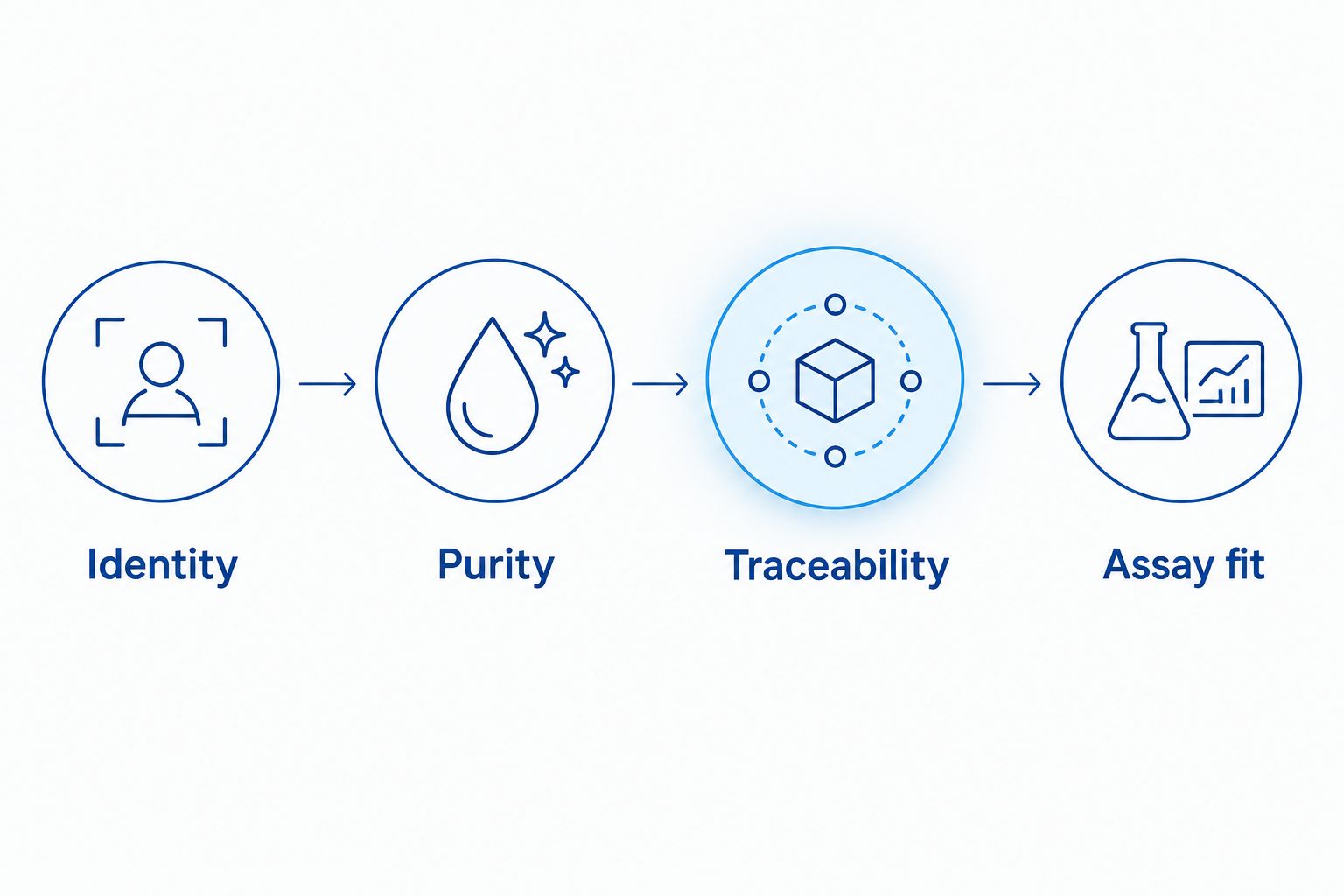
Set acceptance criteria before comparing materials. If a property matters to your assay, request evidence that measures that property rather than treating an unrelated result as a substitute.
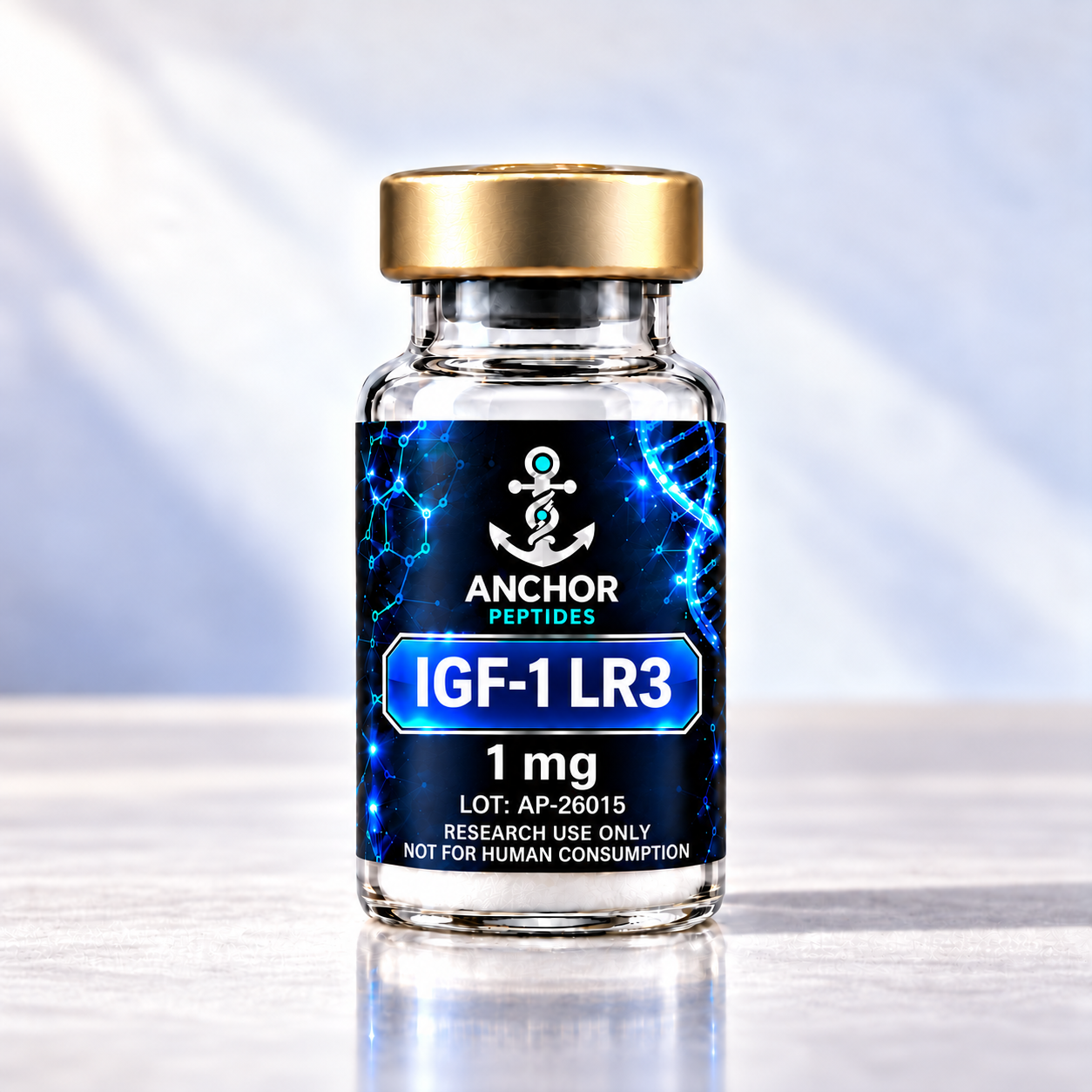
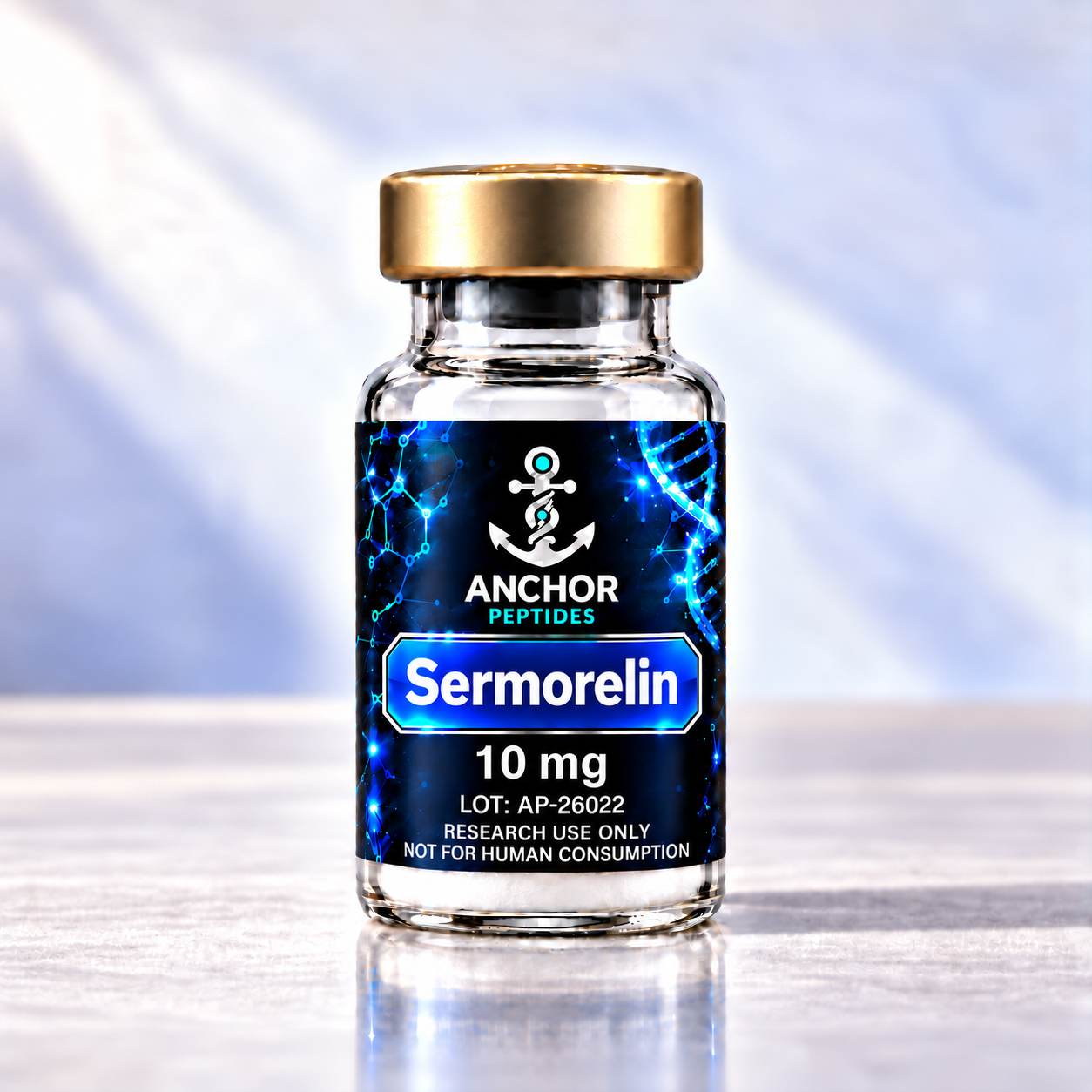
These catalog entries match the single-compound IGF and defined GHRH-fragment questions discussed above. Product selection remains conditional on the relevant documentation and your laboratory's acceptance criteria.
Measure synthesis, not just a related signal
A defensible 2026 study distinguishes the proposed mechanism from the primary endpoint. Phosphorylation—a chemical modification involved in signaling—can indicate pathway activity, but it does not directly quantify new muscle protein production.
Stable-isotope amino acid incorporation methods track labeled amino acids entering protein. Puromycin-based assays detect labeling associated with newly synthesized polypeptides; interpretation depends on the assay design and controls. Neither method eliminates the need to account for cell condition and experimental context.
Build the interpretation around these checks:
- Primary endpoint: Specify the measurement that answers the synthesis question.
- Model relevance: Establish that the experimental system supports the pathway being studied.
- Controls: Include the relevant baseline, vehicle, and assay controls.
- Cell condition: Evaluate whether changes in viability or cell abundance explain the readout.
- Attribution: Use component controls when the question requires separating a blend's effects.
An increase in total protein is also not automatically an increase in synthesis. Protein abundance reflects both production and loss, so the endpoint must distinguish the process your hypothesis concerns.
How the ranking works
This 2026 ranking uses pathway fit, endpoint fit, documentation, and interpretability. IGF-1 LR3 leads for an IGF-focused question; the GHRH materials and combined blend occupy narrower experimental slots.
The ranking does not claim comparative efficacy, verified batch performance, or head-to-head testing. A higher position means a closer match to the stated research question—not a stronger biological effect.
Which research peptide should you choose?
Start with IGF-1 LR3 when your hypothesis concerns IGF-related signaling and your model can measure the downstream synthesis response. Choose Sermorelin for a defined GHRH-fragment question, Tesamorelin for a distinct GHRH-analogue comparison, and the CJC-1295 No DAC & Ipamorelin blend for the combination itself.
For an Anchorpeptide research peptide selection, documentation and model fit are gating decisions. If either fails your acceptance criteria, do not treat the ranking as a reason to proceed.
FAQ
What are the best muscle protein synthesis research peptides in 2026?
IGF-1 LR3 is the first candidate in this shortlist for an IGF-pathway experiment. Sermorelin, Tesamorelin, and CJC-1295 No DAC & Ipamorelin address narrower upstream signaling questions; this ranking does not establish increased muscle protein synthesis.
Is IGF-1 LR3 better than Sermorelin for laboratory research?
IGF-1 LR3 is better aligned with an IGF-pathway question, while Sermorelin fits a defined GHRH-fragment question. Neither is universally better; the experimental model and primary endpoint determine the appropriate choice.
Can I use a signaling marker to prove muscle protein synthesis increased?
A signaling marker alone does not prove increased muscle protein synthesis. Use an endpoint that measures new protein production and interpret signaling results as supporting mechanistic evidence.
Does a peptide Certificate of Analysis prove biological activity?
A Certificate of Analysis establishes only what its reported tests support. Identity or chromatographic purity results do not independently demonstrate biological activity in your experimental model.
Is a peptide blend better than a single research compound?
A blend fits a combination-specific question, while a single compound is easier to interpret for component-level attribution. Separate component controls are needed when your study must distinguish individual contributions.
Does an HPLC purity result establish sterility?
An HPLC purity result does not establish sterility. HPLC evaluates separation and detection under specified analytical conditions; sterility requires evidence from an appropriate separate assessment.
Are these peptides intended for human or veterinary use?
The materials discussed here are for qualified laboratory and in-vitro research only. This guide provides no human or veterinary use advice and makes no therapeutic or consumer health claims.
One last thing
More protein in a sample does not, by itself, mean faster protein synthesis. Before selecting a compound, write the exact observation that would support your hypothesis—and the alternative explanations your controls must exclude. That decision is more useful than a longer peptide shortlist.
Related guides
- Growth hormone secretagogue peptides for research
- Tissue-repair research peptides for lab studies
- Anti-inflammatory research peptides
- Longevity research peptides for cellular studies