

Best overall for mitochondrial membrane studies: SS-31. Best for mitochondrial-derived peptide research: MOTS-C. Best for tissue-repair models: BPC-157. Best for a short-peptide gene-expression hypothesis: Prostamax. This 2026 guide ranks research fit—not lifespan effects—and covers compounds listed by Anchorpeptide for laboratory and in-vitro research only.
- For best longevity research peptides, SS-31 is the default for mitochondrial membrane questions—not a proven longevity intervention.
- MOTS-C fits mitochondrial-derived peptide and cellular metabolism research; BPC-157 fits tissue-repair models.
- Prostamax fits a defined short-peptide gene-expression hypothesis, not an unspecified anti-aging screen.
- Anchorpeptide research peptides require product-specific documentation review before laboratory selection.
Why this matters
Longevity is a research theme, not a single cellular endpoint. Mitochondrial function, gene expression, and tissue-repair signaling require different experimental questions and controls. A compound relevant to one does not automatically answer another.
The best longevity research peptides are the ones that match a defined cellular question and a measurable endpoint. A favorable result in a cell model does not establish longer organismal lifespan, clinical benefit, or suitability for human use.
Anchorpeptide is best suited to qualified US researchers evaluating research-grade peptides and blends for laboratory and in-vitro studies. Keep that boundary explicit in your 2026 purchasing brief: these selections concern research materials, not personal-use products or treatment options.
What makes the best longevity research peptides?
Use these criteria before comparing compound names. A recognizable name cannot compensate for a poorly matched model or incomplete analytical evidence.
- Research fit: Match the compound's stated research context to your hypothesis. Mitochondrial membrane work and gene-expression work are not interchangeable.
- Model relevance: Establish that your cell system can support the pathway or biological process you intend to investigate.
- Analytical evidence: Review evidence for identity and purity separately. Neither measurement alone establishes biological activity.
- Batch traceability: Connect the received material to its lot identifier and the documentation reviewed for that lot.
- Interpretability: Favor a design that separates the intended endpoint from changes in cell number, viability, or assay interference.
For a 2026 shortlist, apply these criteria before deciding which compound deserves a pilot experiment. Treat incomplete documentation as an unresolved selection issue, not as evidence of either acceptable or unacceptable quality.
Best longevity research peptides at a glance
The order below prioritizes a specific research question over a broad longevity label. These compounds occupy distinct use-case slots; the table does not compare demonstrated lifespan extension.
| Rank and compound | Best for | Standout research feature | Key limitation |
|---|---|---|---|
| 1. SS-31 | Mitochondrial membrane studies | Tetrapeptide described as associating with cardiolipin in the inner mitochondrial membrane | Membrane association does not establish an aging-related outcome |
| 2. MOTS-C | Mitochondrial-derived peptide studies | 16-amino-acid peptide described in cellular metabolism and AMPK research | A metabolic readout alone does not establish longevity relevance |
| 3. BPC-157 | Tissue-repair research models | Synthetic pentadecapeptide described in tissue-repair and angiogenesis research | Repair-model findings do not establish lifespan effects |
| 4. Prostamax | Short-peptide gene-expression hypotheses | Tetrapeptide with the sequence Lys-Glu-Asp-Pro | A defined sequence does not establish target specificity or activity |
1. SS-31: best longevity research peptide for membrane studies
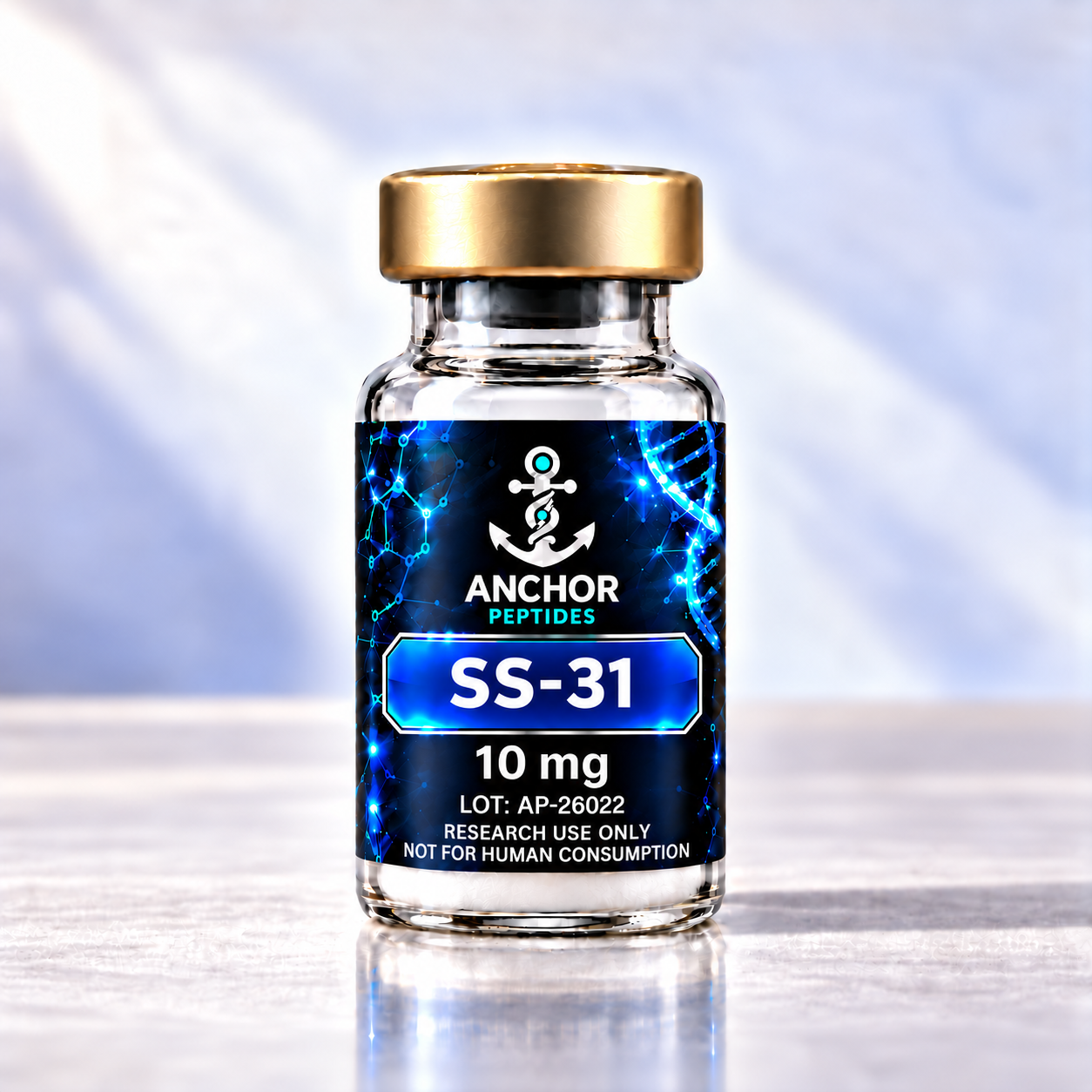
SS-31, also called elamipretide, is described in the supplied catalog as a mitochondria-targeted tetrapeptide that associates with cardiolipin in the inner mitochondrial membrane. A tetrapeptide contains 4 amino-acid residues. Cardiolipin is a phospholipid associated with mitochondrial membranes.
That description gives SS-31 the clearest place in this shortlist when your question specifically concerns mitochondrial membrane biology. It does not establish that a particular vial has demonstrated activity or that a cellular result translates into a longevity outcome.
SS-31 pros:
- Provides a specific mitochondrial membrane research context rather than a general wellness premise.
- Fits a hypothesis organized around cardiolipin-associated biology.
- Offers a distinct research focus from mitochondrial-derived peptide signaling.
SS-31 cons:
- Membrane association alone does not establish the direction or magnitude of a cellular response.
- A catalog description cannot replace lot-specific identity, purity, or activity evidence.
- Mitochondrial findings require additional interpretation before making any aging-related claim.
Best for: Qualified researchers with a defined mitochondrial membrane question and suitable cellular readouts.
Before selection, write down the result that would support your hypothesis and the result that would contradict it. If both an increase and a decrease in your endpoint would be called beneficial, refine the hypothesis first.
Verdict: Buy for a defined membrane-focused study only after documentation review; skip as an unspecified longevity intervention.
2. MOTS-C: best longevity research peptide for metabolism studies
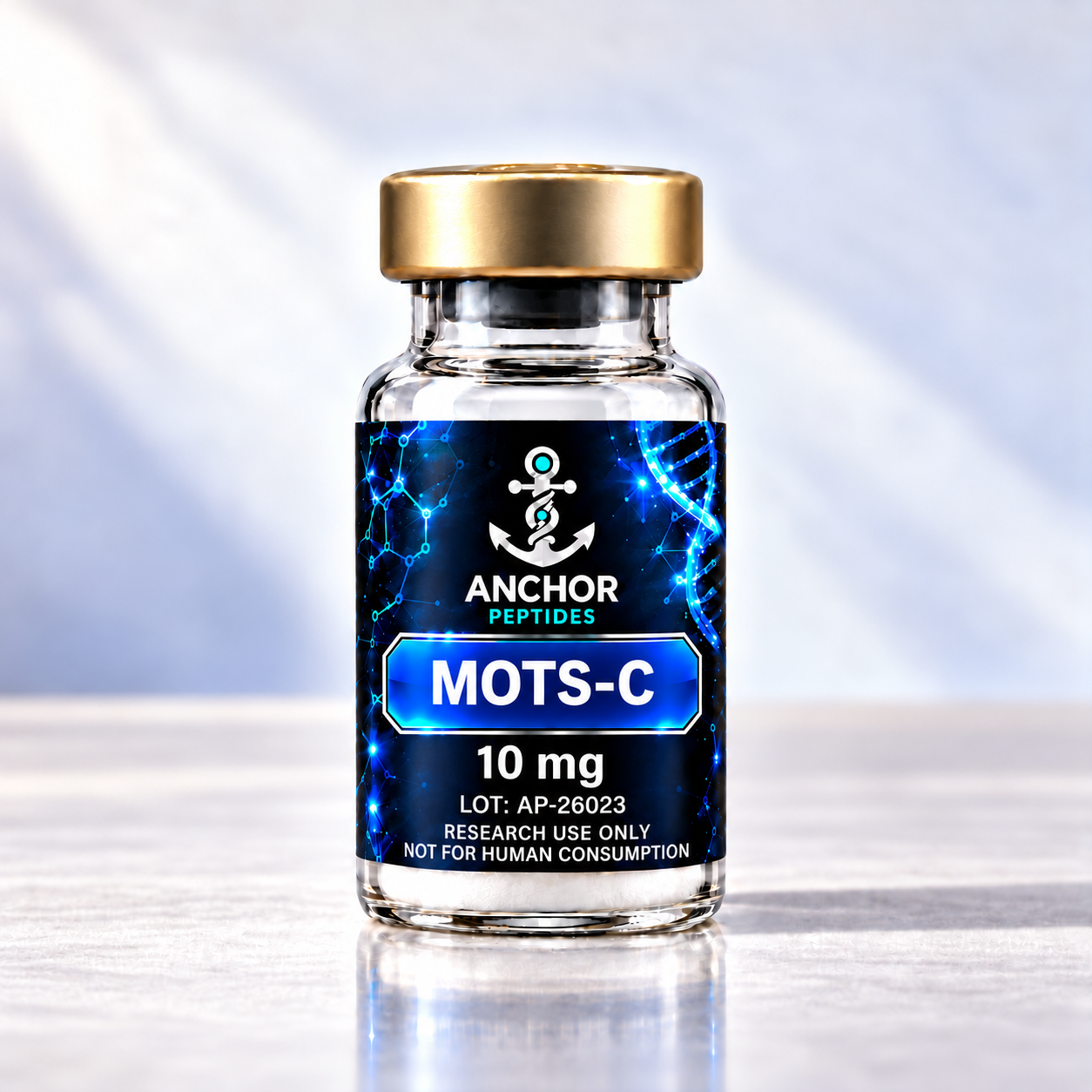
MOTS-C is described in the supplied catalog as a 16-amino-acid mitochondrial-derived peptide encoded within the mitochondrial genome. Its listed research context includes cellular metabolism and AMP-activated protein kinase, abbreviated AMPK, a cellular energy-sensing kinase.
MOTS-C belongs ahead of the other selections when your experimental question concerns mitochondrial-derived peptide biology rather than direct membrane association. SS-31 and MOTS-C share a mitochondrial theme, but their catalog descriptions do not make them equivalent experimental tools.
MOTS-C pros:
- Has a stated research context in cellular metabolism.
- Supports a distinct mitochondrial-derived peptide hypothesis.
- Provides a clearly differentiated selection from membrane-focused SS-31.
MOTS-C cons:
- Changes in metabolic measurements do not independently establish an aging mechanism.
- AMPK-related interpretation requires a readout suited to the specific pathway question.
- Sequence length does not establish identity, purity, or biological activity in the received material.
Best for: Researchers investigating mitochondrial-derived peptide biology within a defined cellular metabolism model.
Specify whether your experiment measures pathway activity, cellular energy handling, or another endpoint. Those measurements answer different questions. Do not group them under a single longevity score without an explicit scientific rationale.
Verdict: Buy for a defined mitochondrial-derived peptide study after documentation review; skip when the hypothesis specifically requires membrane association.
Two mitochondrial research candidates
The following Anchorpeptide research peptides correspond to the distinct mitochondrial questions described above. Product descriptions establish the catalog's stated research context, not a head-to-head performance result or confirmation of testing for a particular lot.
3. BPC-157: best longevity research peptide for repair models
BPC-157 is described in the supplied catalog as a synthetic pentadecapeptide based on a sequence from a gastric protein. A pentadecapeptide contains 15 amino-acid residues. Its stated research context includes tissue repair and angiogenesis, the formation of new blood vessels.
BPC-157 earns a place here only when repair-related biology is the actual experimental subject. Calling a repair assay a longevity assay does not change what the experiment measures.
BPC-157 pros:
- Has a stated tissue-repair research context.
- Provides a separate use-case slot from mitochondrial studies.
- Allows a repair-related hypothesis to be considered without introducing a multi-compound blend.
BPC-157 cons:
- Tissue-repair findings do not independently establish effects on cellular aging.
- An in-vitro result does not establish tissue-level or organism-level outcomes.
- The catalog description does not demonstrate activity in your selected cell system.
Best for: Researchers whose defined cellular question concerns repair-associated processes rather than mitochondrial metabolism.
Choose endpoints that distinguish your intended process from general changes in proliferation or cell survival. An apparent improvement in a repair-related readout needs interpretation within the model, not an automatic anti-aging label.
Verdict: Buy for a justified repair-model study after documentation review; skip for a mitochondria-specific hypothesis.
4. Prostamax: best longevity research peptide for gene-expression work
Prostamax is described in the supplied catalog as a synthetic tetrapeptide with the sequence Lys-Glu-Asp-Pro, studied in gene-expression research. The sequence contains 4 amino-acid residues: lysine, glutamic acid, aspartic acid, and proline.
Prostamax fits a narrow, hypothesis-led gene-expression project. Gene expression describes the production of RNA or protein from genetic information; a change in expression is not automatically a beneficial change.
Prostamax pros:
- Has an explicitly stated short-peptide sequence.
- Provides a distinct gene-expression research context.
- Fits a project that defines its target transcripts or proteins before screening.
Prostamax cons:
- A sequence description does not establish target specificity.
- Gene-expression changes alone do not establish functional consequences.
- The supplied description does not establish a longevity-specific mechanism or outcome.
Best for: Researchers with a defined short-peptide gene-expression hypothesis and an independent functional endpoint.
Avoid selecting Prostamax merely because gene regulation sounds relevant to aging. Identify the biological question first, then determine whether the available literature and product documentation justify including this compound.
Verdict: Hold until the gene-expression rationale is explicit; skip an open-ended anti-aging interpretation.
Build an interpretable cellular study
For a 2026 study plan, separate compound selection from assay qualification. An assay is a measurement procedure; its signal must support the conclusion you intend to draw.
The central challenge in assay development for research labs is connecting a measurable signal to a defined biological question. A response that reflects fewer viable cells, for example, cannot automatically be interpreted as selective pathway inhibition.
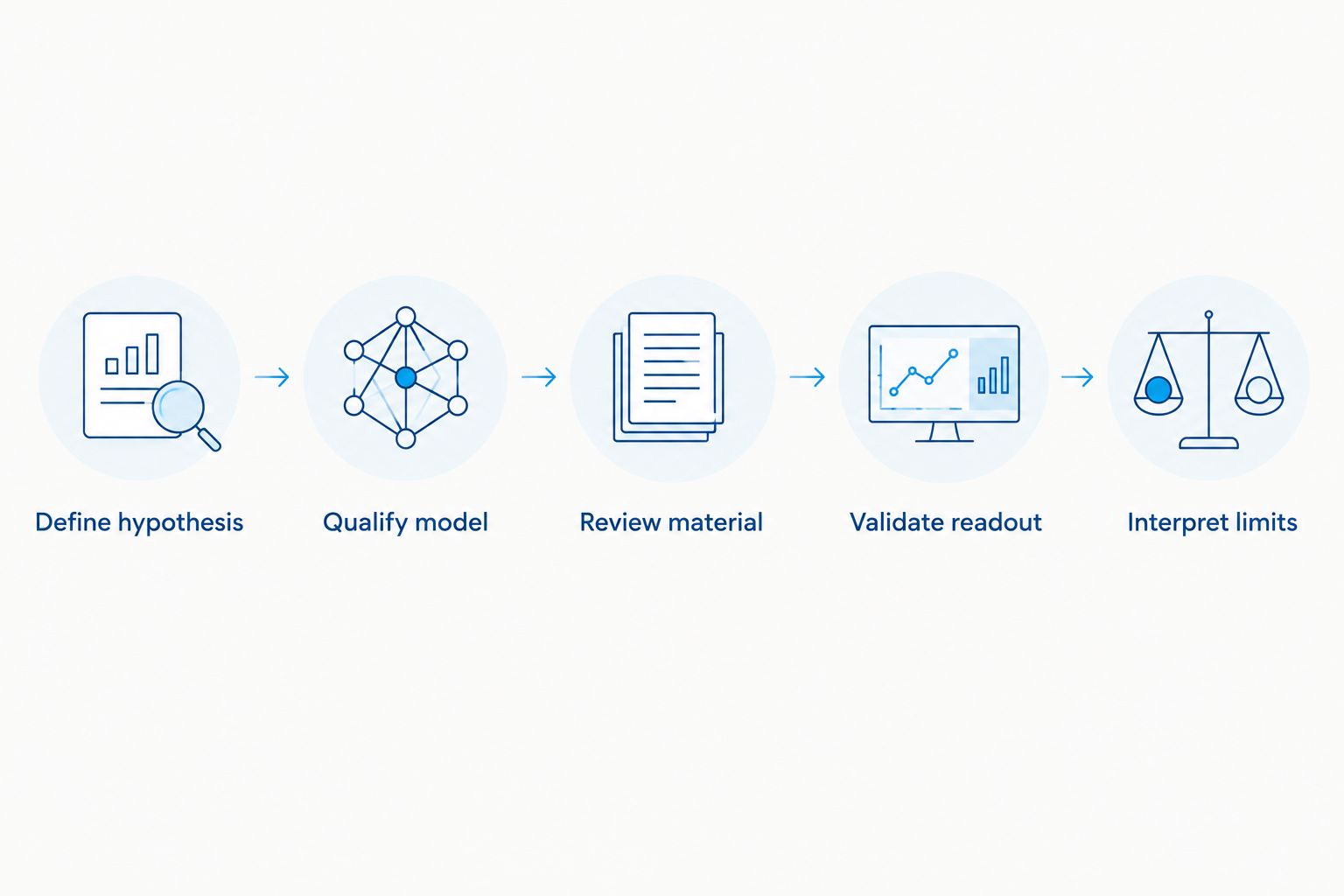
Use this sequence to keep the selection tied to the experiment:
- Define hypothesis: State the process you expect the compound to affect and the observation that would challenge that expectation.
- Qualify model: Establish that the cellular system supports the biological question.
- Review material: Evaluate the compound identity, relevant analytical evidence, and lot linkage.
- Validate readout: Check that the measurement distinguishes the intended signal from interference or general cellular effects.
- Interpret limits: Report what the model measured without extending the result to lifespan or clinical benefit.
A negative result also needs this framework. It can reflect an unsupported hypothesis, an unsuitable model, an ineffective measurement, or a material issue; the endpoint alone does not distinguish those explanations.
Read analytical documentation without overinterpreting it
A Certificate of Analysis, or CoA, records analytical results for the material identified in the document. Anchorpeptide describes its offering as research-grade peptides and blends with Certificates of Analysis; confirm the document relevant to the specific product and lot under consideration.
For your 2026 review, separate the following questions:
- Identity: Does the analytical evidence support the stated compound identity? Mass spectrometry measures mass-to-charge ratios; interpretation depends on the method and supporting information.
- Purity: What method produced the reported result? High-performance liquid chromatography, or HPLC, separates sample components under specified conditions.
- Content: Does the documentation establish peptide amount, or does it report a different measurement? Chromatographic area percentage is not automatically peptide mass content.
- Traceability: Does the document's sample or lot identifier match the received material?
Neither a chromatogram nor a mass spectrum alone establishes cellular potency, sterility, or suitability for your assay. Those are separate questions requiring relevant evidence.
For Anchorpeptide research peptides, keep the review product-specific. Do not transfer a result from one compound, lot, or blend to another, even when the names or intended research areas overlap.
How we ranked these research peptides
This ranking uses the supplied catalog descriptions and the criteria above: research fit, model relevance, analytical evidence, batch traceability, and interpretability. It is a use-case ranking, not a head-to-head experimental comparison.
SS-31 takes the default position because its description gives a specific mitochondrial membrane context. MOTS-C, BPC-157, and Prostamax occupy different experimental slots. No position represents demonstrated lifespan extension, verified lot quality, or measured superiority over the other compounds.
Which longevity research peptide should you choose?
Choose SS-31 when your question concerns mitochondrial membrane biology. Choose MOTS-C for a mitochondrial-derived peptide metabolism question, BPC-157 for a repair-model question, and Prostamax only after defining the gene-expression rationale.
If you cannot name the cellular process and endpoint, do not choose a compound yet. The next move is a sharper study question—not a broader peptide shortlist.
FAQ
What’s the best longevity research peptide for cellular studies?
SS-31 is the default in this guide for a defined mitochondrial membrane study. That ranking concerns research fit, not demonstrated lifespan extension or a verified result for a particular lot.
Is SS-31 better than MOTS-C for mitochondrial research?
SS-31 fits a membrane-focused question, while MOTS-C fits mitochondrial-derived peptide and cellular metabolism research. The supplied catalog descriptions do not establish head-to-head superiority.
Does studying BPC-157 establish an anti-aging effect?
No. A BPC-157 tissue-repair experiment establishes only what its model and measurements support; repair-related results do not independently establish effects on aging or lifespan.
Is Prostamax a proven longevity peptide?
The supplied catalog description does not establish Prostamax as a proven longevity peptide. It identifies a synthetic tetrapeptide studied in gene-expression research, which requires a specific experimental rationale.
Does a high HPLC purity result prove biological activity?
No. HPLC characterizes sample components under specified analytical conditions; a purity result does not independently establish identity, peptide content, or biological activity.
What should I check before selecting research peptides in 2026?
Check the experimental rationale, model relevance, product-specific analytical evidence, and lot linkage. Confirm which measurements the documentation actually supports before accepting the material for your study.
Are these peptides intended for human or veterinary use?
No. This guide addresses laboratory and in-vitro research only and provides no human or veterinary use recommendations.
One last thing
A compound can have the expected identity and still be unsuitable for your experiment. Analytical acceptance and biological suitability are separate decisions. Record both in your 2026 study file so a documented material is never mistaken for a validated experimental tool.
Related guides
- Best GLP-1 receptor agonist research peptides
- Best tissue-repair research peptides for lab studies
- Best growth hormone secretagogue peptides for research