

Best overall for a mitochondria-focused research question: SS-31. Best for sleep-signaling studies: DSIP. Best for growth-factor signaling: IGF-1 LR3. Best exploratory option for metabolism-focused designs: MOTS-C. This 2026 guide compares the best cognitive research peptides by experimental fit—not demonstrated cognitive benefit—and helps you evaluate Anchorpeptide research peptides for laboratory and in-vitro work only.
- The best cognitive research peptides match a defined mechanism; no compound here earns a universal cognition ranking.
- SS-31 is the strongest fit here for a mitochondria-targeted research question, not a proven cognitive outcome.
- DSIP fits sleep-regulation research; IGF-1 LR3 fits growth-factor signaling studies.
- MOTS-C belongs in exploratory metabolism-focused designs, with neuroscience relevance established separately.
- Evaluate Anchorpeptide research peptides through product-specific documentation; do not assume every batch has the same testing.
Why this matters
A cognitive-research label does not define a mechanism. Sleep regulation, mitochondrial function, growth-factor signaling, and cellular metabolism are different experimental questions, even when a neuroscience program investigates several of them.
Choose the pathway before choosing the peptide. A result from a cellular assay does not establish learning, memory, or cognitive performance. Your model, controls, and measured endpoint determine what the experiment can support.
For a 2026 shortlist, distinguish three decisions: whether the compound matches your hypothesis, whether the supplied material is adequately characterized, and whether your model can answer the question. None substitutes for another.
Anchorpeptide serves US laboratory and in-vitro researchers evaluating research-grade peptides and blends. These materials are not recommendations for human or veterinary use.
What makes the best cognitive research peptides?
Use these criteria before comparing names. They assess research suitability rather than presumed potency or consumer appeal.
- Mechanistic fit: Select a compound whose stated research mechanism matches your experimental question. A mitochondrial target is not interchangeable with a sleep-signaling research focus.
- Model relevance: Establish why your chosen cell system or other approved research model addresses the question. A neuroscience heading alone does not establish relevance.
- Identity evidence: Review analytical evidence supporting the identity of the supplied compound. A product name is not an identity test.
- Purity interpretation: Determine what the reported purity method measures. A chromatographic percentage does not establish biological activity or the absence of every contaminant.
- Batch traceability: Connect the material identifier to the applicable analytical report. Documentation without a matching batch reference does not establish that connection.
- Endpoint discipline: Define what constitutes an interpretable result before selecting material. Separate target-associated measurements from downstream functional claims.
For your 2026 evaluation, treat missing decision-critical documentation as a reason to pause selection. Do not replace analytical evidence with a broad quality statement.
Cognitive research peptides at a glance
The order below prioritizes a clearly stated experimental use case. It does not rank cognitive efficacy, clinical suitability, or performance across different mechanisms.
| Research compound | Best for | Standout characteristic in the supplied catalog | Key limitation |
|---|---|---|---|
| SS-31 | Mitochondria-targeted research questions | Tetrapeptide described as associating with cardiolipin in the inner mitochondrial membrane | Mechanistic targeting does not establish a cognitive outcome |
| DSIP | Sleep-regulation and circadian-signaling studies | Neuropeptide investigated in sleep and circadian research | Sleep-related endpoints do not establish learning or memory effects |
| IGF-1 LR3 | Growth-factor signaling designs | Modified analogue of insulin-like growth factor 1 | Pathway relevance must be established in your neuroscience model |
| MOTS-C | Exploratory metabolism-focused designs | Mitochondrial-derived peptide studied in cellular metabolism and AMPK research | The supplied description does not establish neuroscience-specific performance |
The comparison is a decision tree, not an efficacy leaderboard. Start with the row matching your hypothesis, then assess the evidence and documentation needed for that specific experiment.
1. SS-31: best research peptide for mitochondrial questions
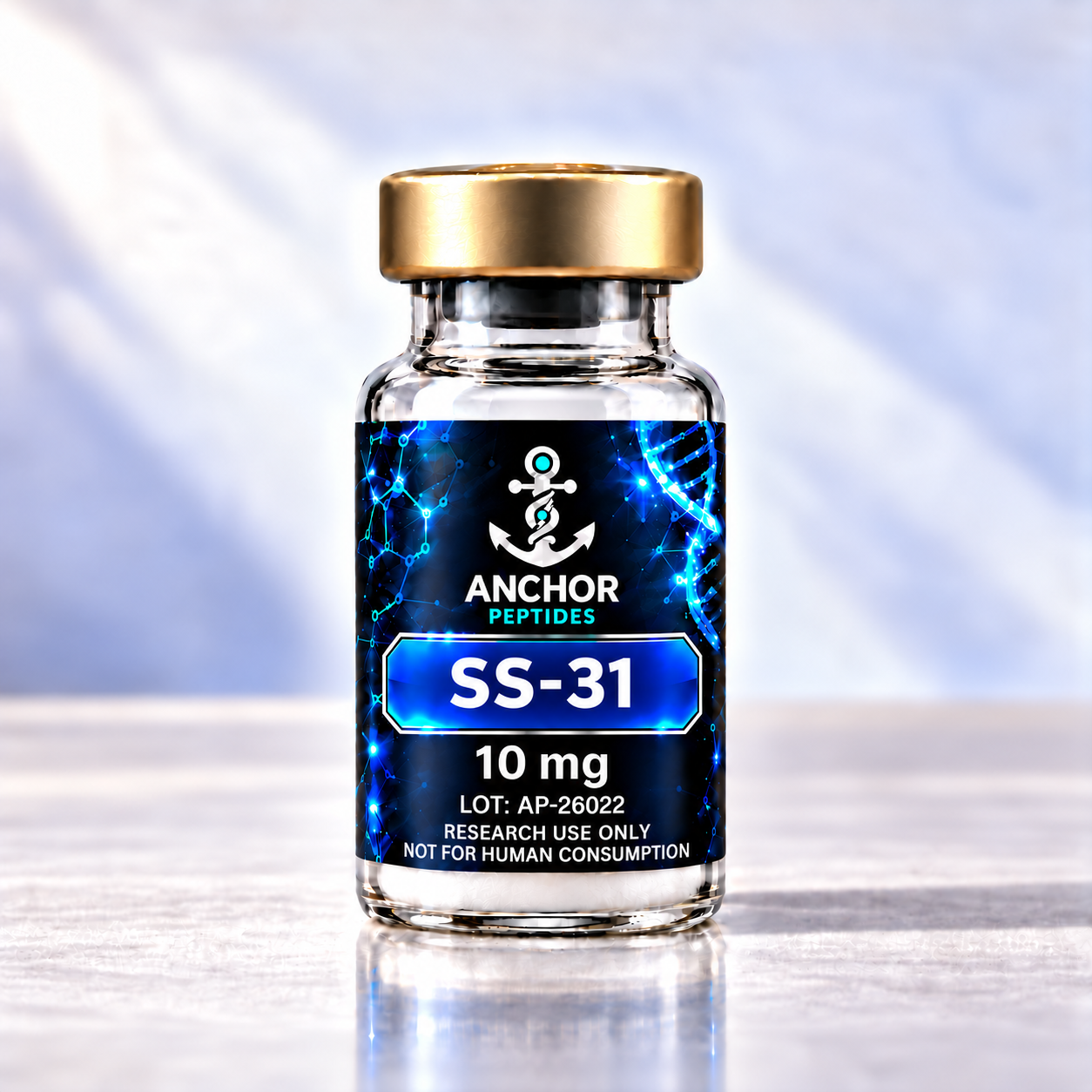
SS-31, also called elamipretide, is a mitochondria-targeted tetrapeptide: a peptide containing 4 amino-acid residues. The supplied catalog describes its association with cardiolipin, a lipid in the inner mitochondrial membrane.
That description makes SS-31 the clearest fit in this shortlist when your question specifically concerns mitochondrial biology. It does not establish improved cognition, a particular response in your model, or an experimental outcome.
SS-31 pros:
- Has a defined mitochondrial research focus in the catalog description.
- Provides a more specific starting mechanism than a general cognitive-research label.
- Fits a shortlist organized around mitochondrial rather than sleep or growth-factor questions.
SS-31 cons:
- Mitochondrial association alone does not demonstrate the effect your experiment seeks to measure.
- The supplied product description does not establish batch-specific identity, purity, or functional activity.
- A mitochondrial endpoint cannot independently support a cognitive-performance claim.
Best for: Researchers whose hypothesis explicitly concerns mitochondrial mechanisms and whose model can measure the relevant response.
Before selecting SS-31, identify which measurement would distinguish your hypothesis from a nonspecific cellular response. Keep that criterion separate from material acceptance: a suitable mechanism and an acceptable analytical report answer different questions.
Verdict: Hold until the model and batch-documentation requirements are satisfied; then shortlist SS-31 for mitochondrial research.
2. DSIP: best research peptide for sleep-signaling questions
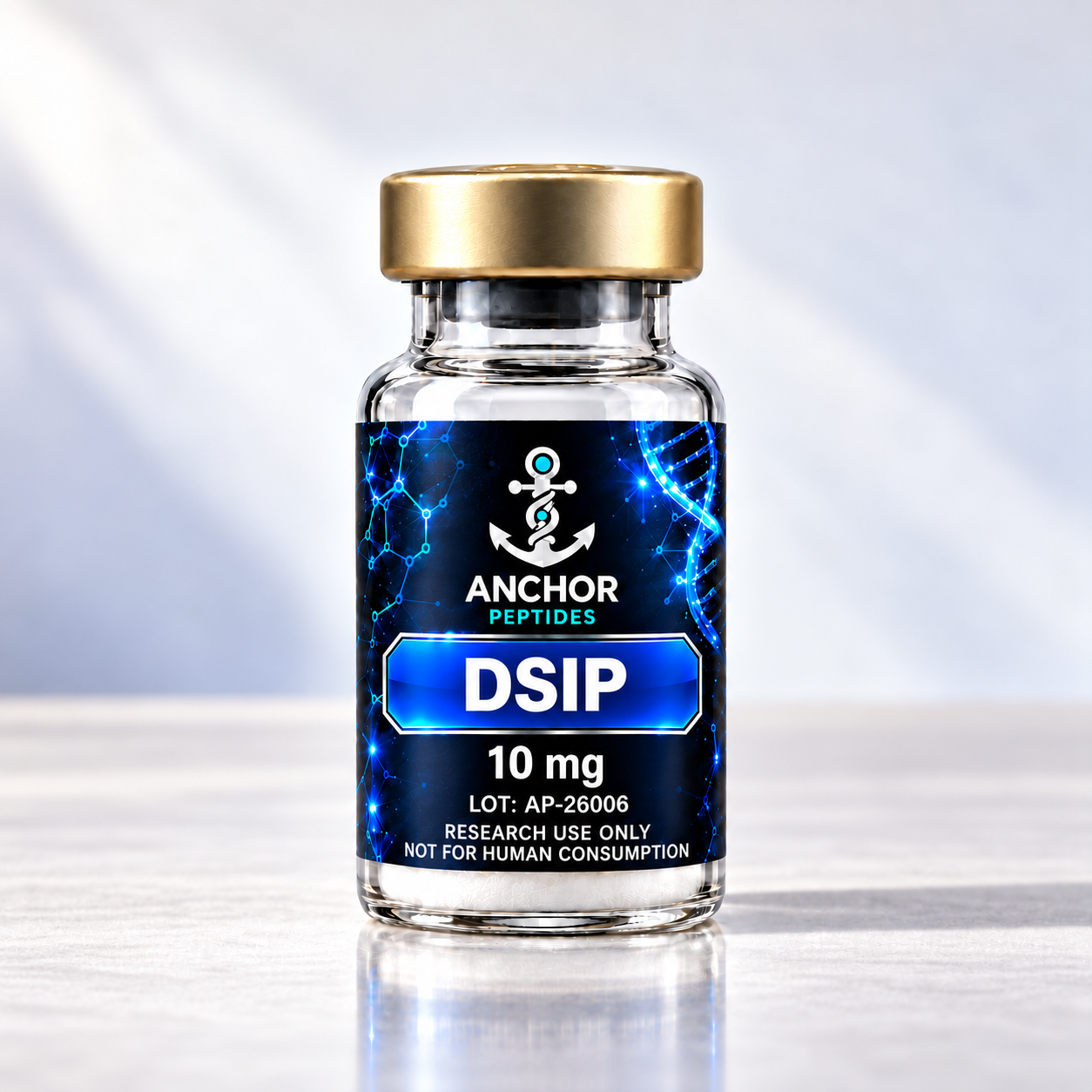
Delta Sleep-Inducing Peptide, abbreviated DSIP, is described in the supplied catalog as a naturally occurring neuropeptide investigated in sleep regulation and circadian signaling. A neuropeptide is a peptide involved in nervous-system signaling.
DSIP earns a distinct place here because the research question concerns sleep-associated signaling rather than mitochondrial targeting. Its name is not proof that an experiment will produce a sleep-related effect.
DSIP pros:
- Has an explicitly stated sleep-regulation research focus.
- Connects the shortlist to circadian-signaling questions rather than a generic cognition category.
- Provides a defined candidate when sleep-associated biology is the hypothesis under investigation.
DSIP cons:
- The supplied description does not establish a reproducible effect in your chosen model.
- Sleep-signaling measurements do not independently establish memory or learning outcomes.
- Product naming cannot replace a literature review or batch-specific analytical assessment.
Best for: Qualified researchers investigating sleep-regulation or circadian-signaling mechanisms within an appropriate research model.
Define whether your endpoint concerns signaling, timing, or another model-specific response. Avoid describing those endpoints collectively as cognition; that wording conceals the actual experimental question.
Verdict: Hold until model relevance is established; shortlist DSIP for sleep-signaling research, not general cognitive claims.
3. IGF-1 LR3: best research peptide for growth-factor signaling
IGF-1 LR3 is an analogue of insulin-like growth factor 1, abbreviated IGF-1. The supplied description identifies an arginine substitution at position 3 and a 13-amino-acid extension at the amino-terminal end.
These structural details distinguish the named analogue from an unspecified IGF-1 reagent. They do not establish how your neuroscience model will respond or whether a downstream measurement is specific to the pathway you intend to study.
IGF-1 LR3 pros:
- Has an explicitly identified growth-factor relationship.
- Includes defined structural modifications in the supplied description.
- Occupies a separate use-case slot from mitochondrial and sleep-signaling compounds.
IGF-1 LR3 cons:
- Growth-factor signaling is not itself a cognitive endpoint.
- Structural identity does not establish biological activity in the supplied material.
- The catalog excerpt does not establish neuroscience-specific performance.
Best for: Researchers with a defined IGF-related signaling hypothesis and a model capable of testing it.
Establish which observations would support pathway involvement and which would remain nonspecific. Keep the compound identity precise in experimental records; an analogue name is part of the reagent definition, not interchangeable shorthand.
Verdict: Hold until the signaling rationale and material requirements are documented; shortlist IGF-1 LR3 for growth-factor research.
4. MOTS-C: best exploratory peptide for metabolic questions
MOTS-C is described in the supplied catalog as a mitochondrial-derived peptide containing 16 amino-acid residues. Its stated research context includes cellular metabolism and AMP-activated protein kinase, abbreviated AMPK, a cellular energy-sensing enzyme.
MOTS-C belongs on this list only when metabolic signaling is the explicit question. The supplied description does not establish that it is a neuroscience-specific reagent or that it produces cognitive effects.
MOTS-C pros:
- Has a stated cellular-metabolism research focus.
- Offers a distinct question from SS-31's described mitochondrial membrane association.
- Includes a defined peptide length in the supplied product information.
MOTS-C cons:
- Neuroscience relevance requires justification beyond the supplied catalog description.
- Metabolic measurements cannot independently establish cognitive effects.
- The description does not establish batch-specific functional performance.
Best for: Exploratory designs connecting a defined metabolic hypothesis to a justified neuroscience model.
Do not select MOTS-C merely because the description mentions mitochondria. SS-31 and MOTS-C have different stated research contexts; the shared terminology does not make them substitutes.
Verdict: Skip MOTS-C for an undefined cognition question; hold for a justified metabolism-focused design.
Read the analytical documentation before selecting material
A Certificate of Analysis, or COA, reports analytical results for the material it identifies. Evaluate its scope rather than treating the document title as a universal quality guarantee.
For Anchorpeptide research peptides, request or review the applicable product and batch documents before making a material-acceptance decision. The brand description references COAs, but that does not establish which tests appear on every product or batch report.
- Identity: Mass spectrometry measures mass-to-charge characteristics that can support compound identification. A matching mass alone does not establish complete sequence identity or exclude every alternative structure.
- Relative purity: High-performance liquid chromatography, abbreviated HPLC, separates sample components under specified conditions. Reported peak-area purity is method-dependent and is not automatically a measurement of peptide content by mass.
- Traceability: Match the report's sample or batch identifier to the supplied material. A report for a different batch does not characterize the vial you are evaluating.

An HPLC result does not establish sterility, endotoxin status, or biological activity. Those questions require relevant evidence; do not infer an unreported result from a different analytical method.
Your 2026 acceptance record should distinguish the supplier's reported findings from your laboratory's interpretation. Record unresolved questions before experimental work rather than converting assumptions into reagent specifications.
Catalog examples for the two leading use cases
The following catalog entries correspond to the mitochondrial and sleep-signaling branches of this guide. Their titles identify the listed products; the cards do not establish analytical results, batch suitability, or biological performance.
How the ranking works
This 2026 ranking uses the supplied catalog descriptions to separate experimental use cases. Mechanistic fit comes first, followed by model relevance, identity evidence, purity interpretation, traceability, and endpoint discipline.
No comparative testing, cognitive-effect measurements, or batch-level analytical results underpin the ordering. The ranking identifies which question each compound fits; it does not identify a universal winner.
Which cognitive research peptide should you choose?
Choose SS-31 when mitochondrial targeting is the explicit research question. Choose DSIP for sleep-signaling questions, IGF-1 LR3 for a justified growth-factor design, and MOTS-C only for a clearly defined exploratory metabolic question.
If your brief says only cognitive research, pause selection. Rewrite it as a mechanism, model, and measurable endpoint before evaluating a reagent.
Anchorpeptide is a research-peptide option for qualified US laboratory and in-vitro researchers, not for personal cognitive enhancement. Select material only after reviewing the evidence relevant to your experiment.
FAQ
What’s the best cognitive research peptide for a neuroscience lab?
There is no universal best cognitive research peptide. SS-31 fits a mitochondria-targeted question, DSIP fits sleep-signaling research, IGF-1 LR3 fits growth-factor signaling, and MOTS-C fits exploratory metabolic questions.
Is SS-31 better than DSIP for cognitive research?
SS-31 and DSIP address different research questions, so this guide does not rank their cognitive efficacy. The supplied descriptions position SS-31 around mitochondrial targeting and DSIP around sleep-regulation and circadian signaling.
Does a high HPLC purity result prove a peptide works?
No, HPLC purity does not prove biological activity. It describes chromatographic results under specified analytical conditions, not performance in your experimental model.
What should a laboratory check on a peptide COA?
Check the material identifier, reported methods, results, and their connection to the supplied batch. Distinguish evidence supporting identity from relative purity and from any separately reported functional or contaminant testing.
Is MOTS-C established as a cognitive research reagent by this catalog?
No, the supplied MOTS-C description establishes a cellular-metabolism research context, not neuroscience-specific performance. A neuroscience application requires a separate model-specific rationale.
Does every Anchorpeptide batch have the same analytical documentation?
The supplied information does not establish identical documentation across every product or batch. Review the applicable report and confirm which tests were performed on the material under consideration.
Can these research peptides be used for personal cognitive enhancement?
No, this guide covers laboratory and in-vitro research only. It provides no human or veterinary use recommendations, therapeutic claims, or personal-use instructions.
One last thing
A well-characterized compound can still be the wrong reagent for your question. Analytical quality and experimental relevance are separate acceptance decisions; neither rescues a failure in the other.
For your 2026 shortlist, write the intended endpoint beside each candidate before reviewing the catalog. If you cannot explain what the compound will help you investigate without using the word cognition, sharpen the hypothesis first.
Related guides
- Best GLP-1 receptor agonist research peptides
- Best tissue-repair research peptides for lab studies
- Best growth hormone secretagogue peptides for research