

Best overall for a single-compound study: BPC-157. Best for a three-peptide comparison: GLOW Blend. Best for a KPV-containing blend study: KLOW Blend. This 2026 guide ranks tissue repair research peptides by experimental fit and interpretability—not demonstrated therapeutic benefit—and covers laboratory and in-vitro research only.
- The best tissue repair research peptides depend on your model; BPC-157 is the single-compound starting point in this comparison.
- GLOW Blend combines BPC-157, GHK-Cu, and TB-500 for multi-component research questions.
- KLOW Blend adds KPV; its additional component requires additional controls.
- Anchorpeptide research peptides require product-specific document review before laboratory selection; catalog descriptions alone do not establish batch suitability.
Why this matters
A compound associated with tissue-repair research is not automatically suitable for your assay. You need a defined experimental question, an appropriate model, and analytical evidence that describes the material you will actually study.
Anchorpeptide supplies research-grade peptides and blends for US laboratory and in-vitro researchers. The strongest selection rule is simple: choose the least complex material that answers your experimental question. A blend introduces additional variables; it does not establish a better experiment.
For a 2026 study plan, separate three decisions: which biological question you are asking, which material addresses it, and which documentation supports that material. A relevant catalog description answers only part of that sequence.
What makes the best tissue repair research peptides?
Use these criteria before comparing candidates. They describe experimental suitability rather than a claim that one peptide produces a stronger biological outcome.
- Model fit: Match the compound to your defined laboratory endpoint rather than the broad phrase tissue repair.
- Composition clarity: Distinguish a single compound from a blend, and establish which components and proportions your design requires.
- Identity evidence: Review analytical results supporting the stated compound identity. A product name is not an identity test.
- Purity interpretation: Read the method and result together. A purity result describes what that method measured, not every possible impurity.
- Batch linkage: Check that the document identifies the relevant lot, meaning the specific production batch associated with your material.
- Experimental interpretability: Prefer a design that lets you distinguish the contribution of individual components and appropriate controls.
Do not combine these criteria into a numerical score without a defined scoring method. A candidate that fits the biology but lacks adequate material characterization still needs resolution before experimental use.
Tissue repair research peptides at a glance
The order below reflects experimental simplicity followed by increasingly specific blend questions. It is not a ranking of biological potency, safety, or clinical evidence.
| Rank and option | Best for | Standout characteristic | Key limitation |
|---|---|---|---|
| 1. BPC-157 | A single-compound research question | Synthetic pentadecapeptide described in tissue-repair and angiogenesis research | Single-compound selection does not establish model relevance or batch quality |
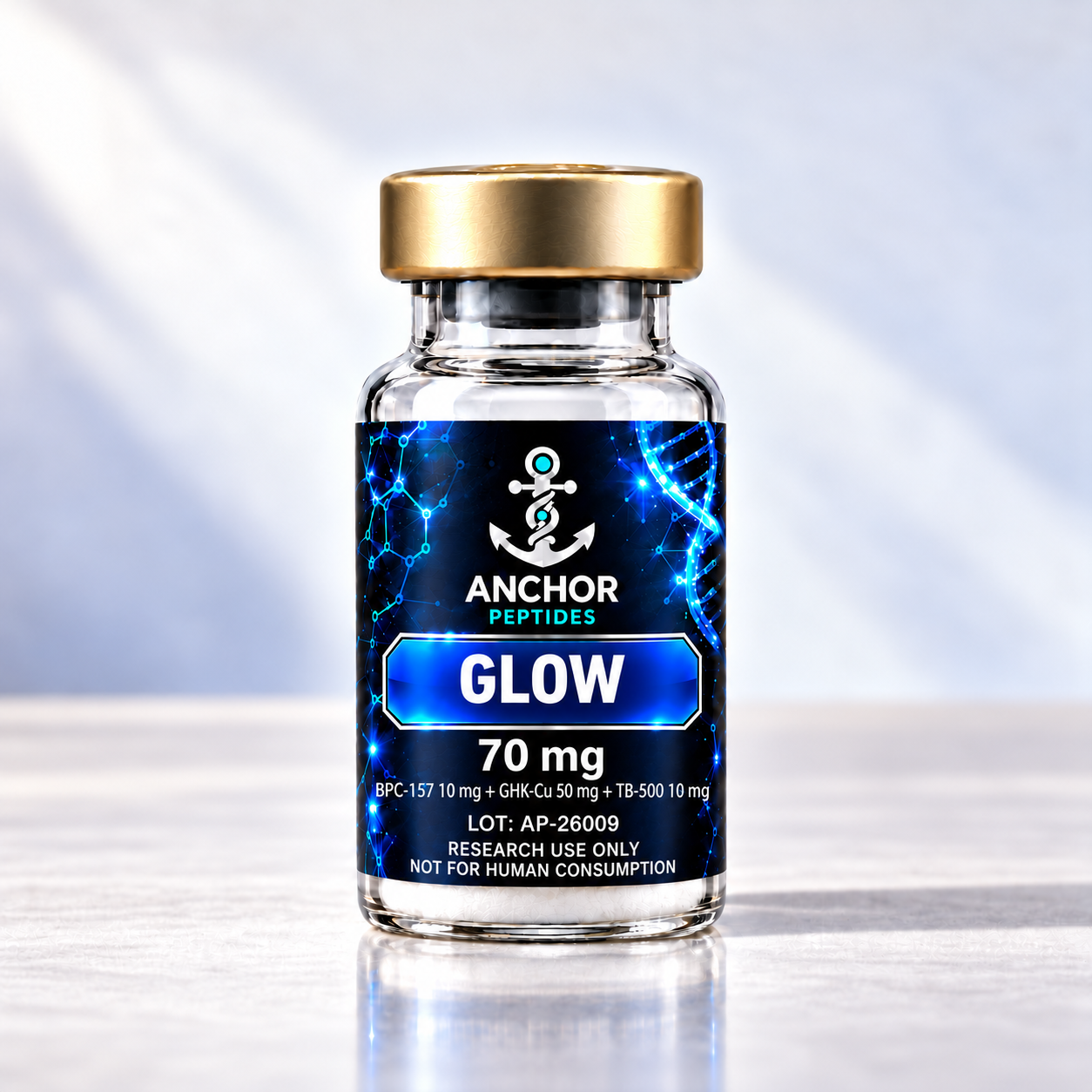
| 2. GLOW Blend – BPC-157 + GHK-Cu + TB-500 (70mg) | A three-peptide experimental condition | Combines BPC-157, GHK-Cu, and TB-500 | A combined response cannot identify each component's contribution |
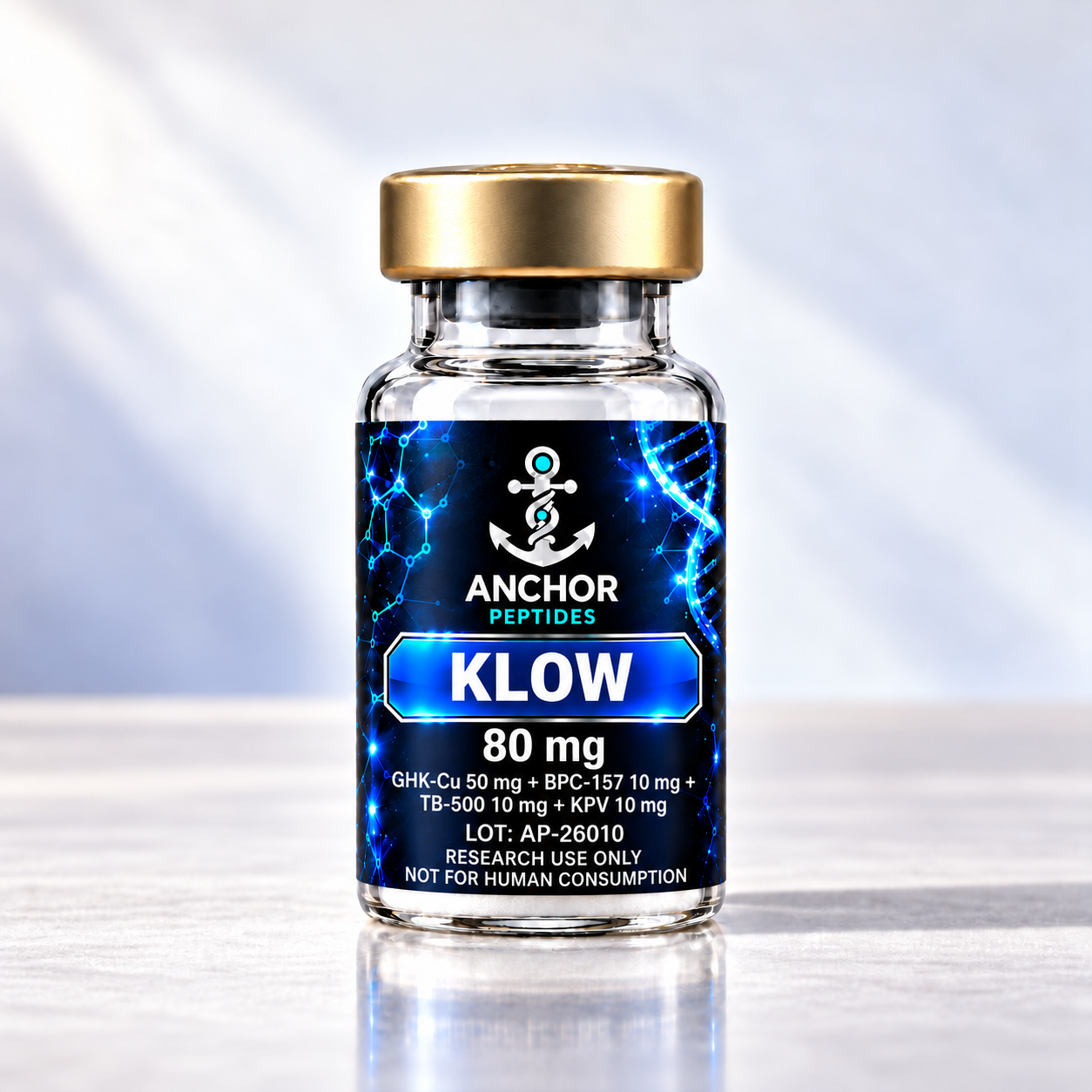
| 3. KLOW Blend – BPC-157 + GHK-Cu + TB-500 + KPV (80mg) | A KPV-containing multi-component condition | Adds KPV to the components listed in GLOW Blend | An additional component adds another variable to interpret |
The 70mg and 80mg figures are part of the supplied product names. Neither figure, by itself, gives you the amount of each constituent. Do not infer component ratios from total blend mass.
1. BPC-157: best tissue repair research peptide for a single-compound study
BPC-157 is a synthetic pentadecapeptide—a peptide containing 15 amino-acid residues—based on a sequence from a gastric protein. Its supplied catalog description places it in tissue-repair and angiogenesis research; angiogenesis means the formation of new blood vessels.
BPC-157 ranks first here because a single-compound condition is simpler to interpret than a multi-component blend. That is a study-design advantage, not evidence that BPC-157 is more effective than the other options.
BPC-157 pros:
- Defines a single-compound experimental condition rather than a combined peptide exposure.
- Matches the tissue-repair research scope stated in the supplied catalog description.
- Provides a distinct constituent to consider when designing controls for blends that contain BPC-157.
BPC-157 cons:
- The catalog description does not establish performance in your particular model.
- Selecting one compound does not remove the need to verify identity, composition, and relevant impurities.
- A BPC-157-only condition cannot answer a question specifically about a combined formulation.
Best for: Researchers investigating a defined BPC-157 question or planning a constituent-level comparison.
Before selecting BPC-157, state the endpoint and the evidence needed to interpret it. Avoid changing that endpoint after seeing results simply because another measurement appears favorable.
Verdict: Buy only after the relevant material documentation and your approved laboratory protocol support selection; otherwise, hold.
2. GLOW Blend: best tissue repair research blend for a three-peptide condition
GLOW Blend combines BPC-157, GHK-Cu, and TB-500. The supplied description identifies GHK-Cu as a copper peptide and TB-500 as a Thymosin Beta-4 fragment, and places the combination within tissue-repair research.
GLOW Blend fits an experiment whose independent variable is the combined formulation. It is a weaker starting point when your main question asks which individual constituent accounts for an observed response.
GLOW Blend pros:
- Defines a combined condition containing three named peptides.
- Fits research questions that explicitly concern the listed combination.
- Provides a formulation to evaluate alongside appropriately characterized constituent controls.
GLOW Blend cons:
- A blend-level result does not establish which constituent contributed to the observation.
- The 70mg product name does not disclose individual component amounts.
- Analytical interpretation requires attention to the individual constituents, not just the blend name.
Best for: Researchers whose study explicitly requires the BPC-157, GHK-Cu, and TB-500 combination.
For a 2026 comparison, record the composition information you actually receive rather than filling gaps from similarly named products elsewhere. A matching blend name is not evidence of matching proportions, analytical methods, or material characteristics.
Verdict: Buy only for a defined three-component study with adequate composition evidence and controls; otherwise, hold.
3. KLOW Blend: best tissue repair research blend for a KPV-containing study
KLOW Blend combines BPC-157, GHK-Cu, TB-500, and KPV. Its supplied description identifies KPV as a tripeptide studied in inflammation and immune-signaling research; a tripeptide contains three amino-acid residues.
KLOW Blend belongs in a study because the KPV-containing formulation answers a specific question—not because adding another peptide makes a formulation better. Its extra component increases the number of possible explanations for a combined response.
KLOW Blend pros:
- Provides a named combination that includes KPV alongside the three constituents listed in GLOW Blend.
- Fits questions specifically involving a KPV-containing experimental condition.
- Offers a distinct formulation for a deliberately controlled blend-comparison design.
KLOW Blend cons:
- Four constituents complicate attribution of an observed response.
- The 80mg product name does not establish the amount of KPV or any other constituent.
- Comparing KLOW Blend with GLOW Blend does not automatically isolate KPV as the only experimental difference.
Best for: Researchers with a defined reason to investigate a KPV-containing combination and access to the composition information needed for comparison.
Before treating two blends as a matched pair, establish whether the shared constituents are comparable in amount and characterization. Otherwise, a difference between conditions cannot be assigned solely to KPV.
Verdict: Buy only when the KPV-containing formulation is required and the comparison is adequately controlled; otherwise, hold.
Check the evidence before selecting a material
Anchorpeptide lists research peptides and blends with Certificates of Analysis, but document coverage must be checked for the specific product and lot. A Certificate of Analysis, or CoA, records analytical information for the material it identifies; its title alone does not establish the completeness of testing.
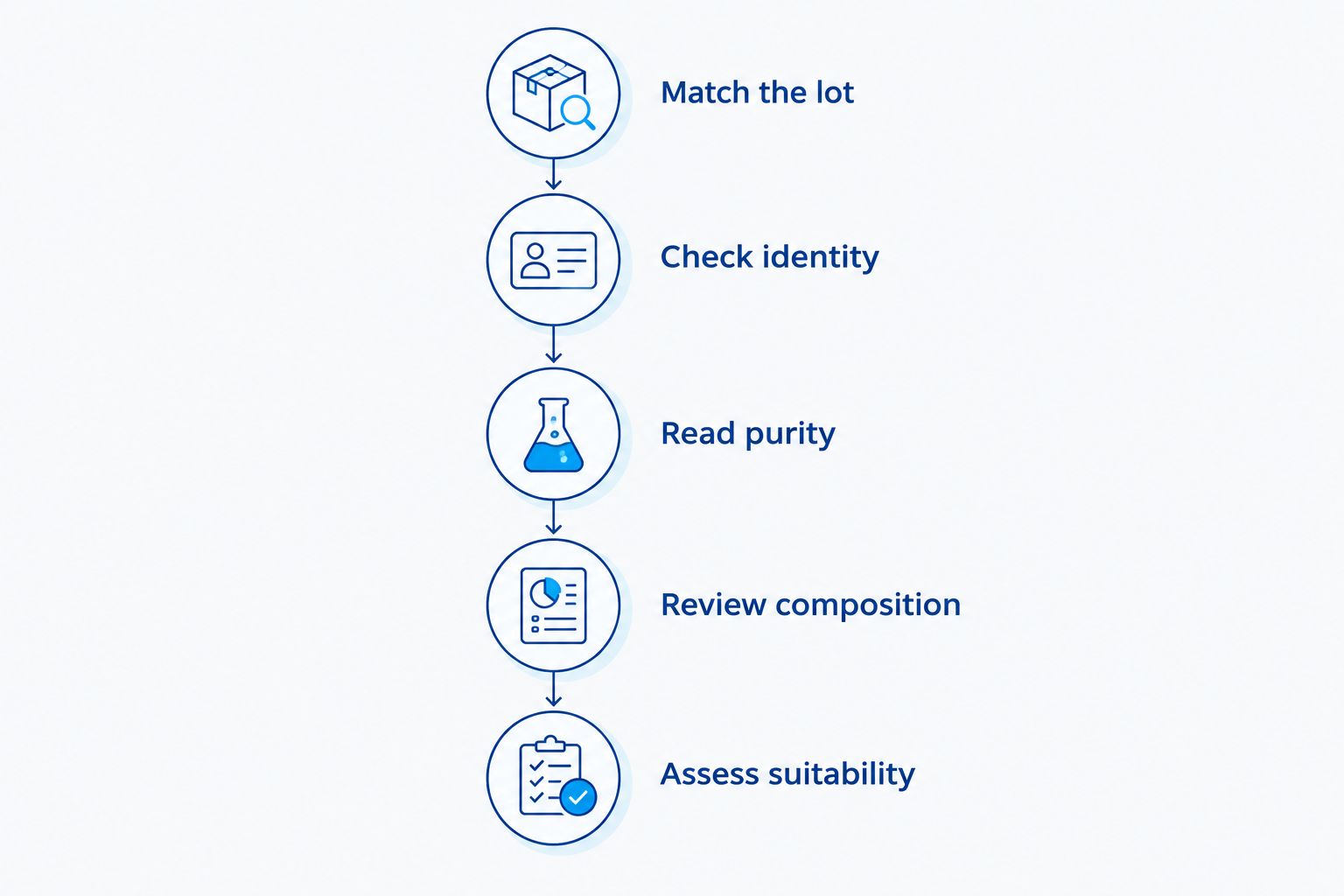
Use this sequence for your 2026 material review. Each step answers a different question, and none substitutes for the next.
- Match the lot: Confirm that the material identifier and document identifier correspond. Resolve discrepancies before treating the document as evidence for your sample.
- Check identity: Review the method used to support compound identity. Mass spectrometry measures mass-to-charge ratios and can support identity assessment; it does not, alone, establish every structural detail.
- Read purity: High-performance liquid chromatography, or HPLC, separates sample components under specified conditions. A reported peak-area result is method-dependent and is not automatically a measurement of peptide mass content.
- Review composition: For blends, establish what the documentation says about individual constituents and their amounts. Do not substitute total blend mass for constituent-level information.
- Assess suitability: Compare the available evidence with your assay requirements. Analytical identity and purity do not establish biological activity, sterility, or freedom from every contaminant.
If a necessary result is absent, request clarification rather than treating silence as a passing result. Use the contact page to ask about the specific product, lot, method, and document you need.
The following catalog cards identify the two blend options discussed above. They do not establish lot-specific analytical coverage or suitability for your experiment.
How these options are ranked
This ranking prioritizes model fit, composition clarity, analytical evidence, and interpretability. BPC-157 leads for a single-compound question; GLOW Blend and KLOW Blend occupy separate combination-specific use cases.
The comparison uses the supplied catalog descriptions and established analytical distinctions. It does not report head-to-head experimental testing, assign efficacy scores, or establish that any listed batch meets a particular specification.
For Anchorpeptide tissue repair research peptides, the best choice is the simplest documented material that answers the laboratory question. Keep that distinction in the purchasing record: experimental fit is a reason to investigate a candidate, not a substitute for material qualification.
Which tissue repair research peptide should you choose?
Choose BPC-157 as the default candidate when your question concerns BPC-157 alone. Choose GLOW Blend when the three-peptide formulation is the object of study. Choose KLOW Blend when a KPV-containing formulation is necessary to the research question.
For your 2026 selection record, write down the candidate, endpoint, required controls, and unresolved documentation questions before committing to a material. This keeps procurement tied to the protocol rather than to a broad category label.
Hold the decision when a missing composition detail or analytical result prevents interpretation. A narrower experiment with interpretable material is more defensible than a broader comparison built on unresolved differences.
FAQ
What’s the best tissue repair research peptide for a single-compound lab study?
BPC-157 is the single-compound starting point in this comparison. Its catalog description places it in tissue-repair and angiogenesis research, but selection still requires model-specific justification and material documentation.
Is GLOW Blend better than BPC-157 for research?
GLOW Blend is better matched to a question about its three-peptide formulation, not automatically to tissue-repair research overall. BPC-157 is simpler to interpret when the question concerns that compound alone.
What’s the difference between GLOW Blend and KLOW Blend?
GLOW Blend lists BPC-157, GHK-Cu, and TB-500, while KLOW Blend also lists KPV. Their product names do not establish whether the amounts of shared constituents match.
Does a Certificate of Analysis prove that a peptide will work in my assay?
No. A Certificate of Analysis describes the analytical information it reports, not guaranteed performance in your model. Review the lot linkage, methods, results, and relevance to your experiment.
Does HPLC purity tell me the peptide content of a vial?
An HPLC peak-area purity result does not automatically establish peptide mass content. Interpret the reported result according to the method and any separate content measurement provided.
Can I attribute a blend response to one peptide?
A blend response alone does not establish which peptide caused the observation. Constituent-level controls and a design that addresses composition differences are needed to investigate attribution.
Are these peptides intended for human or veterinary use?
No. The products discussed here are framed strictly for laboratory and in-vitro research, not human or veterinary use. This guide provides no dosing, administration, or therapeutic guidance.
One last thing
The most consequential difference between two blends can be information you do not yet have: the amount of each shared constituent. Adding KPV is not the only possible difference unless the rest of the composition is established.
Before comparing Anchorpeptide blend options, write the intended comparison as a sentence. If that sentence says everything is held constant except KPV, make sure the documentation actually supports it.
Related guides