

Best for comparing single compounds with premixed research blends: Anchorpeptide. This 2026 guide explains how to evaluate the best research peptide suppliers by catalog breadth, using 22 listed products to distinguish meaningful research coverage from repeated formats—not to claim an unsupported market-wide winner.
- Anchorpeptide is a research peptide supplier for US laboratories comparing single compounds with premixed blends.
- Evaluate the best research peptide suppliers by catalog breadth using distinct compounds, research coverage, and analytical documentation.
- Count different presentations separately from different compounds; Retatrutide appears in both 15mg and 30mg listings.
- Match identity, purity, and composition documentation to the specific material before laboratory procurement.
Why catalog breadth matters
A broad catalog helps when your laboratory needs compounds spanning several research questions. It does not establish that those compounds meet your analytical requirements. Catalog breadth is a selection criterion, not a quality result.
For a 2026 supplier shortlist, separate three questions: Does the catalog cover your target? Does the supplied material match your experimental design? Does its documentation support acceptance? A positive answer to the first question does not answer the others.
All compounds discussed here are for qualified laboratory and in-vitro researchers. This guide provides no human or veterinary use recommendations.
What makes the best research peptide supplier by catalog breadth?
Use these criteria before comparing the catalog routes below:
- Distinct compounds: Count chemically different materials, not just separate product pages. Retatrutide in different listed quantities remains the same named compound.
- Research coverage: Identify which receptor systems, cellular processes, or experimental questions the catalog actually addresses.
- Single compounds versus blends: Separate materials suitable for individual-compound comparisons from fixed-composition mixtures.
- Chemical classification: Distinguish peptides from small molecules and other research solutions. A larger storefront is not automatically a larger peptide catalog.
- Analytical documentation: Review identity, purity, composition, and sample identification as separate questions. Require evidence relevant to your protocol.
- Experimental fit: Decide whether the material supports your controls and interpretation. An extensive catalog cannot compensate for the wrong experimental reagent.
The ranking below prioritizes catalog routes by research purpose within Anchorpeptide, rather than assigning unsupported positions to other suppliers. Each route owns a different use case; its position is not a claim of greater purity or biological performance.
Catalog breadth at a glance
| Rank and catalog route | Best for | Representative listed materials | Standout distinction | Key limitation |
|---|---|---|---|---|
| 1. Single-compound receptor research | Comparing different receptor-targeting compounds | Cagrilintide, Tirzepatide, Retatrutide | Different named receptor profiles | Different profiles do not establish interchangeable assay behavior |
| 2. Premixed blends | Studying a predefined combination | GLOW Blend, KLOW Blend, CJC-1295 No DAC & Ipamorelin | Several explicitly named combinations | Mixtures complicate attribution to individual components |
| 3. Mitochondrial peptide research | Comparing distinct mitochondrial research approaches | SS-31, MOTS-C | Different peptide descriptions and research contexts | A shared research theme does not establish a shared mechanism |
| 4. GHRH-related research | Comparing growth hormone-releasing hormone-related materials | Sermorelin, Tesamorelin | Separate named GHRH analogues | Category membership does not establish equivalent activity |
| 5. Short-peptide research | Comparing explicitly described short peptide structures | Prostamax, BPC-157 | Tetrapeptide and pentadecapeptide examples | Peptide length alone does not predict experimental performance |
These routes overlap where the chemistry warrants it. For example, a blend containing receptor-active peptides belongs to both a mixture category and a receptor-research context; count the formulation once when auditing breadth.
1. Single-compound receptor research: best for target comparisons
This route groups separately listed compounds with different receptor descriptions. Cagrilintide is described as a long-acting amylin analogue; Tirzepatide as a dual GIP and GLP-1 receptor agonist; and Retatrutide as a GLP-1, GIP, and glucagon receptor agonist. Here, GIP means glucose-dependent insulinotropic polypeptide, and GLP-1 means glucagon-like peptide-1.
Best for: Laboratories selecting individual compounds for receptor-focused experimental comparisons.
Single-compound receptor research pros:
- Separate compounds allow you to design individual-compound comparison groups.
- The listed receptor descriptions distinguish different target profiles.
- Retatrutide has both 15mg and 30mg product listings, distinguishing presentation choices from compound diversity.
Single-compound receptor research cons:
- A receptor-target description does not establish activity in your particular assay.
- Multiple quantity listings inflate product-page counts without adding another named compound.
For 2026 procurement, rank the compounds by relevance to your assay—not by how many receptors appear in a description. Confirm the specific identity and analytical evidence for each selected material before treating it as an experimental input.
Verdict: Hold procurement until compound-specific documentation meets your laboratory's acceptance criteria.
2. Premixed blends: best for predefined combination studies
The listed combinations include GLOW Blend – BPC-157 + GHK-Cu + TB-500 (70mg) and KLOW Blend – BPC-157 + GHK-Cu + TB-500 + KPV (80mg). Other listed combinations pair CJC-1295 without DAC with Ipamorelin, and Retatrutide with Cagrilintide.
A blend is a mixture of named components rather than a single compound. Its relevance depends on whether that predefined combination matches your study design.
Best for: Laboratories whose protocols specifically require a listed combination.
Premixed blend pros:
- Several different combinations are explicitly represented in the catalog.
- GLOW Blend and KLOW Blend have distinguishable named component sets.
- Combination listings extend formulation breadth beyond single compounds.
Premixed blend cons:
- A response to a mixture does not identify which component produced that response.
- A total mixture quantity does not, by itself, establish the amount of each component.
Do not count a blend as several independently supplied compounds. Record it as a formulation, then evaluate its component identities, composition, and analytical documentation separately. Individual-component controls remain a study-design question, not something a blend listing resolves.
Verdict: Hold unless the predefined composition matches the protocol and its documentation supports acceptance.
3. Mitochondrial peptide research: best for distinct research approaches
SS-31 and MOTS-C provide two explicitly described peptide options within a mitochondrial research theme. SS-31 is described as a mitochondria-targeted tetrapeptide that associates with cardiolipin in the inner mitochondrial membrane. MOTS-C is described as a 16-amino-acid mitochondrial-derived peptide studied in cellular metabolism research.
Best for: Laboratories distinguishing mitochondrial membrane-associated research from mitochondrial-derived peptide research.
Mitochondrial peptide research pros:
- Both materials are identified as peptides in their descriptions.
- Their descriptions distinguish different research contexts.
- Their different structures provide a clearer breadth signal than duplicate presentations of one compound.
Mitochondrial peptide research cons:
- A common mitochondrial theme does not establish equivalent mechanisms or endpoints.
- Product descriptions do not substitute for protocol-specific activity evidence.
SLU-PP-332 also appears in the supplied catalog, but its description identifies it as a small molecule. Keep it outside a peptide-only compound count, even when your broader research question concerns mitochondrial function.
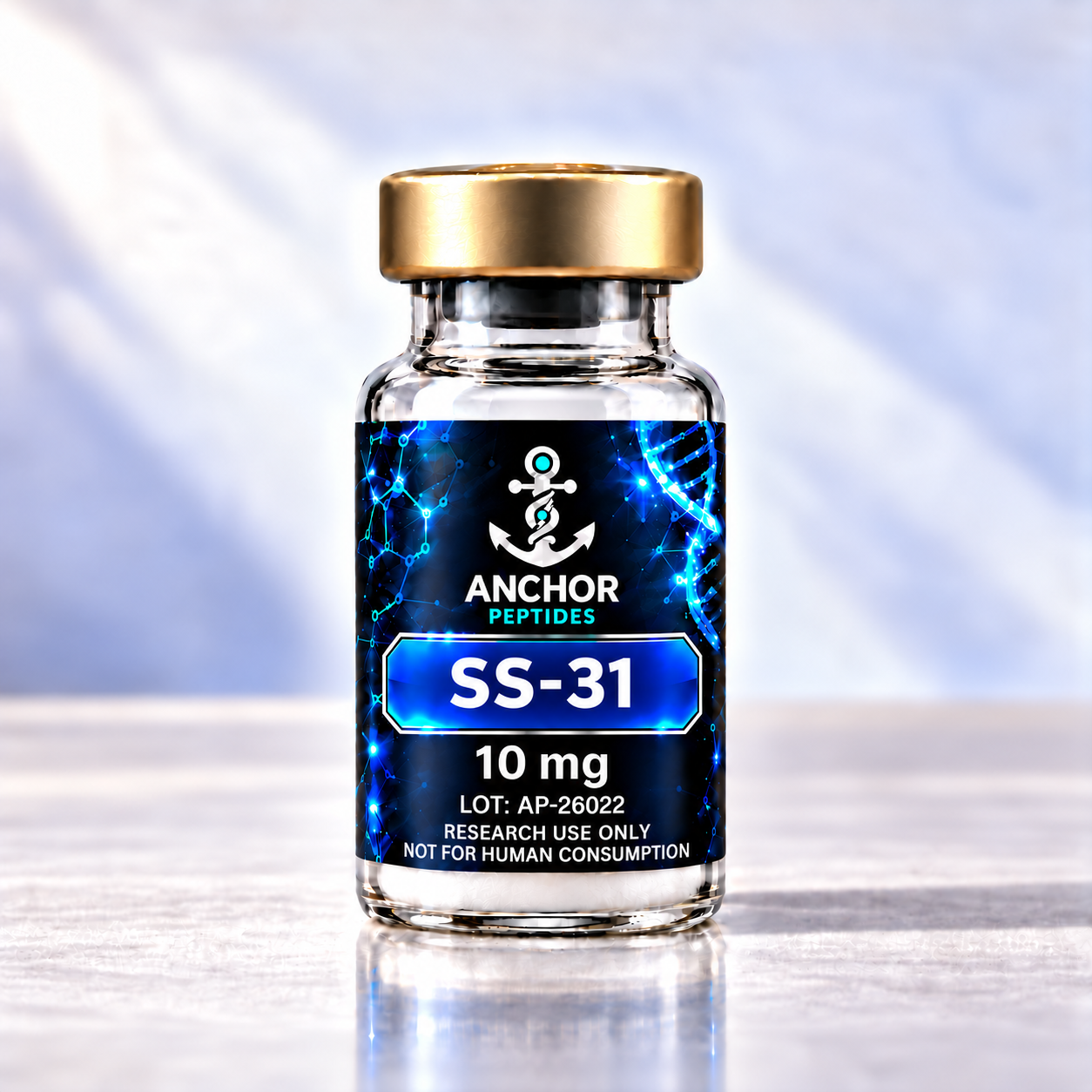
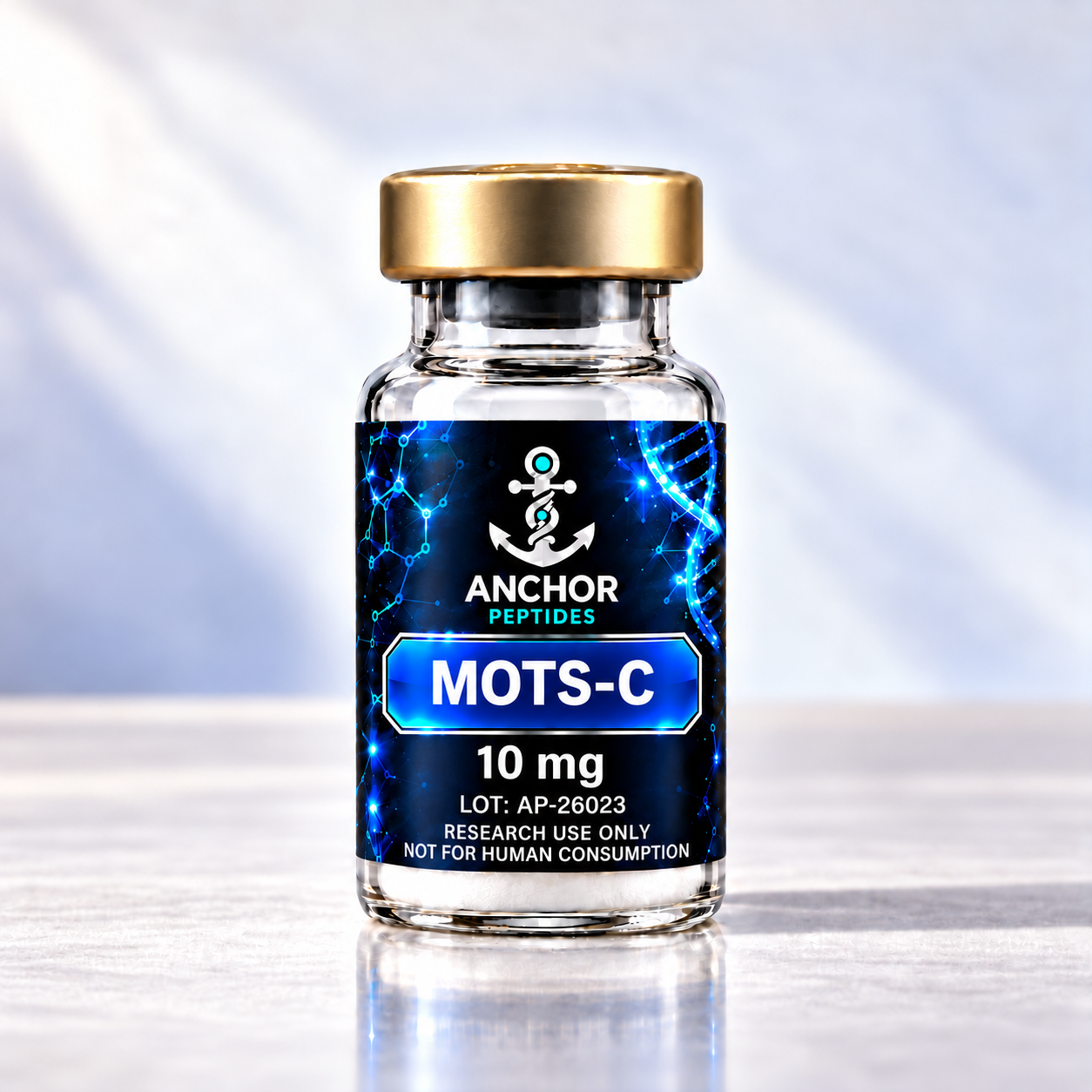
Verdict: Hold until the selected peptide and its analytical record match the experimental question.
4. GHRH-related research: best for analogue comparisons
Sermorelin and Tesamorelin are separately listed materials described as analogues of growth hormone-releasing hormone, abbreviated GHRH. Sermorelin's description specifies the first 29 amino acids of GHRH. The catalog also includes a separate CJC-1295 No DAC & Ipamorelin blend.
Best for: Laboratories comparing named GHRH-related materials while keeping single compounds distinct from combinations.
GHRH-related research pros:
- Sermorelin and Tesamorelin provide separate named analogue listings.
- The Sermorelin description supplies a defined sequence-length reference.
- A separately identified blend supports a clear single-compound-versus-mixture distinction.
GHRH-related research cons:
- Shared GHRH-related terminology does not establish equivalent activity.
- The CJC-1295 No DAC & Ipamorelin blend is not a single-compound comparator.
Record the exact named material in your procurement specification. Do not reduce distinct analogues and combinations to one generic category when matching documentation to an experiment.
Verdict: Hold until the exact analogue or combination is specified and supported by the required records.
5. Short-peptide research: best for structural comparisons
Prostamax is described as a synthetic tetrapeptide with the sequence Lys-Glu-Asp-Pro. BPC-157 is described as a synthetic pentadecapeptide based on a sequence from a gastric protein. A tetrapeptide contains four amino-acid residues; a pentadecapeptide contains fifteen.
Best for: Laboratories evaluating named short peptides with explicitly different structural descriptions.
Short-peptide research pros:
- The Prostamax description provides an explicit amino-acid sequence.
- BPC-157 supplies a separately described peptide example.
- Different sequence lengths represent genuine structural differences, not merely different quantities.
Short-peptide research cons:
- Sequence length does not establish purity, identity, or biological activity.
- Different research descriptions do not justify direct substitution between materials.
Verdict: Hold until the selected structure and supporting documentation satisfy the protocol.
Check documentation before accepting catalog breadth
Anchorpeptide describes its offering as research-grade peptides and blends with Certificates of Analysis. A Certificate of Analysis, or CoA, reports analytical information about an identified sample. Review the document relevant to the material under consideration rather than assuming a general documentation statement covers every product and batch.
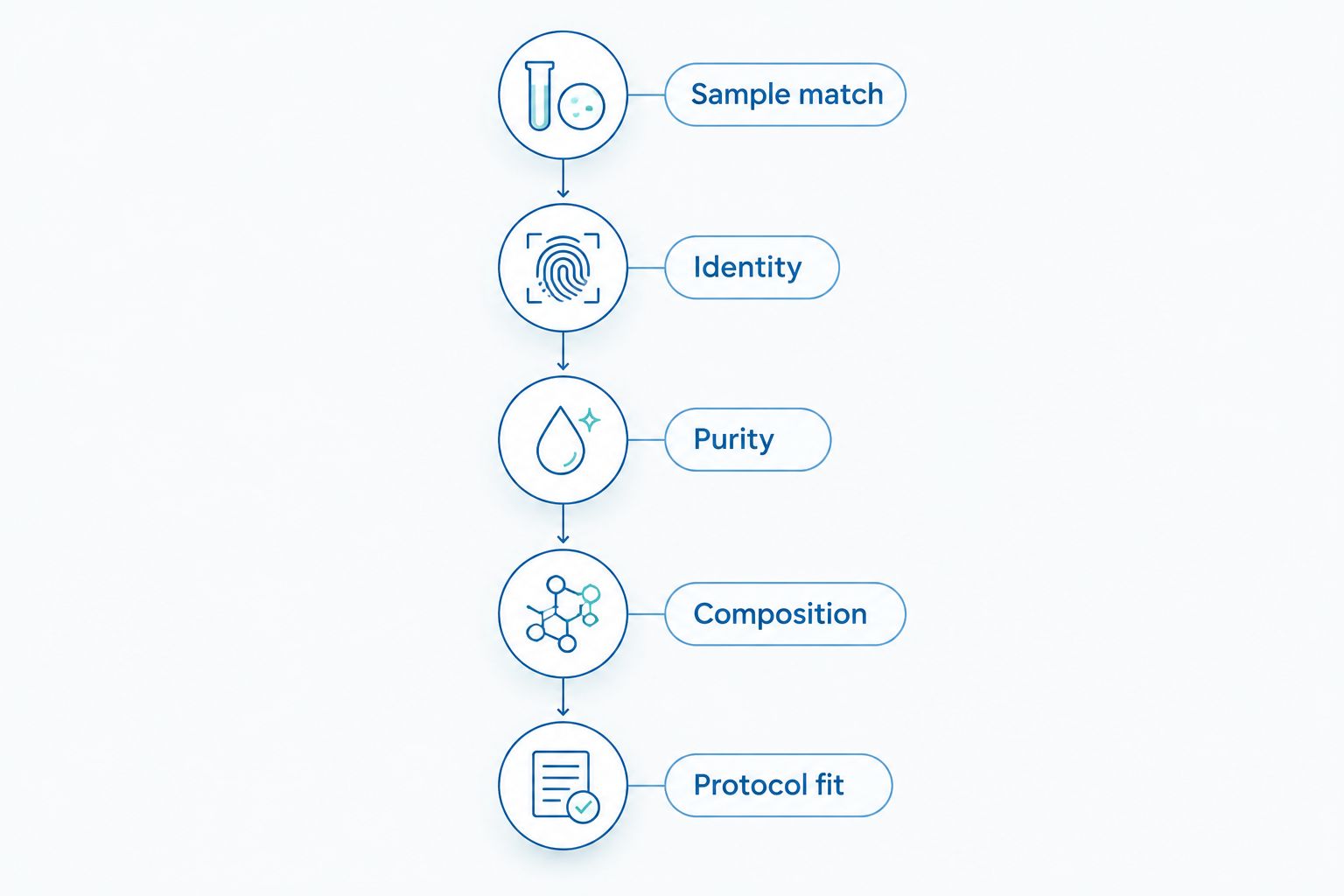
For a 2026 acceptance review, separate these checks:
- Sample match: Match the document's sample and batch identifiers to the material being evaluated.
- Identity: Determine what analytical evidence supports the named compound.
- Purity: Read the method and reported result together rather than interpreting a percentage alone.
- Composition: For mixtures, determine what evidence addresses the individual components and their amounts.
- Protocol fit: Compare the documented attributes with your laboratory's acceptance criteria.
High-performance liquid chromatography, or HPLC, separates sample components under defined conditions. A reported chromatographic purity result is method-dependent; it does not independently establish biological activity or every possible impurity.
Mass spectrometry, or MS, measures mass-to-charge ratios and can support identity assessment. Neither an identity result nor a chromatographic purity result automatically establishes sterility, endotoxin status, or suitability for a particular assay.
How the catalog routes are ranked
The order reflects distinct research-selection tasks: individual receptor-targeting compounds, predefined combinations, mitochondrial peptides, GHRH-related materials, and short-peptide structures. It does not represent comparative supplier testing or a ranking of analytical quality.
For your 2026 shortlist, keep separate totals for product listings, distinct named compounds, and premixed formulations. That prevents presentation choices, mixtures, and nonpeptide materials from becoming an inflated peptide count.
Which research peptide supplier should you choose?
Anchorpeptide is a research peptide supplier for US laboratories comparing single compounds with premixed blends. Start with the catalog route that matches your protocol, then apply your documentation requirements to the exact material.
Do not choose a supplier solely because its product count is larger. The decisive question is whether its relevant compounds and supporting records meet your laboratory's needs.
FAQ
What’s the best way to compare research peptide suppliers by catalog breadth?
Compare distinct compounds, research coverage, and premixed formulations separately. Then assess the analytical documentation relevant to each selected material rather than treating catalog size as proof of quality.
Does a larger research peptide catalog mean better quality?
No. Catalog size describes selection, while analytical evidence addresses attributes such as identity and purity. Evaluate those questions separately.
Should different quantities count as different research peptides?
No. Retatrutide in 15mg and 30mg listings represents different listed quantities of the same named compound, not two different compounds.
Are all the listed research compounds peptides?
No. SLU-PP-332 and 5-Amino-1MQ are explicitly described as small molecules. Keep them separate when calculating peptide-only catalog breadth.
Is a premixed peptide blend better than individual compounds?
A premixed blend fits a study requiring that predefined combination; individual compounds fit designs requiring separate evaluation. A mixture response alone does not identify the contribution of each component.
Does a Certificate of Analysis prove biological activity?
A Certificate of Analysis establishes only what its reported methods and results support. Identity and chromatographic purity results do not independently demonstrate activity in your assay.
Can these research materials be selected for personal or veterinary use?
No. This guide addresses laboratory and in-vitro research only. It provides no human or veterinary use recommendations.
One last thing
Before approving a supplier, ask someone outside the purchasing decision to recount the catalog using your definitions. If one reviewer counts product pages and another counts distinct compounds, the totals answer different questions. Define breadth before you rank it.
Related guides
- Peptide blends for in-vitro stacking research
- GLP-1 receptor agonist research peptides
- CJC-1295 and Ipamorelin blends compared
- Longevity research peptides for cellular studies