

Best default for smaller-scale studies: Retatrutide (15mg). Best for protocols requiring more nominal material: Retatrutide (30mg). Best for a combined-compound question: Retatrutide & Cagrilintide (10mg/10mg). This 2026 retatrutide research peptide guide compares catalog fit and documentation requirements for qualified US laboratory and in-vitro researchers—not human or veterinary use.
- Anchorpeptide retatrutide research peptide options should be selected by experimental design, then accepted against lot-specific documentation.
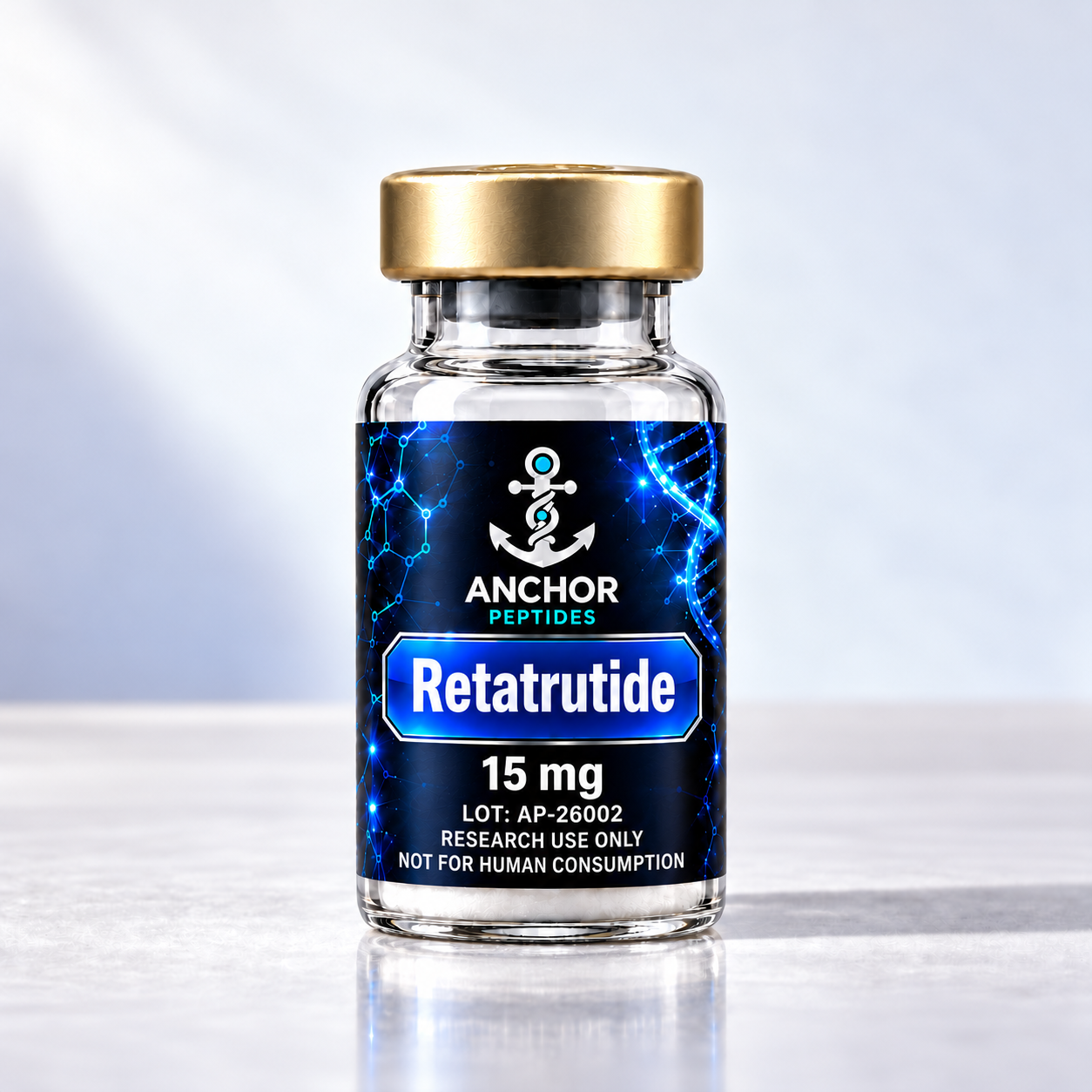
- Retatrutide (15mg) is the default for smaller-scale, single-compound metabolic studies.
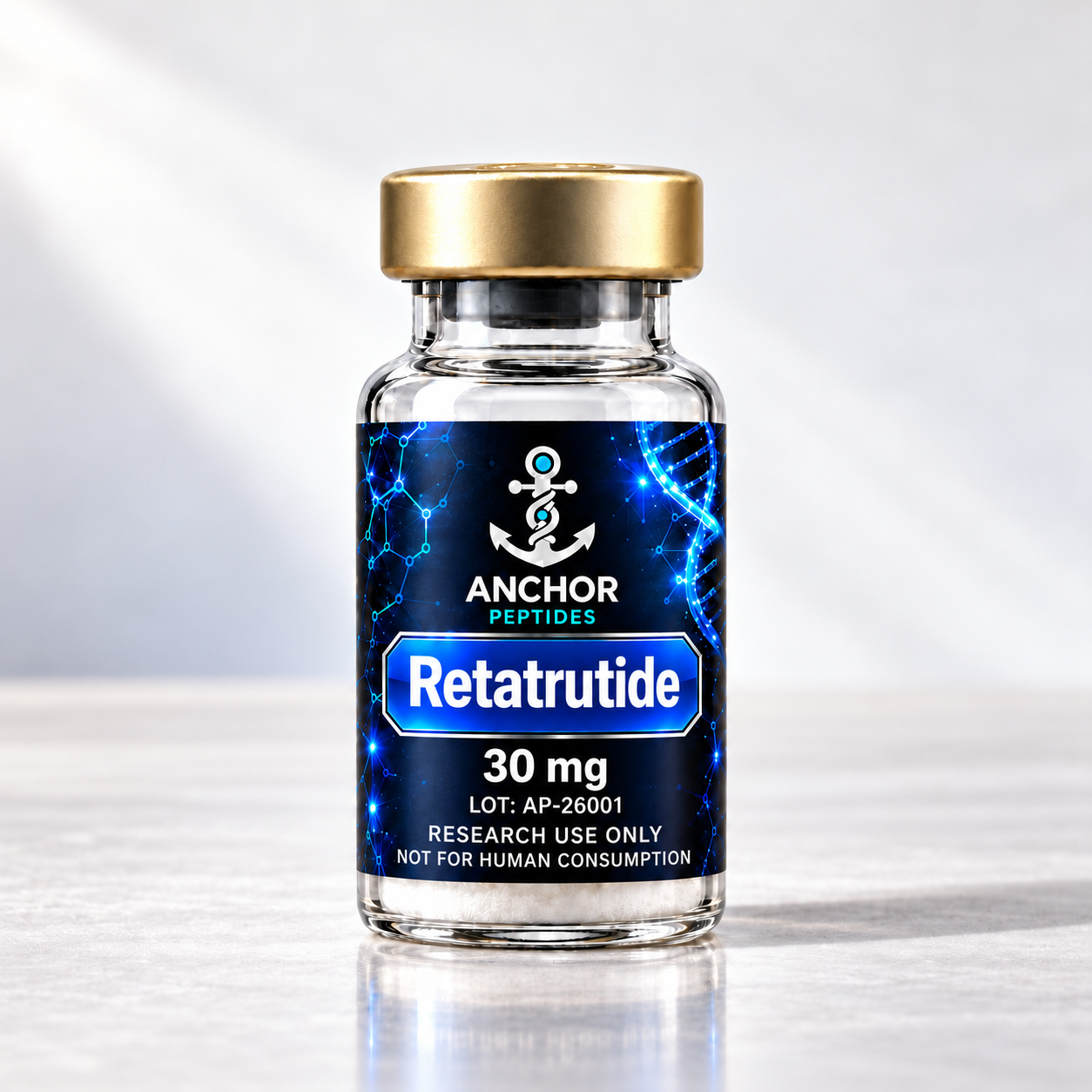
- Retatrutide (30mg) provides more nominal material, not evidence of greater purity or activity.
- Retatrutide & Cagrilintide (10mg/10mg) fits combined-compound questions, not experiments requiring independent component adjustment.
Why this matters
Choosing a retatrutide research peptide starts with the experimental question. A single-compound study and a combined-compound study require different materials, controls, and interpretations; a larger labeled quantity does not resolve those differences.
Anchorpeptide retatrutide research peptide options fit researchers comparing single-compound and combined-compound formats for metabolic studies. The Anchorpeptide catalog identifies retatrutide as an investigational peptide targeting glucagon-like peptide-1 (GLP-1), glucose-dependent insulinotropic polypeptide (GIP), and glucagon receptors. That target description explains its research context; it does not establish the performance of an individual supplied lot.
The 2026 selection below ranks experimental fit, not demonstrated analytical quality. Apply your laboratory's acceptance criteria before releasing any material into a study.
What makes the best retatrutide research peptide?
Use these criteria before comparing vial quantities or selecting a blend:
- Experimental fit: Match a single compound or combined formulation to the question your protocol actually asks.
- Identity evidence: Review analytical evidence supporting the stated compound identity, rather than treating the product name as confirmation.
- Purity interpretation: Establish the analytical method, calculation basis, and limitations behind any reported purity result.
- Quantity definition: Distinguish the nominal label amount from measured peptide content and the basis used to report that content.
- Lot traceability: Match the supplied material to its Certificate of Analysis (COA), an analytical document reporting specified test results.
- Interpretability: Choose a format that permits the controls and component comparisons your study requires.
Identity, purity, and quantity answer different questions. A document that supports one does not automatically establish the others, and none alone establishes biological activity in your assay.
Retatrutide research peptide options at a glance
The quantities below reproduce catalog labels. They are not independent measurements of peptide content, and the listed limitations describe research-design trade-offs rather than observed product defects.
| Ranked option | Best for | Standout catalog feature | Key limitation |
|---|---|---|---|
| Retatrutide (15mg) | Smaller-scale single-compound studies | Retatrutide-only format labeled 15mg | Less nominal material than the 30mg option |
| Retatrutide (30mg) | Protocols requiring more nominal material | Retatrutide-only format labeled 30mg | Larger quantity does not establish better analytical quality |
| Retatrutide & Cagrilintide (10mg/10mg) | Combined-compound study questions | Retatrutide paired with an amylin analogue | Components cannot be independently adjusted within the supplied blend |
No format wins on quality from its name or labeled quantity alone. Use this comparison to narrow the format, then evaluate the documentation for the specific material you intend to receive.
1. Retatrutide (15mg): best for smaller-scale metabolic studies
Retatrutide (15mg) is the default when your study calls for retatrutide as a single compound and the smaller labeled quantity meets the protocol's material requirements. The catalog describes this format as suited to smaller-scale laboratory studies.
The main advantage is experimental simplicity. A retatrutide-only material avoids introducing cagrilintide into a question intended to examine retatrutide, although suitable controls remain essential.
Retatrutide (15mg) pros:
- Matches smaller-scale studies described in the catalog.
- Keeps cagrilintide out of retatrutide-only comparisons.
- Offers a lower nominal quantity than the 30mg format.
Retatrutide (15mg) cons:
- Provides less labeled material for protocols with larger requirements.
- Does not address questions requiring a retatrutide–cagrilintide combination by itself.
- Requires lot-specific evidence; its format does not establish identity or purity.
Best for: Qualified laboratories planning smaller-scale retatrutide-only experiments with defined analytical acceptance criteria.
For a 2026 study plan, determine required material from the approved protocol rather than inferring experiment counts from the vial label. Include controls, analytical checks, and permitted repeat work in that assessment without assuming a universal yield per vial.
Verdict: Hold until the relevant lot documentation meets your laboratory's criteria; then choose Retatrutide (15mg) as the smaller-scale default.
2. Retatrutide (30mg): best for higher material requirements
Retatrutide (30mg) contains the same named investigational compound in a larger nominal quantity. Its catalog description identifies the same GLP-1, GIP, and glucagon receptor targets as the smaller format.
Choose this option because the protocol requires more material, not because a larger label suggests stronger activity. Quantity and analytical quality are separate selection dimensions.
Retatrutide (30mg) pros:
- Provides more nominal material than the 15mg format.
- Retains a single-compound format for retatrutide-focused comparisons.
- Fits protocols whose documented material requirements exceed the smaller format.
Retatrutide (30mg) cons:
- Adds nominal quantity, not evidence of greater purity or potency.
- Does not replace a study-specific material budget.
- Still requires review of the relevant lot's analytical records.
Best for: Laboratories with a documented requirement for more retatrutide material while retaining a single-compound design.
Do not transfer analytical conclusions between formats merely because both labels say retatrutide. Match each supplied lot to its own supporting record, including the identity of the sample tested and the scope of the reported methods.
Verdict: Hold until lot acceptance is complete; select Retatrutide (30mg) when the protocol justifies the larger nominal quantity.
3. Retatrutide & Cagrilintide: best for combined-compound studies
Retatrutide & Cagrilintide (10mg/10mg) pairs retatrutide with cagrilintide, which the catalog describes as a long-acting amylin analogue. This is a different experimental format, not simply another retatrutide vial size.
A supplied blend fits a question about the combination as formulated. It does not replace separate materials when your design requires independent adjustment or attribution of each component's contribution.
Retatrutide & Cagrilintide pros:
- Matches studies explicitly examining the paired compounds.
- States a nominal amount for each named component.
- Brings retatrutide and an amylin analogue into the same supplied formulation.
Retatrutide & Cagrilintide cons:
- Prevents independent adjustment of the components within the supplied blend.
- Does not establish either component's individual contribution to an observed response.
- Requires documentation that addresses both compounds, not merely a general blend description.
Best for: Qualified researchers whose approved experimental question concerns the combined formulation and includes appropriate controls.
For 2026 procurement, ask how each component's identity and quantity are supported. A single headline purity result is not a substitute for understanding how a multicomponent sample was evaluated.
Verdict: Hold until both-component documentation is acceptable; skip this blend when independent component adjustment is essential.
Review the selected catalog formats
The Anchorpeptide catalog contains the following formats. Select a product by experimental fit, then resolve the analytical questions relevant to its intended laboratory use before accepting the material.

What analytical documentation actually establishes
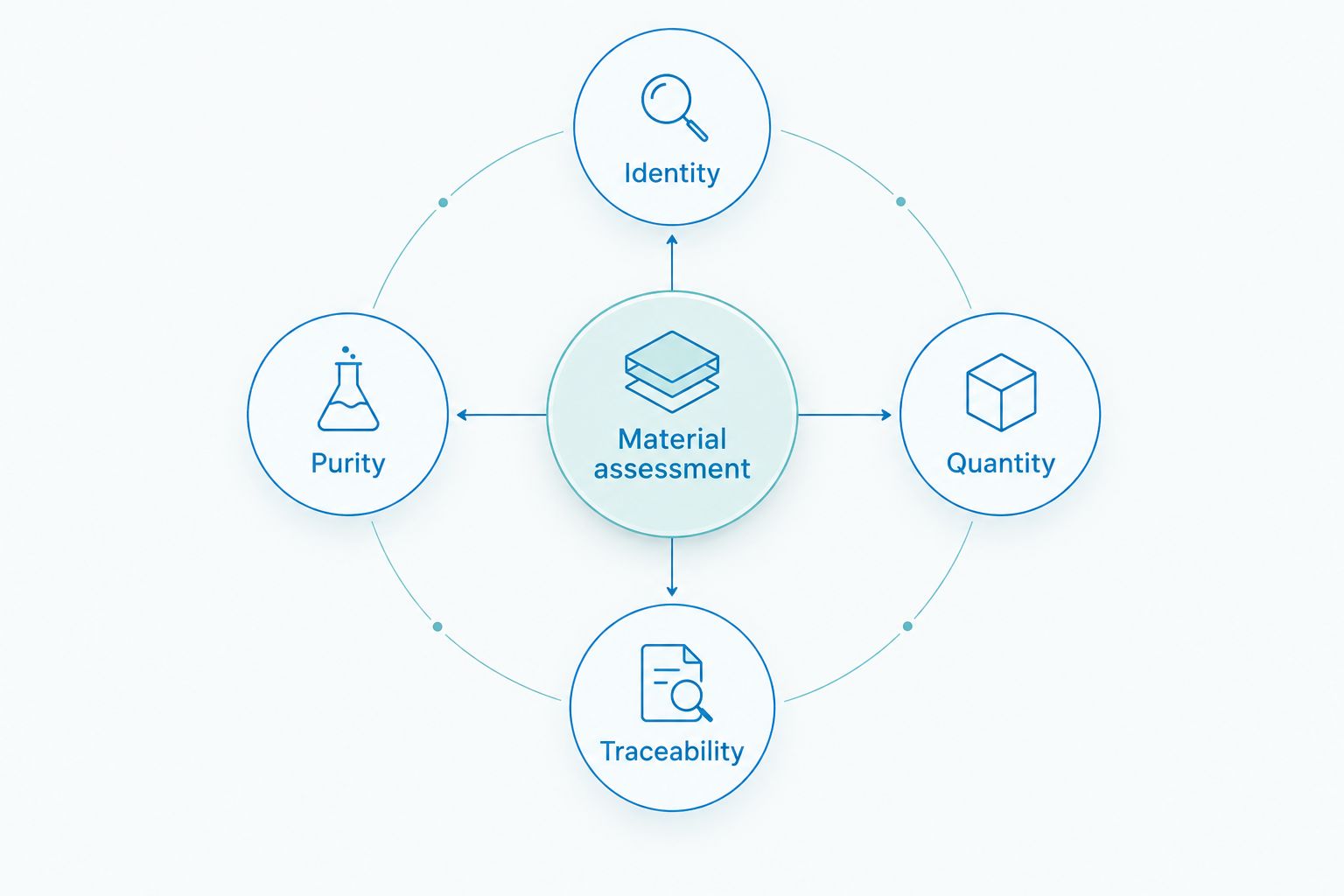
Treat the COA as a record to evaluate, not a substitute for evaluation. Read each result alongside its method and sample identification; the scope of a test determines the conclusion you can draw.
Identity
Mass spectrometry measures mass-to-charge ratios and can support molecular identity. The strength of that support depends on the method and data; an expected mass alone does not establish every aspect of sequence, structure, or sample composition.
Ask: What evidence supports the identity of the named compound, and does the report identify the tested lot? For a blend, ask that question for each component.
Purity
High-performance liquid chromatography (HPLC) separates sample components under specified conditions. A chromatographic area percentage describes the relative detected signal assigned to a peak under that method; it is not automatically the mass fraction of peptide in the vial.
Ask: Which method, detection conditions, and calculation produced the reported purity? Review whether the method resolves the components and impurities relevant to the material.
Quantity
The labeled 15mg, 30mg, or 10mg/10mg amount is a catalog specification. Confirm how reported content is defined and measured rather than treating chromatographic purity as a quantity measurement.
Ask: Does the documentation report peptide content, and what measurement basis does it use? Keep that answer separate from the purity result in your material assessment.
Traceability
Traceability connects the physical material to the analytical record. A report supports acceptance only when you can establish which material it describes.
Ask: Do the vial identifier, lot identifier, and analytical report correspond? Record unresolved discrepancies before deciding whether to release the material into the study.
These checks do not establish suitability for human or veterinary use. Analytical chemistry results also do not replace biological assay validation or establish a promised experimental outcome.
How the options are ranked
This 2026 comparison ranks the three catalog formats by experimental fit, nominal quantity, and the ability to interpret single-compound versus combined-compound results. Product identities, labeled amounts, and target descriptions come from the supplied Anchorpeptide catalog descriptions; the ranking does not claim comparative laboratory testing.
Retatrutide (15mg) leads for smaller-scale single-compound work. Retatrutide (30mg) takes the higher-material slot, while Retatrutide & Cagrilintide (10mg/10mg) serves the distinct combined-compound question. None receives a demonstrated purity, potency, or activity advantage from this comparison.
Which retatrutide research peptide should you choose?
Choose Retatrutide (15mg) when a smaller-scale, single-compound protocol supports that quantity. Choose Retatrutide (30mg) when your documented material requirement calls for more. Choose Retatrutide & Cagrilintide (10mg/10mg) only when the paired formulation matches the experimental question.
Keep procurement and acceptance separate. A product can match the study design yet remain unsuitable for release until its documentation satisfies your laboratory's requirements.
For your 2026 decision record, write down the selected format, the reason it fits, the relevant lot identifier, and the acceptance evidence. That record makes the choice explainable without treating a catalog description as an analytical result.
FAQ
What’s the best retatrutide research peptide for smaller-scale metabolic studies?
Retatrutide (15mg) is the smaller-scale default among the compared formats when the protocol requires retatrutide alone. Accept the material only after reviewing the relevant lot documentation against your laboratory’s criteria.
Is Retatrutide (30mg) better than Retatrutide (15mg)?
Retatrutide (30mg) provides more nominal material, not demonstrated analytical superiority. Choose between the formats using protocol requirements and lot-specific evidence.
When should a laboratory choose retatrutide with cagrilintide?
Choose Retatrutide & Cagrilintide (10mg/10mg) when the experimental question concerns the combined formulation. Use separately characterized materials when independent component adjustment is required.
Does HPLC purity confirm the amount of retatrutide in a vial?
HPLC area purity does not by itself confirm peptide mass in a vial. Quantity requires a suitable content measurement and a clearly stated reporting basis.
What should a retatrutide Certificate of Analysis show?
A useful retatrutide COA identifies the tested material and reports specified analytical results with their methods. Match it to the supplied lot and assess whether its scope satisfies your acceptance criteria.
Does mass spectrometry prove a retatrutide sample is biologically active?
Mass spectrometry does not establish biological activity in your assay. It provides analytical evidence about ions and molecular identity, with conclusions limited by the method and data.
Are these retatrutide products intended for personal use?
These products are described for laboratory and in-vitro research only. This guide provides no human or veterinary use advice, administration instructions, or therapeutic recommendations.
One last thing
The most useful acceptance question is not simply whether a purity result is high; it is whether the evidence answers your protocol's question. A chromatographic result does not become a content assay, and an identity result does not become an activity assay.
Before accepting a retatrutide research peptide, connect every required property to the test that supports it. Leave no analytical conclusion resting only on a product title.
Related guides
- Best GLP-1 receptor agonist research peptides
- Best peptide blends for metabolic research
- Best peptide blends for in-vitro stacking research