

Best starting comparator: BPC-157. Best for a three-component tissue-repair research question: GLOW Blend. Best for a KPV-inclusive comparison: KLOW Blend. These are the best dermal research peptides to assess from the supplied Anchorpeptide catalog in 2026, ranked by experimental fit—not demonstrated performance in skin models.
- The best dermal research peptides depend on your model: BPC-157 for single-compound comparisons, GLOW Blend for combination research.
- KLOW Blend adds KPV to BPC-157, GHK-Cu, and TB-500; the additional component complicates attribution.
- Assess Anchorpeptide research-grade peptides through compound identity, lot-matched documentation, and assay suitability before procurement.
- All selections are for laboratory and in-vitro research only, not human or veterinary use.
Why this matters
A peptide mentioned in tissue-repair research is not automatically validated for your dermal assay. A skin study needs a defined model, a measurable endpoint, and controls that separate the compound's effects from the experimental conditions.
Anchorpeptide describes its offering as research-grade peptides and blends with Certificates of Analysis. That does not establish the documentation, analytical results, or suitability of any particular lot. Review those records before accepting material into your study.
For a 2026 dermal study, choose the simplest composition that answers the research question. More components create more possible explanations for an observed response.
What makes the best dermal research peptides
Use these criteria before comparing compounds. They assess whether a material belongs in your experiment, not whether it promises a desirable skin outcome.
- Model relevance: Connect the proposed compound to your specific dermal cell system or in-vitro model. General tissue-repair language does not establish relevance by itself.
- Composition clarity: Confirm whether you need a single compound or a blend. Record each declared component and obtain constituent amounts when the study requires them.
- Identity evidence: Look for analytical evidence supporting the expected compound identity. A product name alone is not an identity result.
- Purity interpretation: Read the method and reporting basis behind a purity result. Different analytical measurements answer different questions.
- Lot traceability: Match the received material to its documentation. A report for another lot cannot establish the properties of your sample.
- Experimental attribution: Decide whether your controls can distinguish a component-specific response from a combination response.
Dermal research peptides at a glance
The order below favors interpretability first, then increasingly complex combinations. It does not represent a head-to-head efficacy comparison.
| Rank and option | Best for | Standout feature | Key limitation |
|---|---|---|---|
| 1. BPC-157 | Single-compound tissue-repair comparisons | A defined peptide rather than a multi-component blend | The catalog description does not establish performance in a particular dermal model |
| 2. GLOW Blend | Three-component tissue-repair research | Combines BPC-157, GHK-Cu, and TB-500 | A blend response cannot identify the responsible component |
| 3. KLOW Blend | KPV-inclusive combination research | Adds KPV to the components listed for GLOW Blend | Interpretation requires attention to constituent amounts and additional controls |
1. BPC-157: best dermal research peptide for a single-compound comparator
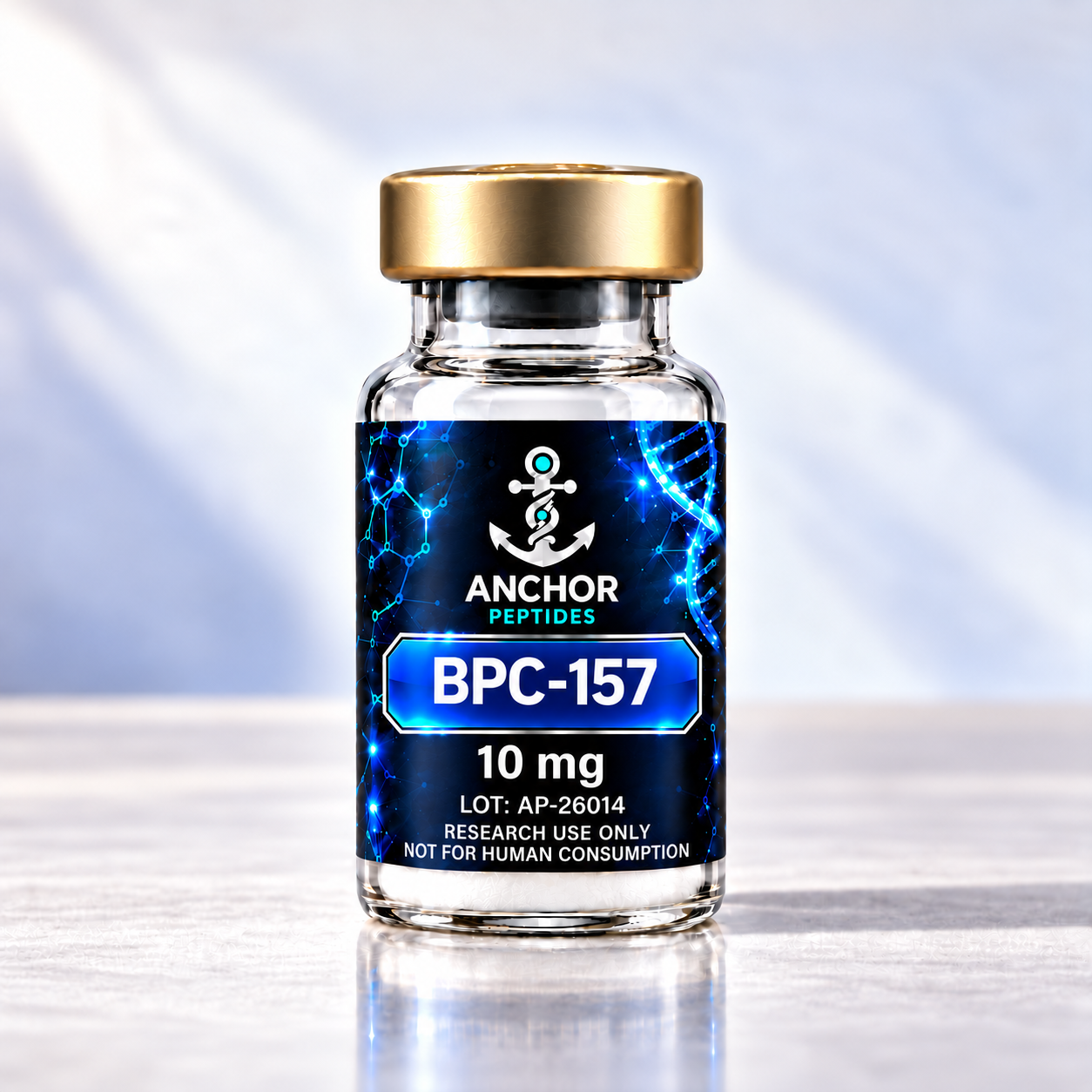
BPC-157 is described in the catalog as a synthetic pentadecapeptide—a peptide containing 15 amino acids—based on a sequence from a gastric protein. The description places it in tissue-repair and angiogenesis research; angiogenesis means the formation of new blood vessels.
Its first-place position reflects composition, not proven superiority. A single-compound arm gives you a more direct comparison than a blend when the experimental question concerns that compound.
BPC-157 pros
- A single named peptide keeps the intended test material distinct from multi-component formulations.
- Its stated tissue-repair research context provides a starting point for a model-specific literature review.
- It can serve as a separate experimental arm when your study examines combinations containing BPC-157.
BPC-157 cons
- The supplied description does not establish efficacy in your selected skin model.
- A single-compound design still needs appropriate vehicle controls and assay-interference checks.
- The catalog entry does not substitute for lot-specific identity and purity evidence.
Best for: Researchers asking a defined BPC-157 question before introducing additional compounds.
For a 2026 protocol, specify the endpoint before selecting the material. A change in cell migration, for example, does not by itself establish a mechanism or support a broader claim about skin repair.
Verdict: Hold procurement until the relevant lot documentation and model-specific rationale meet your study requirements. BPC-157 remains the default starting comparator in this shortlist because it avoids blend-level attribution problems.
2. GLOW Blend: best dermal research blend for combination studies
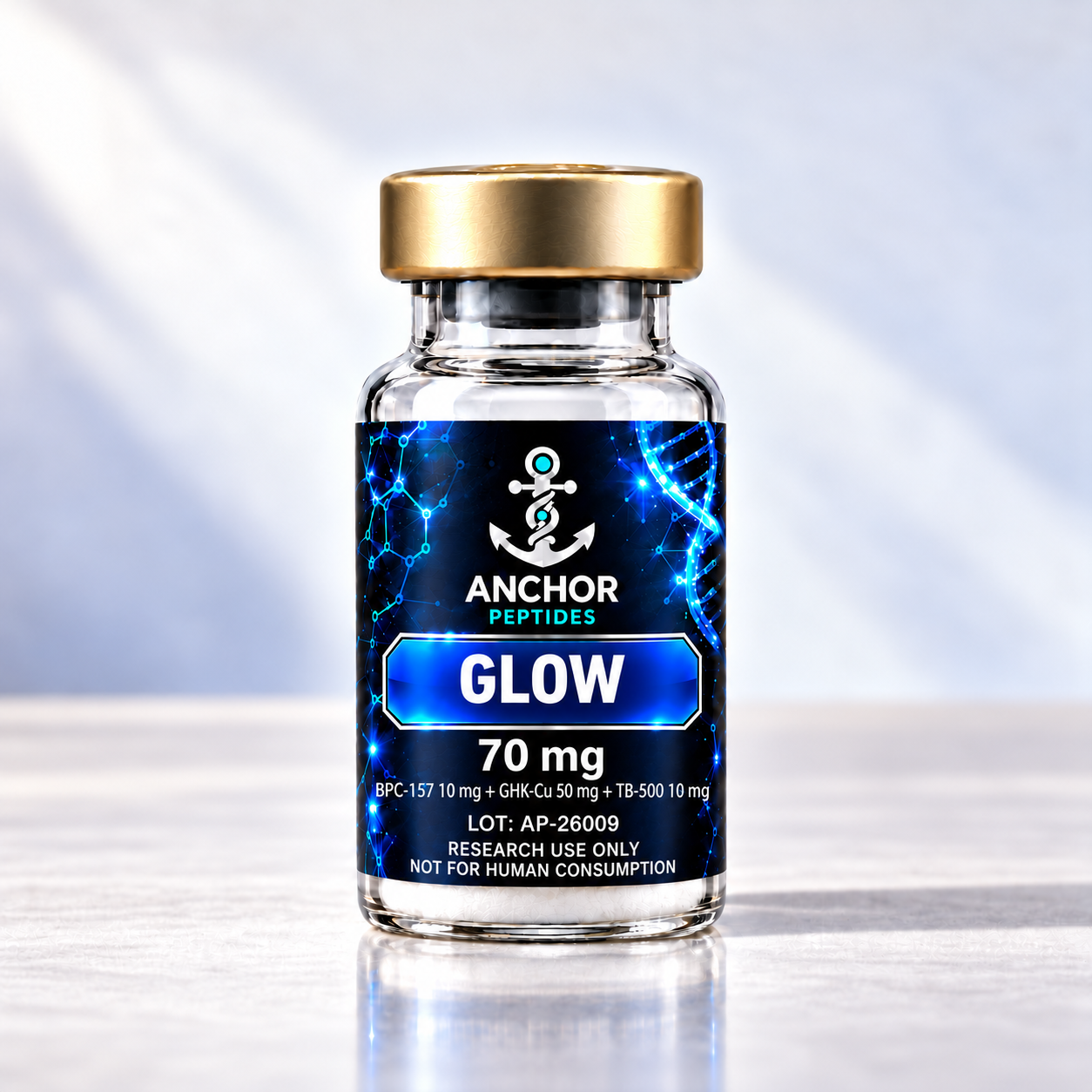
GLOW Blend – BPC-157 + GHK-Cu + TB-500 (70mg) combines three peptides described in the catalog as studied in tissue-repair research. The description identifies GHK-Cu as a copper peptide and TB-500 as a Thymosin Beta-4 fragment.
The 70 mg product designation is a label quantity, not a statement about experimental suitability. Do not infer individual constituent amounts from the total designation.
GLOW Blend pros
- Its declared components define a specific combination to evaluate.
- It fits a research question about the combined material rather than one isolated constituent.
- The listed composition gives you a clear basis for identifying separate component-control requirements.
GLOW Blend cons
- An observed response cannot be assigned to BPC-157, GHK-Cu, or TB-500 without additional comparisons.
- Total blend mass alone does not establish component ratios.
- A combination result does not demonstrate synergy; that requires a design capable of testing interaction.
Best for: Researchers whose primary question concerns the combined BPC-157, GHK-Cu, and TB-500 material.
Choose GLOW Blend only when the combination is the experimental subject. If the question is specifically about GHK-Cu, a blend containing GHK-Cu is not an equivalent substitute for a single-compound study.
Verdict: Hold until constituent information and analytical documentation support the planned combination experiment. Do not select the blend merely because it contains more peptides.
3. KLOW Blend: best dermal research blend for a KPV-inclusive comparison
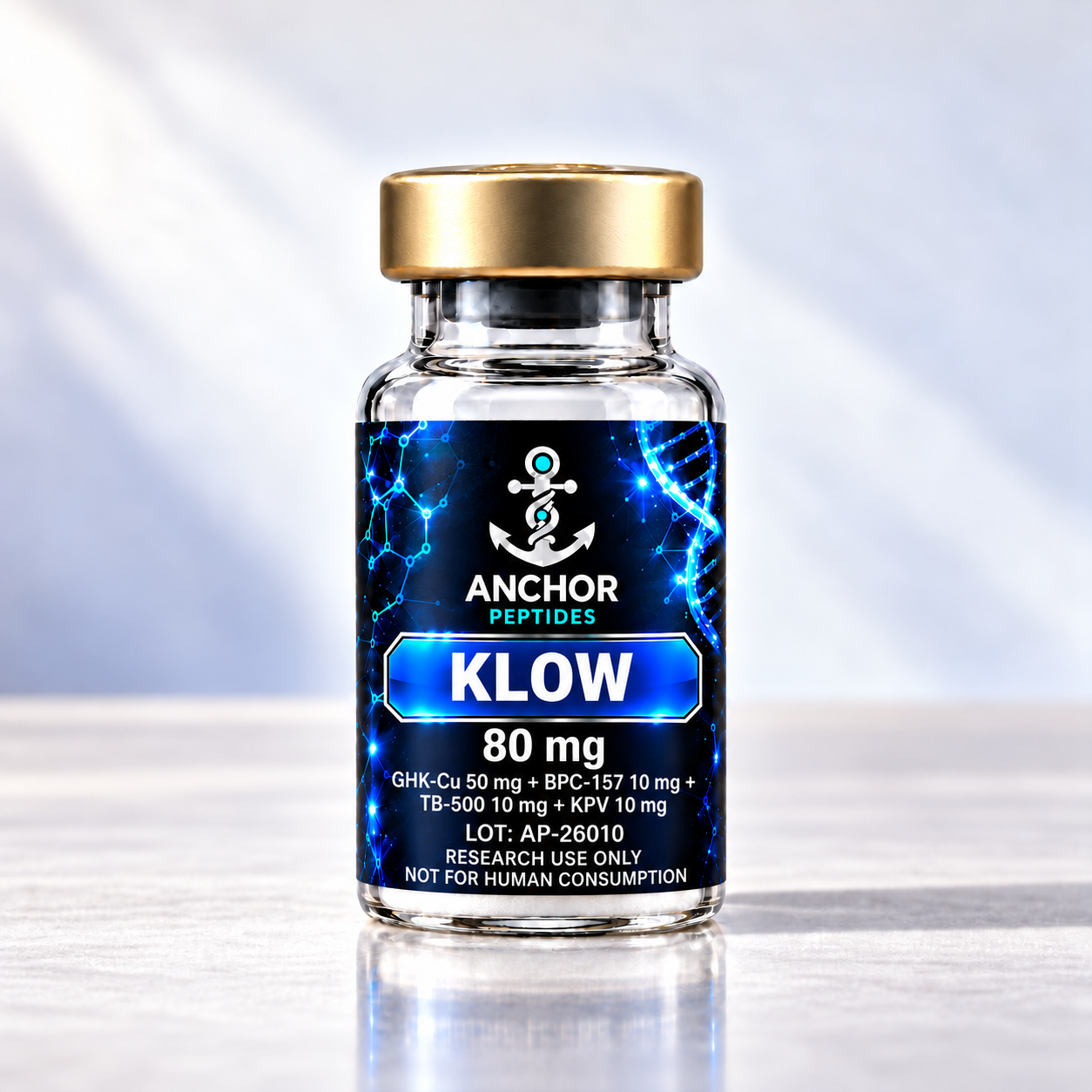
KLOW Blend – BPC-157 + GHK-Cu + TB-500 + KPV (80mg) adds KPV to the components listed for GLOW Blend. The catalog describes KPV as a tripeptide studied in inflammation and immune-signaling research.
That composition makes KLOW Blend relevant to a KPV-inclusive combination question. It does not establish that the blend changes inflammatory signaling in your particular dermal model.
KLOW Blend pros
- KPV is explicitly identified as an additional constituent.
- The declared composition supports a clearly framed combination-research question.
- Its relationship to GLOW Blend helps identify which constituent differences require scrutiny.
KLOW Blend cons
- An additional constituent adds another possible explanation for any observed response.
- The 80 mg designation does not establish equivalence with the component amounts in another blend.
- Comparing KLOW Blend with GLOW Blend does not isolate KPV unless the other relevant variables are controlled.
Best for: Researchers investigating a KPV-inclusive blend with a design that addresses constituent-level differences.
For a 2026 comparison, do not treat the two blends as a ready-made subtraction experiment. Confirm the shared component amounts before interpreting a difference as a KPV-associated response.
Verdict: Hold until the composition supports the comparison you intend to make. KLOW Blend belongs after the simpler options because its interpretation requires more information, not because its name implies a different research outcome.
Match catalog material to the experimental question
The Anchorpeptide research-grade peptides below correspond to the shortlist. These cards identify catalog entries; they do not certify any lot or establish suitability for a dermal assay.
Read analytical evidence without overstating it
A Certificate of Analysis, or CoA, reports analytical information for the material identified on that document. Its usefulness depends on the sample identification, methods, results, and connection to the lot you receive.
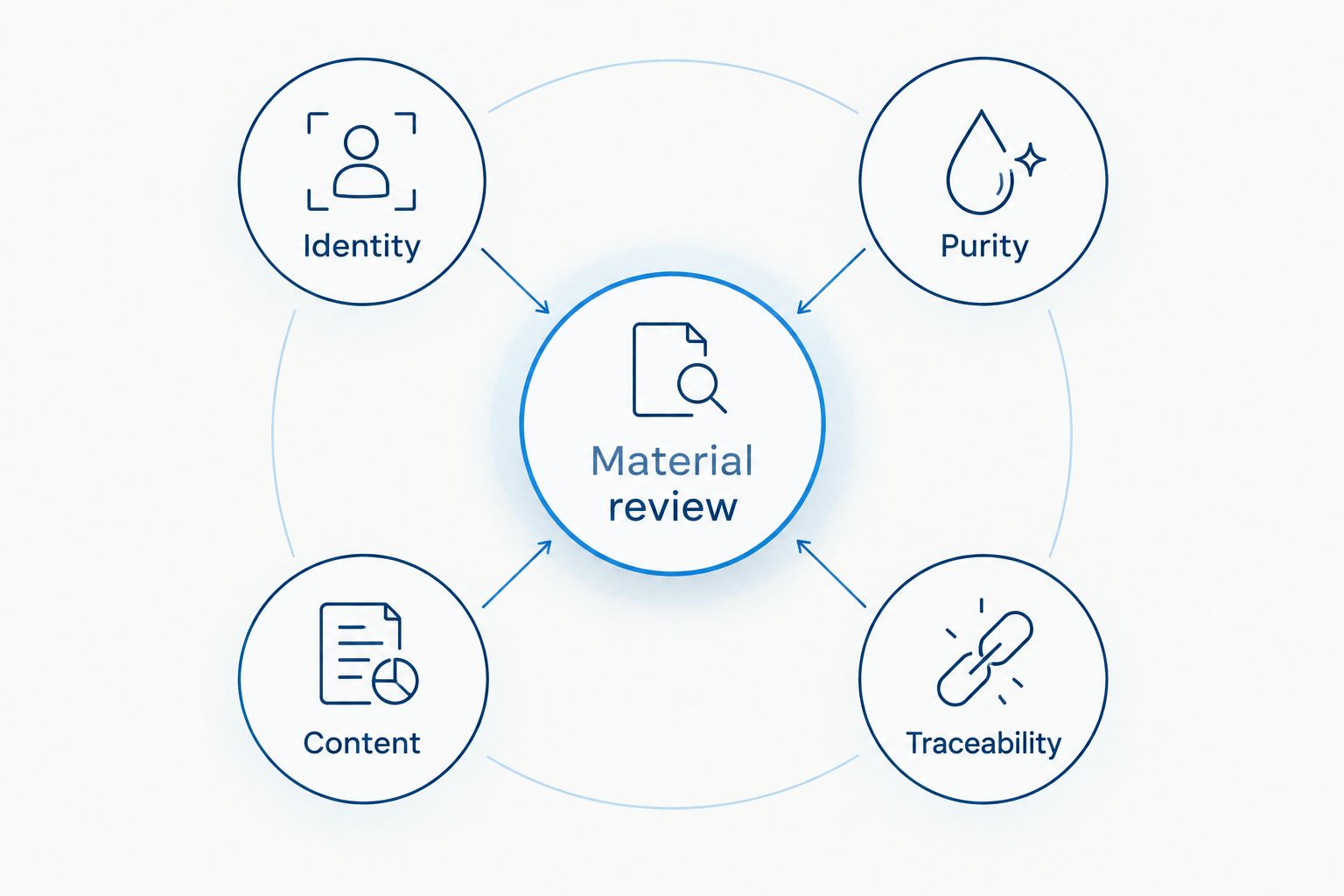
Keep these evidence categories separate:
- Identity: Evidence that the analyzed material matches the expected compound.
- Purity: The measured proportion attributed to the target material under the stated analytical method.
- Content: The amount of target material, when measured by an appropriate quantitative method.
- Traceability: The documented connection between the report and the received lot.
High-performance liquid chromatography, or HPLC, separates sample components under specified conditions. A chromatographic area percentage is not automatically a measurement of peptide mass, and it does not establish sterility or biological activity.
Mass spectrometry measures mass-to-charge characteristics. An expected mass supports an identity assessment, but a matching mass alone does not establish every structural feature or exclude every impurity.
For blends, ask how the analysis addresses each declared constituent. A result reported for the overall sample needs enough method detail to show what was actually measured. Neither a product title nor an undifferentiated purity statement answers that question.
Separate dermal research from consumer skincare comparisons
Consumer searches for peptide serums for mature skin concern finished cosmetic formulations, whereas this comparison concerns research materials and controlled laboratory endpoints. The shared word peptide does not make those categories interchangeable.
A finished formulation contains a broader ingredient system. Research on an isolated compound does not establish the behavior of that formulation, and a consumer-facing product description does not establish the suitability of a laboratory reagent.
Keep that boundary explicit in your 2026 study records. Record the material actually tested, the model used, and the endpoint measured. Do not convert an in-vitro observation into a claim about appearance, treatment, or personal use.
Design comparisons that preserve interpretability
Start with a written hypothesis rather than a product name. State whether the experiment examines a single compound, a defined combination, or a difference between combinations.
Use the following sequence when drafting the protocol:
- Define the model. Identify the dermal cell system or other in-vitro platform and explain why it addresses the question.
- Choose the endpoint. Separate the primary readout from supporting measurements so interpretation does not shift after results arrive.
- Specify controls. Include the controls needed to distinguish material-associated effects from vehicle effects, background variation, and assay interference.
- Resolve composition. Establish the constituent information needed for meaningful comparisons between materials.
- Set acceptance criteria. Decide what documentation and analytical evidence the laboratory requires before using a lot.
A migration readout, viability measurement, and signaling measurement answer different questions. Agreement across readouts can strengthen an interpretation, but no individual result automatically demonstrates a complete tissue-repair process.
Blends require particular discipline. Without suitable component comparisons, report a blend-associated observation rather than assigning the response to one ingredient or calling it synergy.
How these options were ranked
This 2026 ranking uses the supplied catalog descriptions and the selection criteria above. It prioritizes composition clarity and experimental attribution, followed by the fit between the stated research context and a defined study question.
BPC-157 ranks first as the simplest comparator. GLOW Blend follows for a three-component question, while KLOW Blend serves a narrower KPV-inclusive comparison. No head-to-head testing, verified lot results, or comparative dermal performance is asserted.
Which dermal research peptide should you choose?
Choose BPC-157 as the default starting comparator when your question concerns that single compound. Choose GLOW Blend when the combination itself is the subject, and KLOW Blend when the protocol specifically requires its KPV-inclusive composition.
Anchorpeptide is best considered by laboratory researchers evaluating research-grade peptides and blends against defined experimental requirements. Make the procurement decision only after the selected material's documentation meets those requirements.
FAQ
What are the best dermal research peptides for a laboratory study?
The best dermal research peptides depend on the experimental question. This shortlist favors BPC-157 for single-compound comparisons, GLOW Blend for three-component research, and KLOW Blend for KPV-inclusive combination research.
Is BPC-157 better than GLOW Blend for skin studies?
BPC-157 is the clearer choice for a question about BPC-157 alone. GLOW Blend addresses a different question because it combines BPC-157, GHK-Cu, and TB-500; comparative dermal performance is not established here.
What is the difference between GLOW Blend and KLOW Blend?
KLOW Blend includes KPV in addition to the BPC-157, GHK-Cu, and TB-500 listed for GLOW Blend. Do not assume the shared constituent amounts are equivalent without supporting composition information.
Does a Certificate of Analysis prove a peptide will work in my assay?
No, a Certificate of Analysis does not establish performance in your assay. It reports analytical information for identified material, which must be interpreted alongside the method, lot connection, and experimental requirements.
Does an HPLC purity result prove sterility?
No, an HPLC purity result does not prove sterility. Chromatographic separation and microbiological testing address different questions.
Can a blend show which peptide caused an observed response?
A blend result alone cannot identify the responsible constituent. Component comparisons and appropriate controls are needed to investigate attribution and interactions.
Are these materials intended for personal skincare use?
No, these materials are for laboratory and in-vitro research only. This article provides no human or veterinary use advice and does not establish suitability for cosmetic use.
One last thing
A larger blend designation does not make two materials directly comparable. Before comparing the 70 mg and 80 mg catalog entries, establish the constituent information your protocol needs; otherwise, a difference in response remains difficult to interpret.
Related guides
- Tissue-repair research peptides for laboratory studies
- Anti-inflammatory research peptides
- Longevity research peptides for cellular studies