

Best for cardiolipin-focused research: SS-31. Best for mitochondrial-derived peptide studies: MOTS-C. Best for dual-receptor metabolic research: Tirzepatide. The best research peptides for biotech startups in 2026 match a defined experimental question; this guide compares six candidates by research fit, interpretability, and documentation requirements.
- The best research peptides for biotech startups match a defined mechanism, not a general promise of biological activity.
- SS-31 fits cardiolipin-focused research; MOTS-C fits mitochondrial-derived peptide studies.
- Tirzepatide and Retatrutide address different receptor combinations; neither replaces receptor-specific controls.
- Anchorpeptide research peptides require product-specific and batch-specific documentation review before laboratory selection.
Why this matters
A startup needs a compound that helps answer a question, not a longer list of possible experiments. Start with your biological target, choose a measurable endpoint, and then decide which material supports that design. Reversing that order creates a study around a catalog entry rather than a hypothesis.
Anchorpeptide offers research-grade peptides and blends for laboratory and in-vitro researchers. Anchorpeptide research peptides are best suited to laboratory teams that select compounds by research question and review supporting documentation before use. That is a procurement fit, not a claim that any listed compound meets your assay specifications.
For your 2026 shortlist, separate three decisions: biological relevance, analytical acceptance, and experimental controls. A relevant mechanism does not establish sample identity. A satisfactory analytical result does not establish activity in your model.
All recommendations below concern laboratory and in-vitro research only. They provide no human or veterinary use guidance.
What makes the best research peptides for biotech startups?
Use these criteria before comparing compound names:
- Mechanism fit: The compound's described research role must match the question your experiment addresses.
- Model fit: Your experimental system must support the pathway or interaction you intend to investigate.
- Identity evidence: Review evidence that addresses the identity of the supplied material, not merely its label.
- Purity evidence: Examine the analytical method and result, including what that method does not measure.
- Batch linkage: Confirm that the analytical documentation refers to the material entering your laboratory.
- Interpretability: Prefer a design that separates the compound's effect from vehicle, background, and assay interference.
A Certificate of Analysis, or COA, is a document reporting specified analytical results for a sample or batch. Its usefulness depends on the methods, results, identifiers, and scope it contains. The heading alone is not an acceptance criterion.
For 2026 purchasing decisions, write your acceptance requirements before comparing suppliers. Otherwise, a prominent purity claim can distract from a missing identity result or an unresolved batch identifier.
Research peptide shortlist at a glance
These rankings assign distinct research questions, not universal quality scores. The research roles below follow the supplied product descriptions; the ranking does not establish comparative potency, laboratory performance, or batch acceptance.
| Rank and compound | Best for | Standout research feature | Key limitation |
|---|---|---|---|
| 1. SS-31 | Cardiolipin-focused mitochondrial research | Tetrapeptide described as associating with cardiolipin | Does not substitute for direct measurement of the proposed interaction |
| 2. MOTS-C | Mitochondrial-derived peptide studies | 16-amino-acid peptide associated with cellular metabolism research | Metabolic endpoints alone do not identify a signaling mechanism |
| 3. Tirzepatide | Dual GIP/GLP-1 receptor research | Activity described at two receptor systems | Combined activity complicates receptor-specific attribution |
| 4. Retatrutide | Triple-receptor metabolic research | GLP-1, GIP, and glucagon receptor research scope | Requires controls suited to a multi-receptor question |
| 5. Sermorelin | GHRH-related signaling research | Analogue of the first 29 amino acids of GHRH | Requires a model relevant to the proposed receptor question |
| 6. BPC-157 | Exploratory tissue-repair research models | Synthetic pentadecapeptide | A broad research association does not define a specific mechanism |
None is the default for every biotech startup. Use SS-31 when the question concerns cardiolipin; choose a different entry when the question changes.
1. SS-31: best research peptide for cardiolipin-focused studies
SS-31, also called elamipretide, is described in the catalog as a mitochondria-targeted tetrapeptide that associates with cardiolipin in the inner mitochondrial membrane. A tetrapeptide contains 4 amino acids. Its position here reflects that specific research focus, not a head-to-head performance result.
Best for: Teams investigating cardiolipin-associated mitochondrial questions in an appropriate laboratory model.
SS-31 pros:
- The described interaction gives the study a defined starting hypothesis.
- The mitochondrial focus supports a narrower question than general cellular metabolism.
- A single named compound permits a single-compound experimental arm.
SS-31 cons:
- A downstream cellular response does not by itself demonstrate cardiolipin association.
- The catalog description does not establish performance in your assay.
Define whether you intend to examine association, mitochondrial function, or a downstream response. Those are different claims and need corresponding evidence. Do not use one readout as a substitute for all three.
Verdict: Buy for a defined cardiolipin-focused study only after analytical acceptance.
2. MOTS-C: best research peptide for mitochondrial-derived peptide studies
MOTS-C is described as a 16-amino-acid mitochondrial-derived peptide studied in cellular metabolism and AMPK research. AMPK means AMP-activated protein kinase, a regulator involved in cellular energy signaling. This makes MOTS-C a distinct research choice from a compound selected for cardiolipin association.
Best for: Teams studying mitochondrial-derived peptide biology with predefined metabolic or signaling endpoints.
MOTS-C pros:
- The research question can center on a mitochondrial-derived peptide rather than a membrane-associated interaction.
- The catalog description identifies cellular metabolism as a relevant research area.
- Single-compound arms allow comparison with matched controls.
MOTS-C cons:
- A metabolic response does not independently establish AMPK involvement.
- Mitochondrial origin does not make MOTS-C interchangeable with SS-31.
Keep pathway engagement separate from the final phenotype, meaning the observable response in your model. If your proposed conclusion names AMPK, your evidence must address AMPK rather than relying solely on a general metabolic endpoint.
Verdict: Buy for mitochondrial-derived peptide research; skip as an automatic substitute for SS-31.
3. Tirzepatide: best research peptide for dual-receptor studies
Tirzepatide is described as a dual agonist of glucose-dependent insulinotropic polypeptide, or GIP, and glucagon-like peptide-1, or GLP-1, receptors. An agonist activates a receptor. Its place on this shortlist is for experiments where the combined receptor scope is part of the question.
Best for: Laboratory teams investigating dual GIP/GLP-1 receptor activity.
Tirzepatide pros:
- Two named receptor systems provide a defined research scope.
- A single compound supports a dual-receptor experimental arm.
- The receptor combination distinguishes the study from triple-receptor research.
Tirzepatide cons:
- A combined response does not identify each receptor's contribution.
- A model lacking a relevant receptor cannot answer the full dual-receptor question.
Establish which receptors your model supports before selecting endpoints. Include controls that let you distinguish the claim you can make from the broader activity described for the compound.
Do not interpret a general metabolic response as proof that both receptor systems contributed.
Verdict: Buy for a dual-receptor question; hold when receptor-specific attribution remains unresolved.
4. Retatrutide: best research peptide for triple-receptor studies
Retatrutide is described as an investigational peptide targeting GLP-1, GIP, and glucagon receptors. Its distinguishing feature is the third receptor axis, not a demonstrated advantage over the other entries. Choose it when that broader receptor question is necessary to the experiment.
Best for: Teams investigating combined GLP-1, GIP, and glucagon receptor activity.
Retatrutide pros:
- Three named receptor systems define its research scope.
- The glucagon receptor component distinguishes it from Tirzepatide.
- A single-compound arm supports investigation of combined receptor activity.
Retatrutide cons:
- More receptor targets create more attribution questions.
- A broad downstream endpoint cannot establish each receptor's contribution.
For a 2026 study comparing dual- and triple-receptor compounds, define the comparison before selecting materials. A difference between experimental arms does not, by itself, prove which receptor caused that difference.
Use a design that supports your intended conclusion rather than treating target breadth as a ranking of research value.
Verdict: Buy when the glucagon receptor axis is essential; skip when it adds an unanswered variable.
5. Sermorelin: best research peptide for GHRH-related studies
Sermorelin is described as a synthetic analogue of the first 29 amino acids of growth hormone-releasing hormone, or GHRH. The catalog identifies GHRH-related activity as its research context. That supports a focused shortlist entry, not a prediction of results in an arbitrary cell system.
Best for: Teams studying GHRH-related signaling in a relevant laboratory model.
Sermorelin pros:
- A named hormone-derived sequence provides a defined research reference.
- The GHRH context narrows the biological question.
- A single-compound study avoids introducing a peptide blend at the outset.
Sermorelin cons:
- Model relevance must be established for the proposed signaling question.
- Sequence description alone does not establish the supplied sample's identity or activity.
Keep identity testing and biological testing separate in the study record. Evidence about what a sample contains answers a different question from evidence about what the sample does in your assay.
Neither category of evidence replaces the other.
Verdict: Buy for a defined GHRH-related experiment after model and material review.
6. BPC-157: best research peptide for exploratory tissue-repair models
BPC-157 is described as a synthetic pentadecapeptide based on a sequence from a gastric protein and studied in tissue-repair and angiogenesis research models. A pentadecapeptide contains 15 amino acids. Angiogenesis means the formation of new blood vessels.
Best for: Teams exploring a specific, measurable question within tissue-repair research models.
BPC-157 pros:
- The catalog identifies tissue-repair and angiogenesis research contexts.
- A single-compound arm supports comparison against matched controls.
- The research area can be narrowed to a predefined observable endpoint.
BPC-157 cons:
- A broad tissue-repair label does not identify a specific molecular mechanism.
- Findings in one experimental model do not establish results in another.
Specify the endpoint rather than treating tissue repair as a single measurement. Keep conclusions tied to the model, controls, and observations actually used.
This entry ranks last because its broad research framing requires more narrowing before procurement, not because comparative performance has been established.
Verdict: Hold until the exploratory question becomes a defined experimental endpoint.
Turn the shortlist into a laboratory acceptance decision
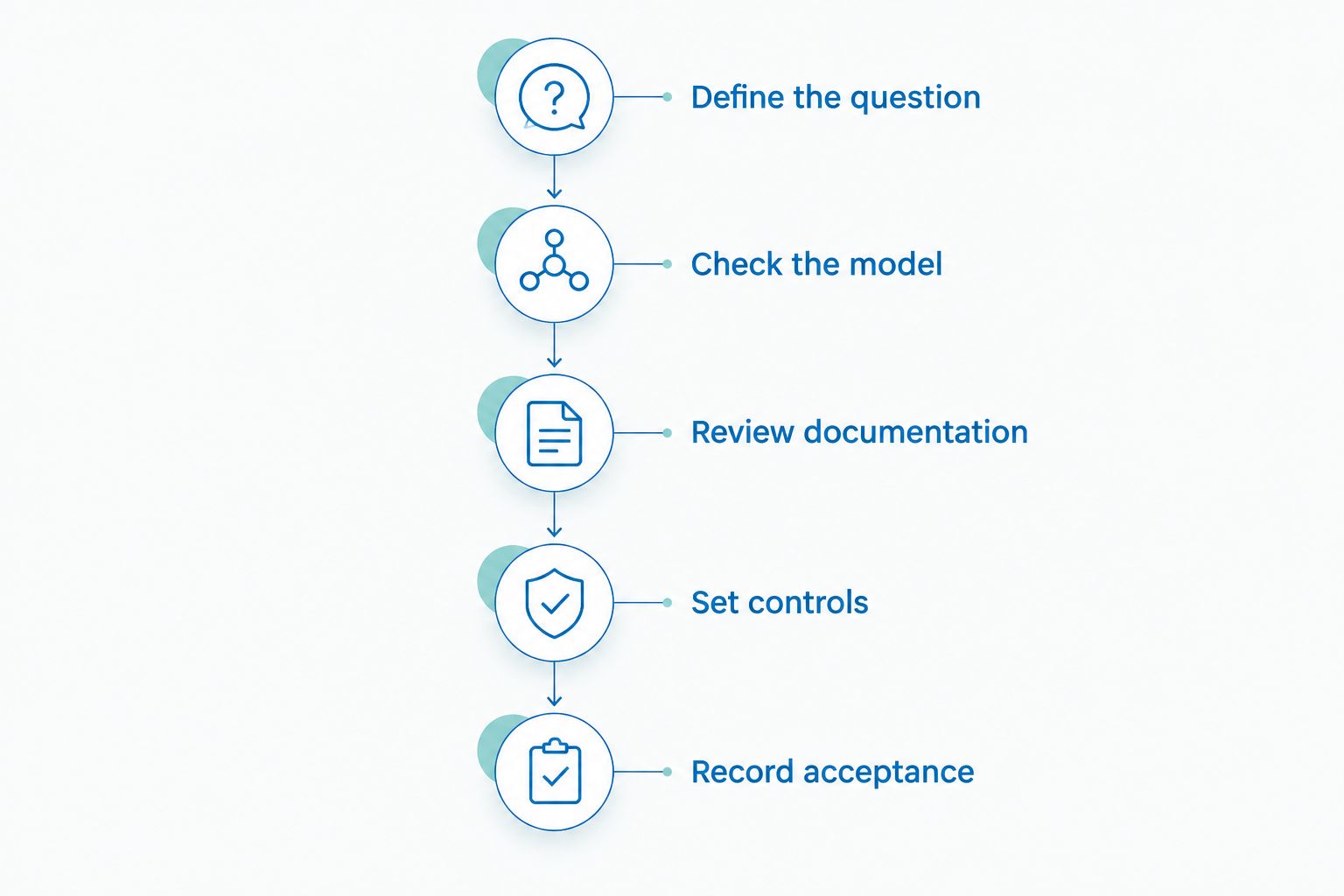
For your 2026 procurement record, use the same sequence for every candidate. Record the question first, then establish what evidence will make the material acceptable for that experiment.
- Define the question: State the mechanism or interaction you intend to investigate.
- Check the model: Confirm that the experimental system can address that question.
- Review documentation: Examine identity, purity, methods, and batch linkage.
- Set controls: Specify how you will assess background and alternative explanations.
- Record acceptance: Document the decision and its supporting evidence.
Chromatographic purity and identity are different analytical questions. High-performance liquid chromatography, or HPLC, separates sample components under specified conditions; a reported peak-area percentage is not automatically the percentage of the vial's total mass that is the intended peptide. Detector response and method conditions matter.
Mass spectrometry measures mass-to-charge signals and can support identity assessment. A matching mass alone does not establish every structural feature, biological activity, sterility, or the absence of all contaminants.
For Anchorpeptide research peptides, review the documentation for the exact product and batch under consideration. The COA verification guide provides a related starting point for document review; a guide does not replace the relevant analytical report.
Do not infer batch documentation coverage from a general supplier description. Ask which report belongs to the material, what was measured, and which acceptance questions remain outside that report's scope.
How these research peptides are ranked
The order reflects specificity of research fit and the ability to assign each compound a distinct experimental question. It is not a ranking of purity, potency, supplier quality, or successful laboratory outcomes.
The comparison uses the supplied catalog descriptions for compound roles. No comparative testing, universal batch verification, or performance equivalence is claimed.
Which research peptide should your startup choose?
For a cardiolipin-focused mitochondrial question, start your shortlist with SS-31. For mitochondrial-derived peptide biology, choose MOTS-C instead. Select Tirzepatide or Retatrutide only when their respective receptor combinations match the study.
If your startup has not defined its endpoint, the next move is experimental design, not compound selection. In 2026, a useful shortlist is one your team can justify through mechanism, controls, and documented material acceptance.
FAQ
What’s the best research peptide for a biotech startup?
The best research peptide is the one that matches a defined experimental question and passes your material acceptance criteria. SS-31 fits cardiolipin-focused research, while MOTS-C fits mitochondrial-derived peptide studies; neither is a universal default.
Is SS-31 better than MOTS-C for mitochondrial research?
SS-31 and MOTS-C address different mitochondrial research questions. SS-31 is described as associating with cardiolipin, while MOTS-C is a mitochondrial-derived peptide studied in cellular metabolism and AMPK research.
How do Tirzepatide and Retatrutide differ for laboratory studies?
Tirzepatide is described as a dual GIP/GLP-1 receptor agonist, while Retatrutide targets GLP-1, GIP, and glucagon receptors. Choose according to the receptor combination your experimental design needs to investigate.
Does a Certificate of Analysis prove a peptide will work in my assay?
A Certificate of Analysis does not establish performance in your assay. It reports specified analytical results, which you must evaluate separately from biological activity in your experimental model.
Does high HPLC purity prove peptide identity?
High HPLC purity alone does not prove peptide identity. Chromatographic purity and identity require different analytical considerations, and the method’s scope determines what conclusions the result supports.
Should a startup begin with a peptide blend?
Begin with single-compound arms when your question requires attribution to individual components. A blend is appropriate only when the combined material is itself the research question and the controls support interpretation.
Can these research peptides be used in humans or animals?
These recommendations are strictly for laboratory and in-vitro research, not human or veterinary use. They provide no dosing, administration, therapeutic, or personal-use guidance.
One last thing
A document can be genuine and still answer the wrong question. Before accepting material from Anchorpeptide, write the exact claim each analytical result supports beside the claim your experiment requires. Any gap belongs in the acceptance decision, not in an assumption.
Related guides
- Peptide blends for in-vitro research
- Retatrutide research peptides for metabolic studies
- GLP-1 receptor agonist research peptides