

Choose Anchorpeptide if you need to shortlist named research peptides and blends for a US laboratory; choose American Peptides if your laboratory has already qualified that supplier and its offered material meets your current protocol. For 2026 procurement, the deciding axis is documented fit for your experiment—not a supplier-wide claim of better purity.
- Anchorpeptide vs American Peptides is a research-supplier decision: compare the exact compound, offered lot, analytical evidence, and laboratory requirements.
- Anchorpeptide research peptides include individual compounds and named blends; qualify each selected material separately.
- Choose American Peptides when an existing laboratory qualification remains applicable to the material and current procurement requirements.
- A Certificate of Analysis reports specified tests; it does not establish suitability for every experimental endpoint.
Why this matters
A research supplier comparison becomes useful when it separates catalog fit from material qualification. Finding the correct compound gets a supplier onto your shortlist. Accepting the material requires evidence tied to the specification your laboratory actually needs.
For a 2026 purchasing decision, use the same acceptance criteria for both suppliers. Do not treat a familiar name as proof of current lot quality, or a detailed product description as a substitute for analytical documentation.
Everything discussed here is for qualified laboratory and in-vitro researchers. Research-use-only materials are not for human or veterinary use, and this comparison provides no administration or personal-use guidance.
At a glance
The table separates stated catalog information from the checks you should apply to either supplier. It is a procurement outline, not a supplier-wide quality ranking.
| Dimension | Anchorpeptide | American Peptides |
|---|---|---|
| Best for | Researchers shortlisting the named individual peptides and blends described below | Laboratories with an applicable, completed supplier qualification |
| Catalog fit | Includes BPC-157, SS-31, MOTS-C, and named multi-compound blends | Match the offered compound and formulation to your protocol |
| Standout consideration | Individual compounds and predefined blends provide distinct screening options | An existing qualification is useful when it covers the current material and requirements |
| Identity evidence | Require analytical evidence appropriate to the selected compound | Apply the same identity requirements |
| Purity evidence | Review the method and result for the offered lot | Apply the same purity requirements |
| Traceability | Match the supplied material to its analytical documentation | Require the same material-to-document match |
| Experimental fit | Select individual compounds or blends according to the study question | Evaluate the offered formulation against the same study question |
| Pricing model | Review current quotation and purchasing terms | Review current quotation and purchasing terms |
Catalog fit favors the supplier offering your exact research material
A named compound match is the first gate, not the final verdict. A supplier offering a related peptide does not necessarily offer the material specified in your protocol. Check the complete compound name and relevant formulation details before comparing analytical results.
The catalog described here includes individual compounds such as BPC-157, SS-31, and MOTS-C, alongside multi-compound research blends. These entries provide concrete starting points for screening. They do not establish that every listed material fits every experimental design.
For example, the supplied catalog describes MOTS-C as a 16-amino-acid mitochondrial-derived peptide and SS-31 as a mitochondria-targeted tetrapeptide. Those descriptions identify different research materials, not interchangeable options simply because both appear in mitochondrial research.
Your catalog review should answer:
- Does the offered material match the protocol's specified compound?
- Is it an individual compound or a mixture?
- Does the description distinguish peptides from other research compounds?
- Are the relevant formulation details documented?
The advantage goes to the supplier whose actual offering matches the specification. Catalog breadth alone earns no quality advantage.
An existing American Peptides qualification wins on continuity
Choose an already-qualified supplier when the qualification still covers the purchase. This recommendation is strongest for a laboratory continuing an established experimental workflow under its own procurement and quality procedures.
An existing American Peptides qualification is a reason to retain that supplier only when it applies to the current material, documentation requirements, and purchasing conditions. A historical approval of a different compound is not equivalent to approval of the present order.
Continuity also has a limit: it cannot excuse a specification mismatch. If the current offer lacks an essential identity result, formulation detail, or document connection, evaluate that gap before accepting the material.
For your 2026 review, distinguish supplier approval from lot acceptance. Supplier approval concerns the organization and its assessed processes. Lot acceptance concerns the particular material offered for your experiment. Keep those decisions separate in your records.
This gives an established supplier a genuine use case without assuming that familiarity proves analytical quality.
Neither supplier wins identity without compound-specific evidence
Peptide identity asks whether the material corresponds to the intended compound. Purity asks a different question: how much of a measured signal or sample is attributed to the intended component under a specified method.
Mass spectrometry, abbreviated MS, measures mass-to-charge relationships. A suitable mass result can support an identity assessment, but a matching mass alone does not establish every structural detail or exclude every possible impurity.
Ask what identity evidence supports the selected material. The answer should identify the analytical method and connect the result to the material under consideration. A generic statement about testing is not the same as a result for the offered lot.
Use the same identity standard for both suppliers. If your protocol requires information beyond a reported molecular mass, define that requirement before purchasing rather than interpreting an incomplete document after receipt.
The winner on identity is therefore the supplier that meets your documented identity specification. There is no defensible supplier-wide winner based on product names alone.
Neither supplier wins purity from a headline percentage
High-performance liquid chromatography, abbreviated HPLC, separates sample components under specified analytical conditions. A reported chromatographic area percentage describes the relative detector response assigned to a peak within that method.
That percentage is not automatically the peptide's mass fraction, the amount of peptide in a container, or proof of sterility. Different questions require appropriate measurements. A clean chromatogram does not answer all of them.
When reviewing purity evidence, examine:
- The analytical method and relevant conditions.
- How the intended peak was identified.
- Whether the result belongs to the offered material.
- What the reported percentage actually measures.
- Which required attributes remain outside that test's scope.
Compare like methods and like specifications—not isolated percentages. A more impressive-looking figure is not a procurement advantage if it answers a different analytical question.
For 2026 supplier assessments, write the acceptance criterion before viewing competing results. That keeps the decision anchored to experimental requirements rather than whichever document presents the largest headline number.
Traceability wins when the document follows the material
A Certificate of Analysis, or CoA, records specified analytical results for an identified material. Its practical value depends on whether you can connect that document to what the laboratory receives.
Check the product identifier, lot identifier, document date, reported methods, and results. Then check whether the identifiers on the received material agree with the documentation. A document for a different lot cannot establish the analytical characteristics of the lot in hand.
Use a simple sequence in your receiving procedure:
- Material match: Confirm the compound and formulation.
- Lot match: Connect the received identifier to the analytical record.
- Method scope: Identify what each reported test measures.
- Acceptance decision: Compare the results with your written criteria.
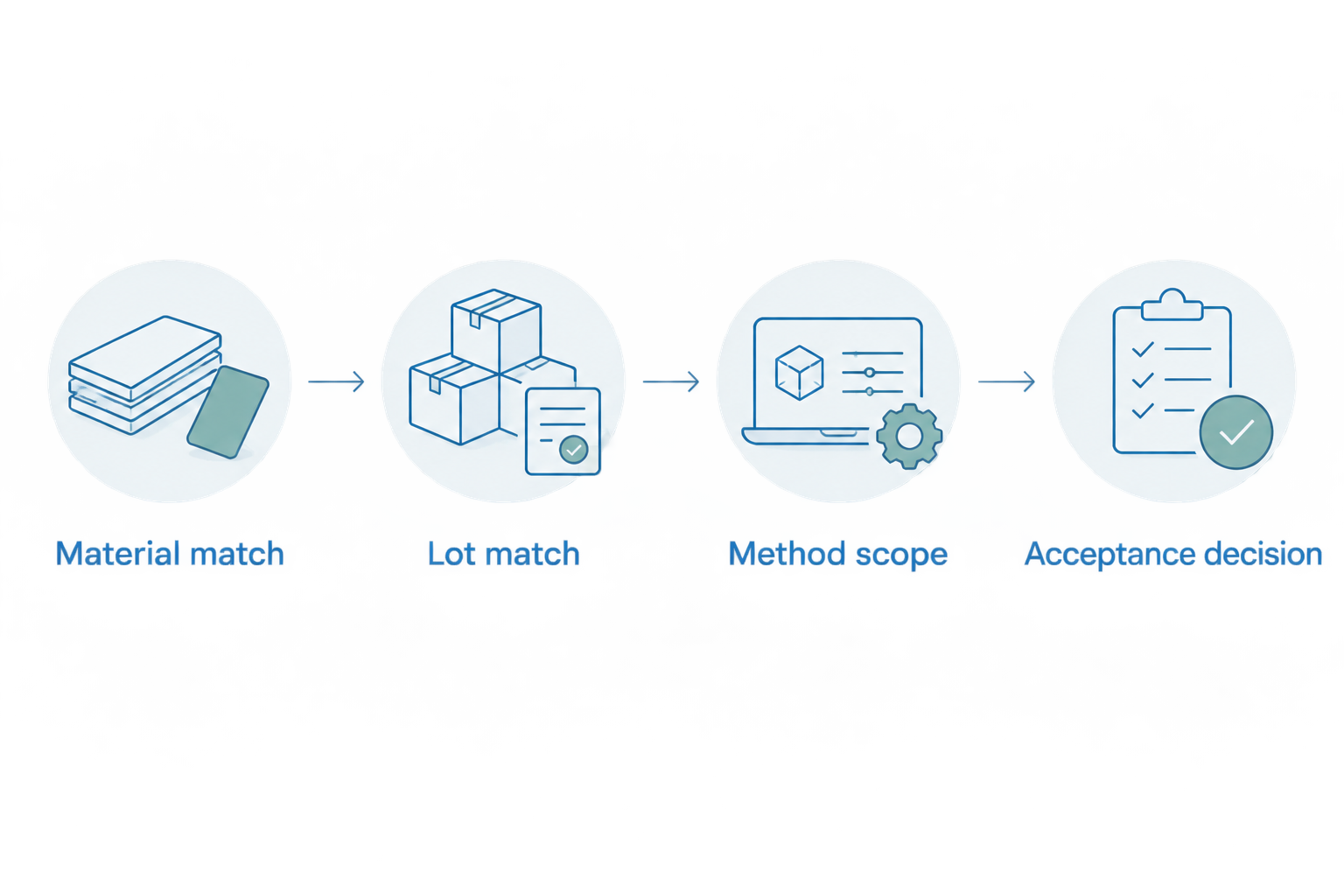
Apply this sequence to either supplier. Documentation wins on a verified connection to the material, not on the presence of a downloadable certificate alone. Retain the applicable record with the laboratory's procurement and experimental documentation.
Individual compounds and blends serve different study designs
An individual compound and a predefined blend answer different procurement needs. Choose the format that matches the question your experiment is designed to investigate.
BPC-157 is listed as an individual synthetic pentadecapeptide. The GLOW Blend – BPC-157 + GHK-Cu + TB-500 (70mg) combines three named peptides. The catalog also lists KLOW Blend – BPC-157 + GHK-Cu + TB-500 + KPV (80mg), adding another component to that combination.
Those distinctions matter more than treating a larger total amount or a longer ingredient list as an advantage. If your study needs separate control over each component, evaluate individual materials. If your approved design specifies a mixture, verify the mixture's composition and supporting documentation.
| Research format | Best for | Main limitation to address |
|---|---|---|
| Individual compound | Designs requiring separate assessment of a named material | Combination experiments require separately planned material controls |
| Predefined blend | Designs explicitly specifying a multi-compound mixture | The blend fixes a combination rather than providing independent components |
The following catalog examples illustrate that distinction; they are not interchangeable recommendations.
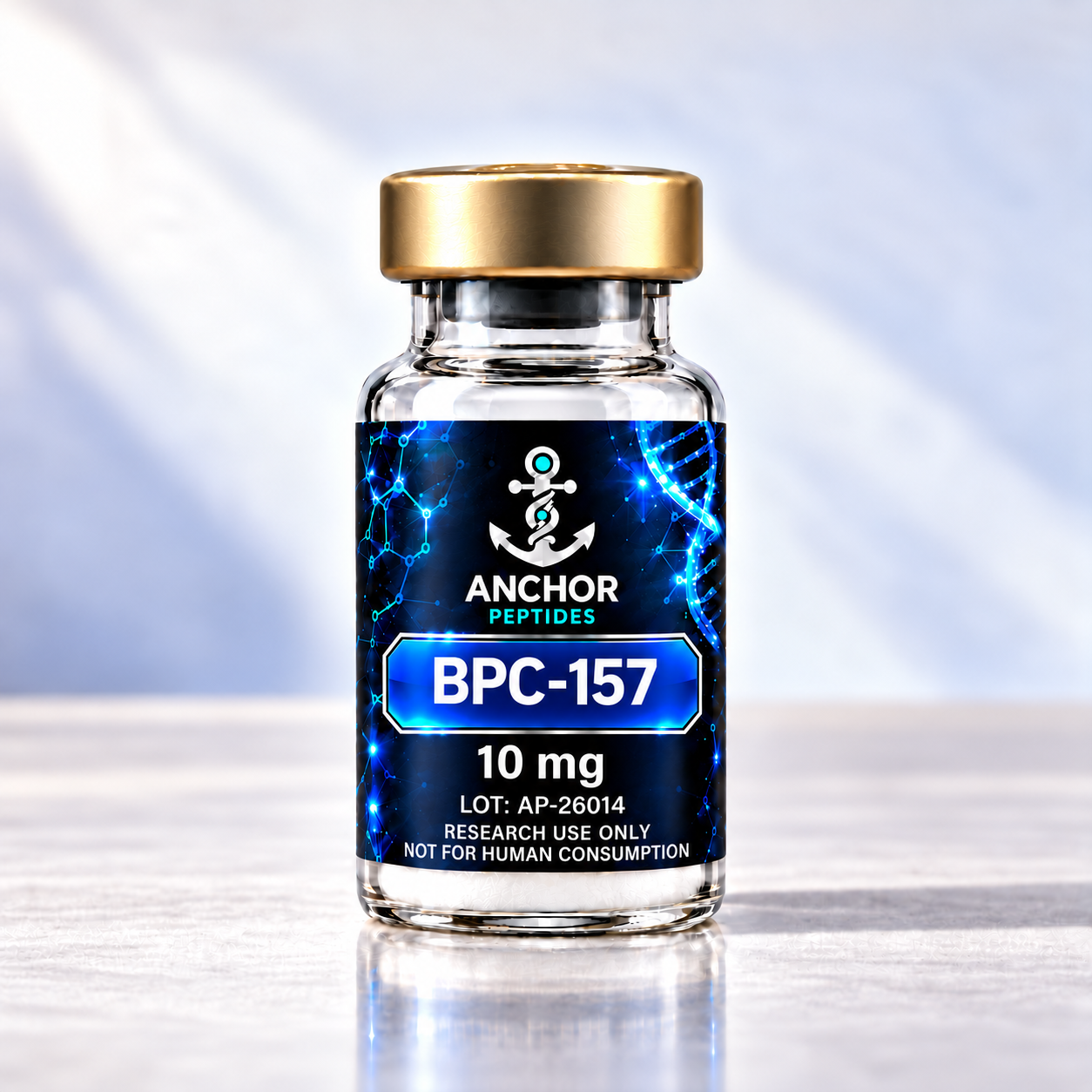
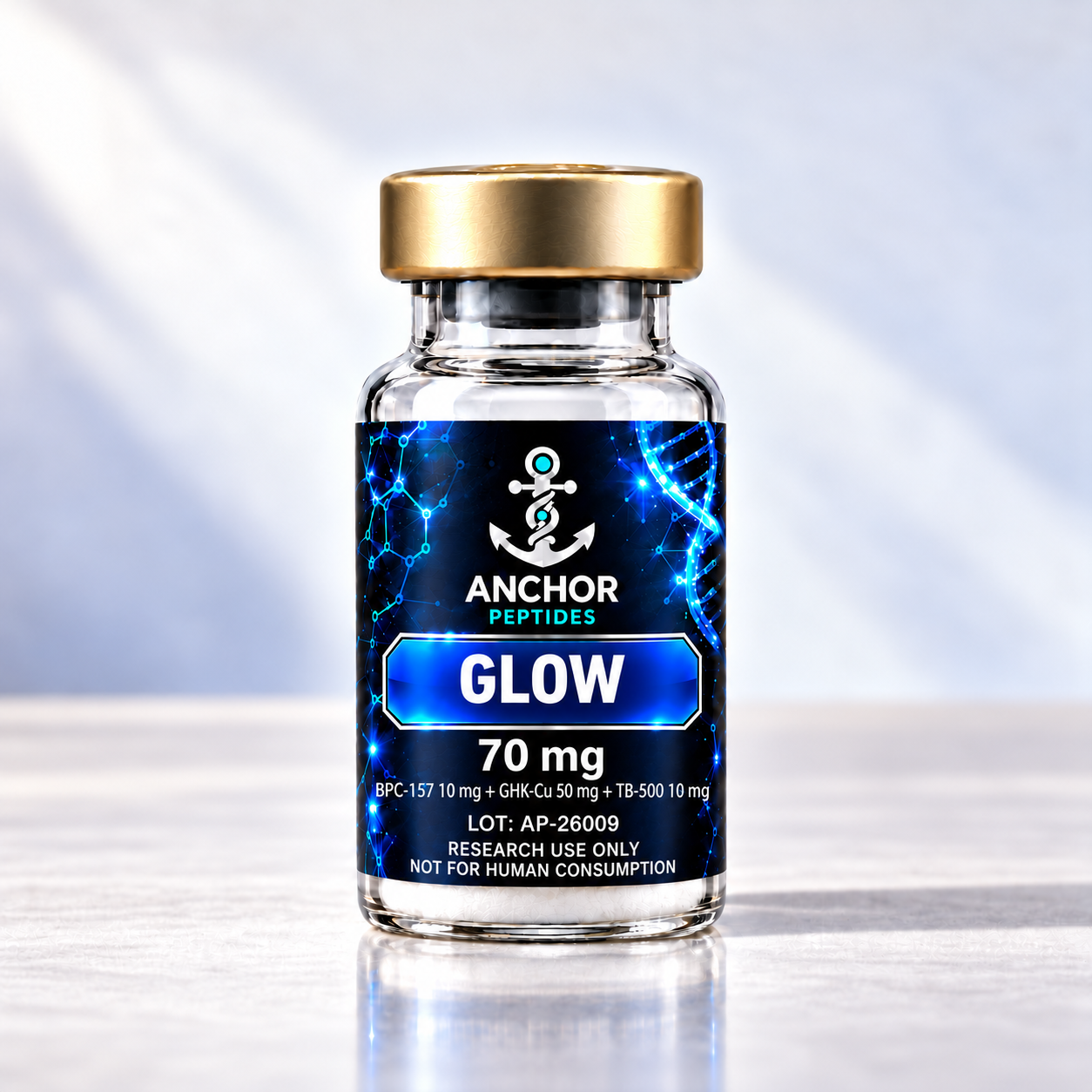
The better format is the one your protocol specifies. Neither an individual compound nor a blend receives a general quality advantage from its format.
Pricing and purchasing terms require a matched comparison
Compare current commercial terms only after establishing that the materials meet the same research specification. Otherwise, the purchasing comparison mixes unlike materials and leaves the central qualification question unresolved.
Request terms covering the exact compound or blend, stated quantity, required documentation, and applicable purchasing conditions. Distinguish a catalog transaction from a negotiated quotation wherever those models are actually offered; do not assume either supplier supports a particular arrangement.
For a 2026 procurement record, retain the commercial terms alongside the accepted specification. Predictability comes from knowing what the transaction includes. Flexibility comes from terms that address your laboratory's actual requirements, not from a supplier label.
There is no purchasing-model winner until both offers describe comparable material and obligations. Do not infer analytical quality from commercial positioning.
Final verdict: shortlist by fit, accept by evidence
Choose Anchorpeptide if you are building a research-material shortlist
Best for: a US laboratory evaluating named individual peptides and blends. The stated catalog provides specific compounds and combinations to assess against your experimental design. Treat that catalog fit as the beginning of qualification, then verify the selected material's documentation and acceptance criteria.
Choose American Peptides if you have an applicable qualification
Best for: a laboratory continuing a documented supplier relationship that meets current requirements. Retain that supplier when the qualification remains applicable and the offered material meets the protocol. Reassess whenever the material or requirements fall outside that approval.
| Dimension | Winner |
|---|---|
| Catalog fit | Supplier offering the exact specified material |
| Qualification continuity | American Peptides when its existing approval remains applicable |
| Identity evidence | Supplier meeting the compound-specific identity requirement |
| Purity evidence | Supplier meeting the method-specific purity requirement |
| Traceability | Supplier connecting the received lot to its analytical record |
| Experimental format | Individual compound or blend matching the protocol |
| Purchasing terms | Offer matching the accepted specification and obligations |
FAQ
Is Anchorpeptide better than American Peptides for research peptides?
There is no defensible blanket winner without comparing the exact research material and its supporting evidence. Select by protocol fit, applicable supplier qualification, lot documentation, and analytical acceptance criteria.
When should a laboratory keep an existing American Peptides supplier relationship?
Keep an existing relationship when its qualification remains applicable and the offered material meets current requirements. Supplier familiarity does not replace acceptance of the particular material being purchased.
Does a Certificate of Analysis prove a peptide is suitable for my experiment?
No, a Certificate of Analysis reports specified analytical results rather than universal experimental suitability. Your laboratory must compare its scope and results with the requirements of the planned work.
Does HPLC purity tell me how much peptide is in a container?
An HPLC area percentage alone does not establish the amount of peptide in a container. Review the measurement’s defined scope and request appropriate quantitative evidence when your specification requires it.
Are peptide blends better than individual research compounds?
Neither format is inherently better for every experiment. Individual compounds support separate component evaluation, while a predefined blend is relevant when the study design specifies that mixture.
What should a laboratory compare before requesting purchasing terms?
Compare the exact compound, formulation, required analytical evidence, and documentation first. Commercial offers become meaningful only when they refer to materials meeting a comparable specification.
Are these research peptides intended for human or veterinary use?
No, the materials discussed here are for laboratory and in-vitro research only. This comparison does not provide human or veterinary use advice.
One last thing
Ask what evidence would cause your laboratory to reject the material. If that question has no written answer, you do not yet have a usable acceptance specification. Define it before reviewing supplier claims; the strongest purchasing decision is one another qualified researcher can reconstruct from the record.
Related guides
- Research peptide suppliers for US laboratories
- CoA-verified research peptides
- Peptide blends for in-vitro stacking research