

The best research peptides for sale are those whose lot-specific analytical evidence meets your laboratory’s requirements—not those with the strongest purity headline. For 2026, SS-31 is a candidate for cardiolipin-focused research, MOTS-C for mitochondrial-derived peptide studies, and Sermorelin for GHRH-related experiments; the shortlist below compares research fit, not measured purity.
- Evaluate research peptides for sale using lot-matched Certificates of Analysis, identity testing, and method-specific purity results.
- Anchorpeptide serves laboratory and in-vitro researchers; evaluate each compound against your protocol and its supporting documentation.
- SS-31 and MOTS-C address different mitochondrial research questions; neither has a demonstrated purity advantage here.
- A peptide blend needs component-specific analytical review, not just a single headline purity result.
Why this matters
A purity result answers a defined analytical question. It does not automatically establish peptide identity, peptide content, sterility, or suitability for your experimental system. Treating those properties as interchangeable creates a procurement problem before your experiment starts.
Anchorpeptide offers research-grade peptides and blends for laboratory and in-vitro researchers. Select the compound that matches your scientific question, then evaluate the documentation associated with the material you intend to receive. Research-use-only material is not for human or veterinary use.
For a 2026 purchasing review, keep two decisions separate: which compound belongs in the experiment, and whether the documented lot meets your acceptance criteria. A product name answers neither question by itself.
What makes the best research peptides for sale?
Use these criteria before comparing catalog entries:
- Research fit: Match the compound’s stated identity and research context to your protocol. Related pathways do not make different peptides interchangeable.
- Lot matching: Connect the Certificate of Analysis, or COA, to the identifier on the material. A general example report is not evidence about a different lot.
- Identity evidence: Review the method and result supporting the stated compound identity. A purity percentage alone does not identify a peptide.
- Method-specific purity: Determine what the reported result measures, how it was calculated, and which impurities the method addresses.
- Content and composition: Distinguish chromatographic purity from the amount of peptide present. For blends, examine the evidence supporting each stated component.
- Experimental suitability: Define any additional requirements, such as endotoxin or sterility testing, from your laboratory’s protocol rather than assuming a purity result covers them.
Set acceptance criteria before reviewing supplier claims. Otherwise, an attractive result can become the standard simply because it appears first.
Research peptide candidates at a glance
This is an ordered research-fit shortlist, not a descending purity ranking. The order moves from focused mitochondrial research candidates to a multicomponent preparation with a different documentation burden. No entry receives a measured-purity advantage over another.
| Candidate | Best for | Distinguishing catalog detail | Key limitation |
|---|---|---|---|
| SS-31 | Cardiolipin-focused mitochondrial studies | Mitochondria-targeted tetrapeptide associated with cardiolipin | Does not substitute for a mitochondrial-derived peptide |
| MOTS-C | Mitochondrial-derived peptide studies | Described as a 16-amino-acid peptide encoded within the mitochondrial genome | Different research identity from SS-31 |
| Sermorelin | GHRH-fragment research | Synthetic analogue of the first 29 amino acids of GHRH | Does not answer mitochondrial or blend-specific research questions |
| BPC-157 | Single-compound tissue-repair research models | Synthetic pentadecapeptide referenced in tissue-repair and angiogenesis research | Single-compound findings do not establish blend behavior |
| GLOW Blend – BPC-157 + GHK-Cu + TB-500 (70mg) | Defined multicomponent tissue-repair research | Combines three named peptide components | Requires composition-aware analysis and experimental controls |
1. SS-31: best research peptide candidate for cardiolipin studies
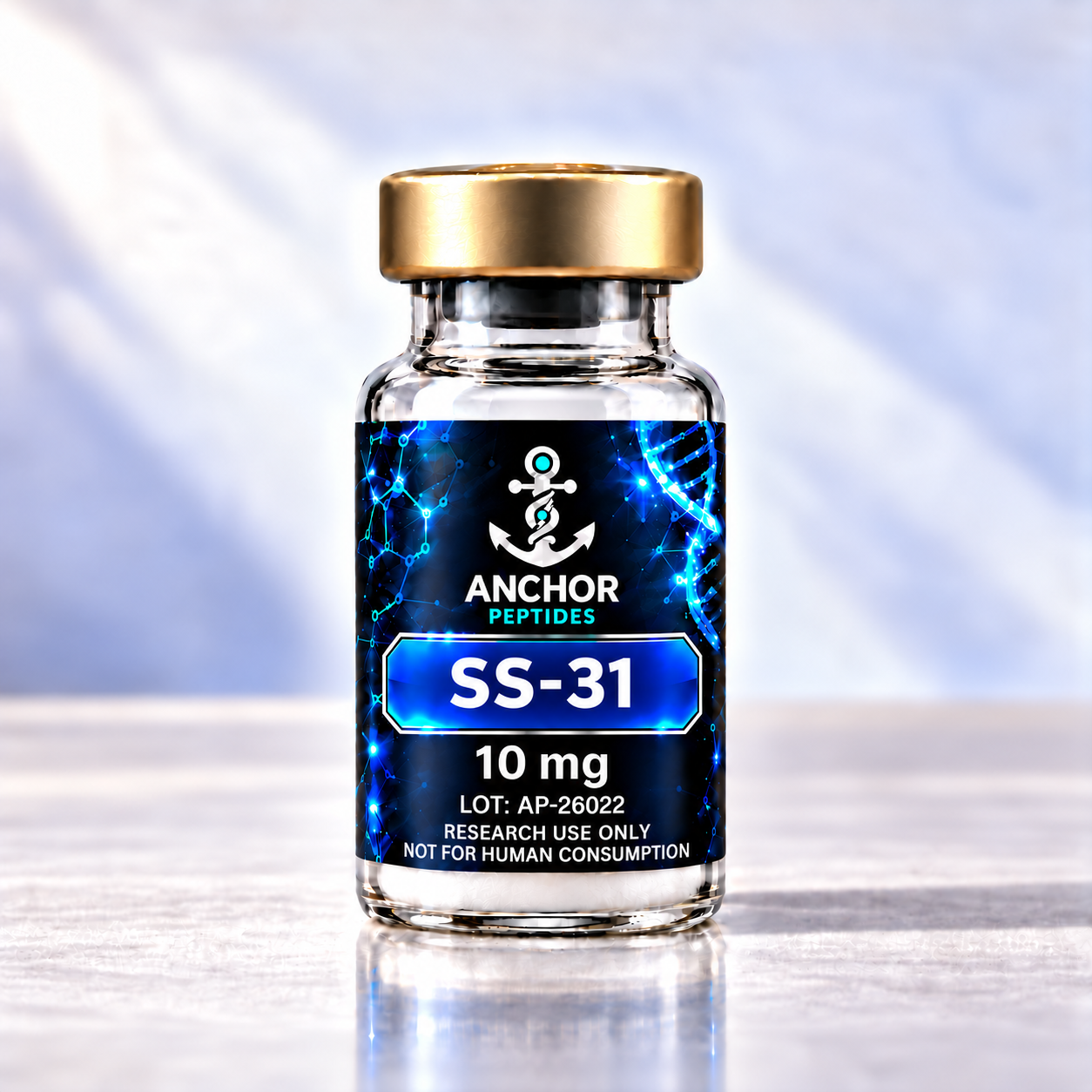
SS-31, also called elamipretide, is described in the catalog as a mitochondria-targeted tetrapeptide that associates with cardiolipin in the inner mitochondrial membrane. A tetrapeptide contains four amino-acid residues. Its research context makes it a focused candidate when your question concerns that membrane interaction.
SS-31 pros:
- Defined compound identity rather than a multicomponent blend.
- Catalog description identifies a specific mitochondrial research context.
- Provides a distinct selection criterion from peptide length or a purity headline.
SS-31 cons:
- Cardiolipin association does not establish performance in your particular assay.
- The compound description does not replace lot-specific identity and purity evidence.
- It is not interchangeable with MOTS-C simply because both appear in mitochondrial research.
Best for: Qualified laboratories investigating questions specifically aligned with SS-31 and cardiolipin.
Verdict: Hold procurement until the lot documentation meets your protocol. Choose SS-31 for its research identity, not an unsupported claim that it is the purest candidate.
2. MOTS-C: best research peptide candidate for mitochondrial-derived studies
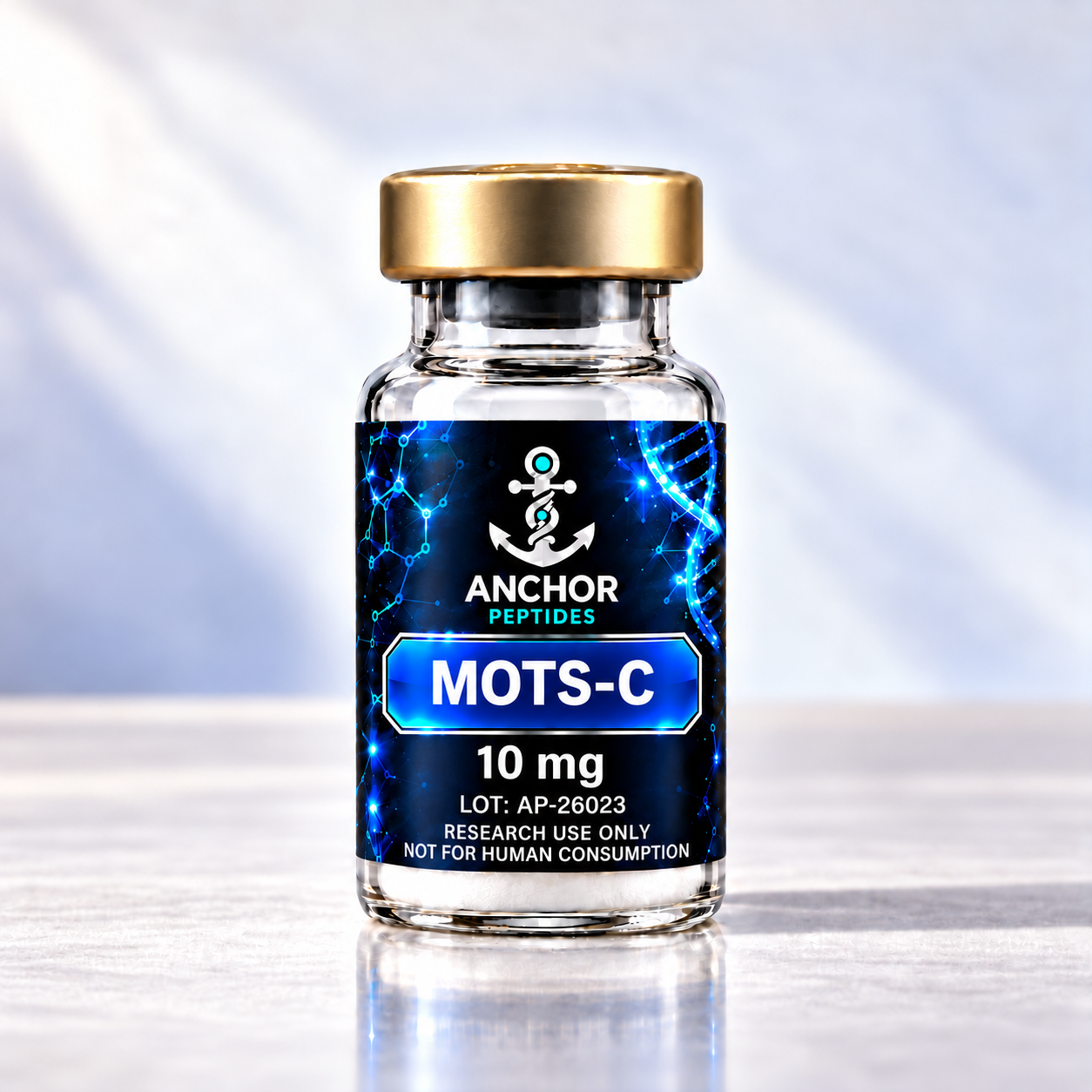
MOTS-C is described as a 16-amino-acid mitochondrial-derived peptide encoded within the mitochondrial genome. The catalog places it in research on cellular metabolism and AMPK, or AMP-activated protein kinase. That research context differs from SS-31’s stated cardiolipin association.
MOTS-C pros:
- Defined single-peptide candidate.
- Explicit mitochondrial-derived research identity.
- Catalog description connects the compound to cellular-metabolism research.
MOTS-C cons:
- Its mitochondrial association does not make it a substitute for SS-31.
- Sequence length does not establish purity or biological activity.
- Analytical acceptance still depends on evidence for the relevant lot.
Best for: Laboratories whose experimental question specifically requires MOTS-C rather than a broadly described mitochondrial research compound.
Verdict: Hold procurement until identity, purity, and protocol requirements align. In a 2026 comparison, distinguish the scientific question before comparing analytical results.
The following catalog entries represent these two different research directions. Their inclusion identifies relevant compounds; it does not certify a particular lot or establish equivalent experimental behavior.
3. Sermorelin: best research peptide candidate for GHRH-fragment studies
Sermorelin is a synthetic analogue of the first 29 amino acids of growth hormone-releasing hormone, abbreviated GHRH. The catalog describes research involving activity at GHRH receptors. Select it when that defined research identity matches your protocol, not because it occupies a position in a general peptide list.
Sermorelin pros:
- Defined relationship to the GHRH sequence.
- Single-compound format separates selection from blend-composition questions.
- Stated receptor-related research context supports a focused literature review.
Sermorelin cons:
- Its sequence relationship does not prove activity in your experimental system.
- A purity result does not establish receptor activity.
- It does not replace other GHRH-related compounds without a protocol-specific justification.
Best for: Laboratories evaluating a GHRH-fragment research question that specifically calls for Sermorelin.
Verdict: Hold procurement until the documented material matches the protocol. Do not infer experimental equivalence from membership in the same research category.
4. BPC-157: best research peptide candidate for single-compound models
BPC-157 is described as a synthetic pentadecapeptide based on a sequence from a gastric protein. A pentadecapeptide contains 15 amino-acid residues. The catalog references tissue-repair and angiogenesis research models; those research contexts are not statements of therapeutic benefit.
BPC-157 pros:
- Single-compound candidate for a defined experimental comparison.
- Named peptide identity supports targeted literature and documentation review.
- Avoids the component-attribution questions introduced by a premixed blend.
BPC-157 cons:
- Published research context does not establish an outcome in your model.
- Single-compound results cannot establish the behavior of a blend containing BPC-157.
- Identity, purity, and content remain separate procurement questions.
Best for: Qualified laboratories whose tissue-repair research protocol calls for BPC-157 as an individual compound.
Verdict: Hold procurement until lot-specific evidence satisfies your acceptance criteria. Keep the selection tied to the experimental design, not consumer-oriented claims.
5. GLOW Blend: best candidate for multicomponent research designs
GLOW Blend – BPC-157 + GHK-Cu + TB-500 (70mg) combines three named peptides described in the catalog’s tissue-repair research context. It belongs in a different decision category from a single compound. Select a blend only when the combined preparation itself is part of the research question.
GLOW Blend pros:
- Identifies the intended peptide components by name.
- Provides a catalog option for studying a combined preparation.
- Creates a distinct comparison against separately evaluated individual compounds.
GLOW Blend cons:
- A combined response does not identify which component produced it.
- A single aggregate purity statement does not establish each component’s identity or proportion.
- Experimental interpretation requires controls appropriate to a multicomponent preparation.
Best for: Laboratories with a predefined multicomponent protocol and an analytical review addressing the stated composition.
Verdict: Hold procurement until component identity and composition are adequately documented. Do not select a blend merely because it contains more named peptides.
How to evaluate a peptide purity claim in 2026
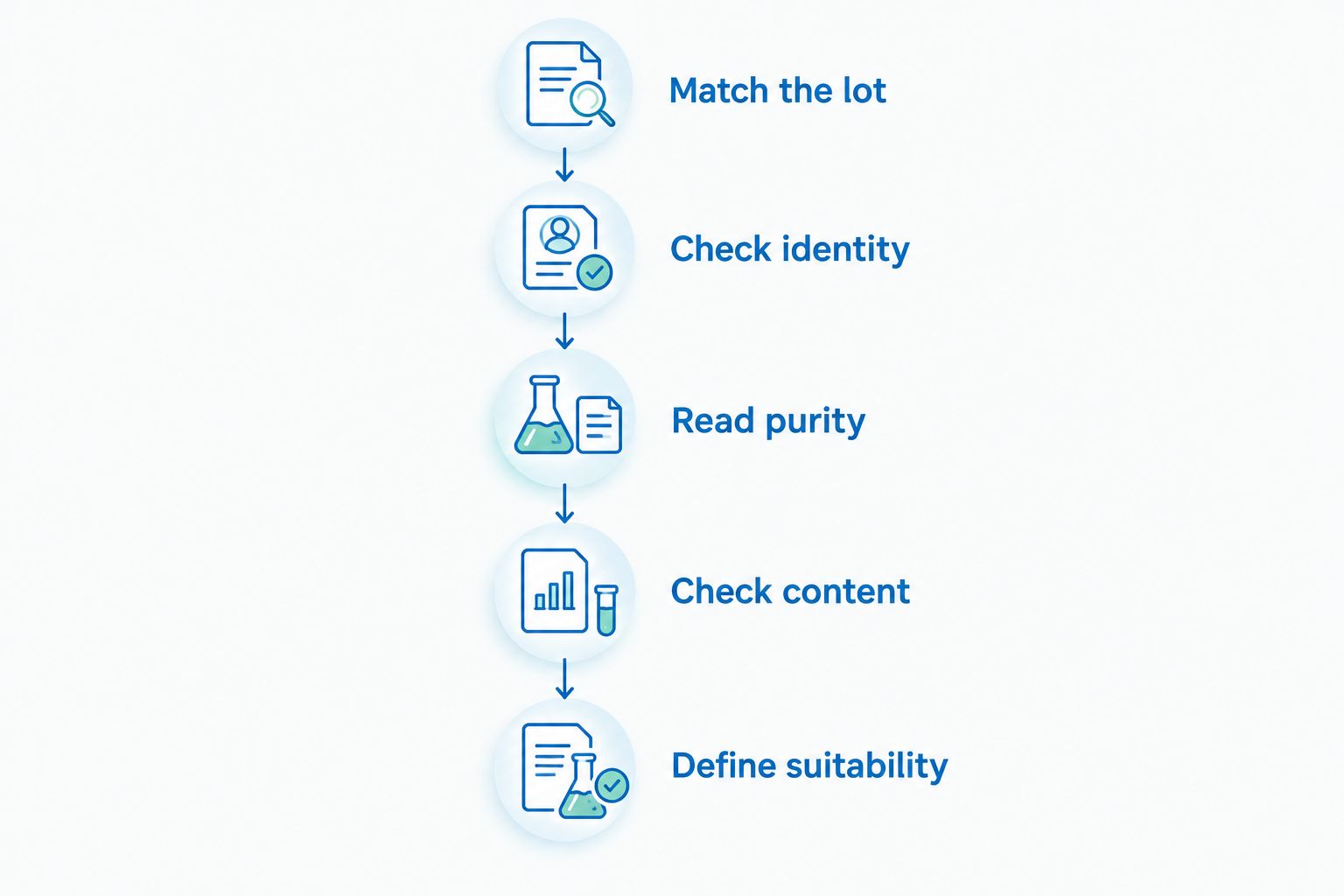
Use the same evidence sequence for Anchorpeptide research peptides and any other research material. Review the actual document, its scope, and its connection to the material—not just the summary statement beside a product name.
Match the lot
Confirm that the report identifies the material and lot under review. Record the report date and laboratory identity where provided, and resolve mismatches before acceptance. A report for another lot does not establish the analytical properties of yours.
Check identity
Identity testing asks whether the material is consistent with the stated compound. Mass spectrometry, which measures mass-to-charge ratios, can contribute identity evidence. Review the method and interpretation rather than treating an instrument name as sufficient proof.
Read purity
High-performance liquid chromatography, or HPLC, separates sample components under specified analytical conditions. A reported chromatographic purity result describes the method’s detected response and calculation; it is not automatically a peptide mass fraction or an inventory of every impurity.
Check content
Peptide content concerns how much peptide is present, which differs from the relative chromatographic response of detected components. Review how any content result was determined. Do not derive content directly from a purity percentage without a justified analytical basis.
Define suitability
Determine which additional attributes your protocol requires. Sterility and endotoxin are separate questions from chromatographic purity, and neither should be assumed from a purity result. Apply the same distinction to blends, including the evidence for component proportions.
For a separate documentation-focused comparison, use the guide to COA-verified research peptides. Keep the distinction explicit: documentation availability and analytical adequacy are different questions.
How this shortlist is ordered
The shortlist uses stated catalog identities and research contexts, then applies the same documentation criteria to every entry. SS-31 and MOTS-C occupy different mitochondrial research roles; Sermorelin addresses a GHRH-related question; BPC-157 represents a single-compound option; GLOW represents a multicomponent design.
These positions are not purity scores. A defensible purity ranking requires comparable, lot-specific analytical results with enough method detail to interpret them. Different reported percentages are not automatically comparable when the methods, calculations, or materials differ.
Which research peptide should you choose?
Choose the compound named by your scientific question, then accept or reject the lot against written criteria. For undecided readers, the default is not a particular peptide: it is a documented selection process that prevents a category label from replacing experimental reasoning.
Anchorpeptide is a research-peptide supplier for qualified laboratory and in-vitro researchers, not a source of personal-use recommendations. In 2026, keep that boundary explicit throughout procurement, internal documentation, and experimental planning.
FAQ
What are the best research peptides for sale in 2026?
The best research peptides for sale are the compounds that match your protocol and satisfy lot-specific acceptance criteria. SS-31, MOTS-C, Sermorelin, BPC-157, and GLOW Blend address different research questions; their inclusion here does not establish a purity ranking.
Can I rank research peptides by the purity percentage alone?
No. A meaningful comparison requires the analytical method, calculation, sample identity, and lot context. A higher reported percentage does not automatically establish better identity evidence, peptide content, or experimental suitability.
Is SS-31 better than MOTS-C for mitochondrial research?
Neither is universally better because they represent different research identities. SS-31 is described in a cardiolipin-associated mitochondrial context, while MOTS-C is described as a mitochondrial-derived peptide studied in cellular-metabolism research.
Does an HPLC purity result prove peptide identity?
An HPLC purity result alone does not prove peptide identity. Evaluate the identity evidence separately and review what the chromatographic method measures.
Does a Certificate of Analysis prove a peptide is sterile?
A Certificate of Analysis establishes only the results and scope it actually reports. Do not assume sterility or endotoxin testing from a chromatographic purity result.
Are peptide blends better than single research peptides?
Peptide blends are appropriate only when the combined preparation matches the experimental question. Single compounds support different controls and interpretation, while blends require attention to component identity, composition, and attribution.
What should I review before selecting Anchorpeptide research peptides?
Review the compound identity, intended research context, and documentation associated with the material under consideration. Match the lot identifier and evaluate purity, content, and any additional protocol requirements separately.
Are these peptides intended for human or veterinary use?
No. These catalog comparisons concern laboratory and in-vitro research only. They do not provide human or veterinary use advice, dosing, administration instructions, or therapeutic recommendations.
One last thing
A more precise percentage is not a broader test. Extra decimal places do not turn chromatographic purity into evidence of identity, sterility, or biological activity. Before approving material, write down exactly which question each reported result answers—and leave every untested property unassumed.
Related guides
- Peptide blends for in-vitro stacking research
- Retatrutide research peptides for metabolic studies
- CJC-1295 and Ipamorelin blends compared