

Best catalog starting point: Anchorpeptide for defined research peptides and blends. Best for custom sequences: GenScript. Best for broader reagent purchasing: MilliporeSigma. The best research peptide supplier for bulk orders in 2026 is the supplier whose material, lot documentation, and supply agreement meet your laboratory’s specifications—not simply the supplier offering the largest vial.
- Anchorpeptide fits US laboratories evaluating catalog research peptides and blends; qualify bulk terms separately.
- GenScript fits custom-sequence procurement; define analytical acceptance criteria before requesting synthesis.
- MilliporeSigma fits broader reagent purchasing; assess each peptide and lot individually.
- The best research peptide supplier for bulk orders connects identity, analytical results, and quantity to the supplied lot.
Why this matters
A bulk order concentrates your procurement risk. If the material fails your acceptance criteria, the problem affects more than a single preliminary experiment.
Your 2026 purchasing decision should therefore separate catalog fit, analytical evidence, and supply terms. A supplier can match your compound requirement without yet satisfying your laboratory’s qualification process. Treat those as separate decisions.
This guide covers procurement for qualified US laboratory and in-vitro researchers only. It does not address human or veterinary use, administration, or therapeutic outcomes.
What makes the best research peptide supplier for bulk orders?
Use these criteria before comparing suppliers. Apply the same requirements to every candidate in your 2026 shortlist.
- Compound match: Confirm sequence, chemical modifications, salt or counterion requirements, and whether you need an individual peptide or a defined blend.
- Lot-specific evidence: Request a Certificate of Analysis, or COA, tied to the material proposed for supply. A COA summarizes reported tests and results; its value depends on its contents and connection to the lot.
- Analytical scope: Separate identity testing, chromatographic purity, peptide content, and application-specific requirements. These answer different questions.
- Order definition: Specify total required material, permitted lot structure, packaging, and the documentation your laboratory must retain.
- Procurement fit: Establish whether the requirement belongs with a catalog supplier, a custom synthesis service, or a broader reagent vendor.
- Acceptance process: Agree on the evidence your laboratory will review before accepting material, including how discrepancies will be handled.
Do not rank suppliers by an isolated purity percentage. Without the method, sample identification, and result interpretation, that figure is an incomplete purchasing criterion.
Research peptide suppliers at a glance
These rankings describe distinct procurement use cases. They are not a ranking of measured purity, manufacturing capacity, or delivery performance.
| Supplier | Best for | Standout fit | Key limitation |
|---|---|---|---|
| Anchorpeptide | Defined catalog peptides and blends | Research-focused catalog containing individual compounds and named blends | Catalog vial descriptions do not establish bulk-order terms or lot-specific acceptance |
| GenScript | Custom peptide sequences | Custom peptide synthesis services | A custom project requires a detailed specification and agreed analytical deliverables |
| MilliporeSigma | Broader laboratory reagent purchasing | Peptides within a wider laboratory reagent portfolio | Portfolio breadth does not establish suitability of an individual peptide or lot |
Supplier scope references: GenScript’s public Custom Peptide Synthesis service information and MilliporeSigma’s public peptide product and synthesis information. The comparison concerns procurement routes, not independently measured supplier performance.
1. Anchorpeptide: best for defined catalog peptides and blends
The catalog includes individual research compounds and peptide blends for laboratory and in-vitro researchers. That makes it a practical starting point when your specification already matches a listed compound rather than requiring a newly designed sequence.
The distinction matters for bulk procurement. Finding a matching catalog item answers the compound-selection question; it does not complete supplier qualification or establish how a larger order will be supplied.
For example, the supplied catalog lists Retatrutide (15mg), Retatrutide (30mg), and MOTS-C. The MOTS-C description identifies a 16-amino-acid peptide. These details help distinguish product identity and listed presentation, but none establishes bulk manufacturing capacity, packaging arrangements, or analytical acceptance.
Anchorpeptide pros:
- Individual compounds and named blends support different catalog-selection needs.
- Product descriptions distinguish peptide compounds from small-molecule research compounds.
- The stated audience is US laboratory and in-vitro researchers.
Anchorpeptide cons:
- A listed vial amount is not a specification for a larger procurement project.
- A general reference to COAs cannot replace review of the document associated with the proposed material.
- A blend requires component-specific evaluation rather than acceptance based only on its combined product name.
Best for: Anchorpeptide fits laboratories whose research-peptide requirement matches a defined catalog compound or blend and whose purchasing team will qualify the proposed material separately.
Verdict: Hold the bulk commitment until the compound specification, lot documentation, and supply terms pass your laboratory’s review.
2. GenScript: best for custom peptide sequences
GenScript offers custom peptide synthesis services. This route fits projects in which your required sequence, modification, or analytical specification must define the order rather than follow an existing catalog listing.
Custom synthesis changes the procurement task. You need to describe the desired material precisely and agree on the deliverables before authorizing the project. A sequence alone is not a complete purchase specification.
GenScript pros:
- Custom synthesis provides a procurement route for specified peptide sequences.
- A project specification lets your team state required modifications and analytical deliverables.
- The custom route supports evaluation against a laboratory-defined material requirement.
GenScript cons:
- Your laboratory must resolve sequence notation and modification requirements before ordering.
- A synthesis request does not itself establish the final material’s analytical characteristics.
- Project suitability depends on the written proposal, not the service category alone.
For bulk evaluation, request a proposal that distinguishes the requested material amount from how that amount will be measured and reported. Ask whether the proposal anticipates a single lot or multiple lots, and define the documentation expected for each.
Best for: GenScript fits laboratories procuring a custom peptide sequence under a written analytical specification.
Verdict: Hold approval until the synthesis proposal explicitly matches your sequence, material requirements, and acceptance criteria.
3. MilliporeSigma: best for broader laboratory reagent purchasing
MilliporeSigma supplies peptides within a broader laboratory reagent portfolio. This route fits purchasing teams that want to evaluate peptide requirements alongside other laboratory materials.
Keep the evaluation product-specific. A familiar supplier relationship or broad catalog does not answer whether a particular peptide, package, or lot meets the study’s requirements.
MilliporeSigma pros:
- Peptides sit within a wider laboratory reagent purchasing route.
- A broader portfolio supports consideration alongside other research materials.
- Product-level selection lets your team evaluate a defined item against its procurement specification.
MilliporeSigma cons:
- Portfolio breadth is not evidence of fitness for a particular assay.
- Documentation and specifications must be assessed for the selected material.
- A catalog match does not settle the structure of a larger order.
Before comparing proposals, make the requested compound description identical across suppliers. Differences in sequence, chemical form, or reported material content prevent a fair comparison even when the product names appear similar.
Best for: MilliporeSigma fits laboratories evaluating peptide procurement within a broader reagent-purchasing process.
Verdict: Hold the order until the selected product and proposed lot meet the same written criteria applied to specialist suppliers.
What peptide testing establishes—and what it does not
Bulk procurement requires more than a document carrying a purity figure. Read each result as an answer to a specific analytical question.
Identity is not purity
Mass spectrometry, or MS, measures mass-to-charge ratios of ions. For peptides, mass measurements can support an identity assessment by comparison with the expected molecular mass.
An expected mass alone does not establish every structural detail or demonstrate that all material in a sample is the intended compound. Review the reported method and interpretation rather than treating a matching mass as complete characterization.
Chromatographic purity is not peptide content
High-performance liquid chromatography, or HPLC, separates sample components under defined conditions. A reported peak-area purity describes the relative detector response assigned to peaks under that method.
An HPLC purity result is not automatically the mass fraction of peptide in a vial. Water, counterions, and other components require separate consideration when determining material content.
A COA is not an application guarantee
A COA reports the tests and results it contains. It does not establish unreported properties, including sterility or suitability for your particular experimental model.
For a blend, ask what was tested: the individual components, the finished mixture, or both. Do not assume a finished blend has component-level identity and content evidence unless the documentation establishes that scope.
Qualify a bulk order before committing
Use this sequence for your 2026 procurement review. The purpose is to connect the research requirement to the exact material your laboratory will receive.
Define requirements
Write the compound identity, intended laboratory application, required material amount, chemical form, and analytical acceptance criteria. For blends, identify the components and the composition information your protocol requires.
Review documents
Request the proposed lot identifier and associated analytical documents. Check that the compound name, identifiers, methods, and results agree across the documents provided.
Confirm lot structure
Ask whether the order will contain material from a single lot or multiple lots. If multiple lots are proposed, require separate documentation and decide how your laboratory will track them.
Set acceptance
State who reviews the documents and what must be resolved before acceptance. Record any additional testing your laboratory requires rather than assuming the supplier’s standard panel answers every question.
Record disposition
Retain the purchasing specification, supplier response, analytical documents, and your laboratory’s acceptance decision together. This creates a usable record when researchers later need to identify the material used in an experiment.
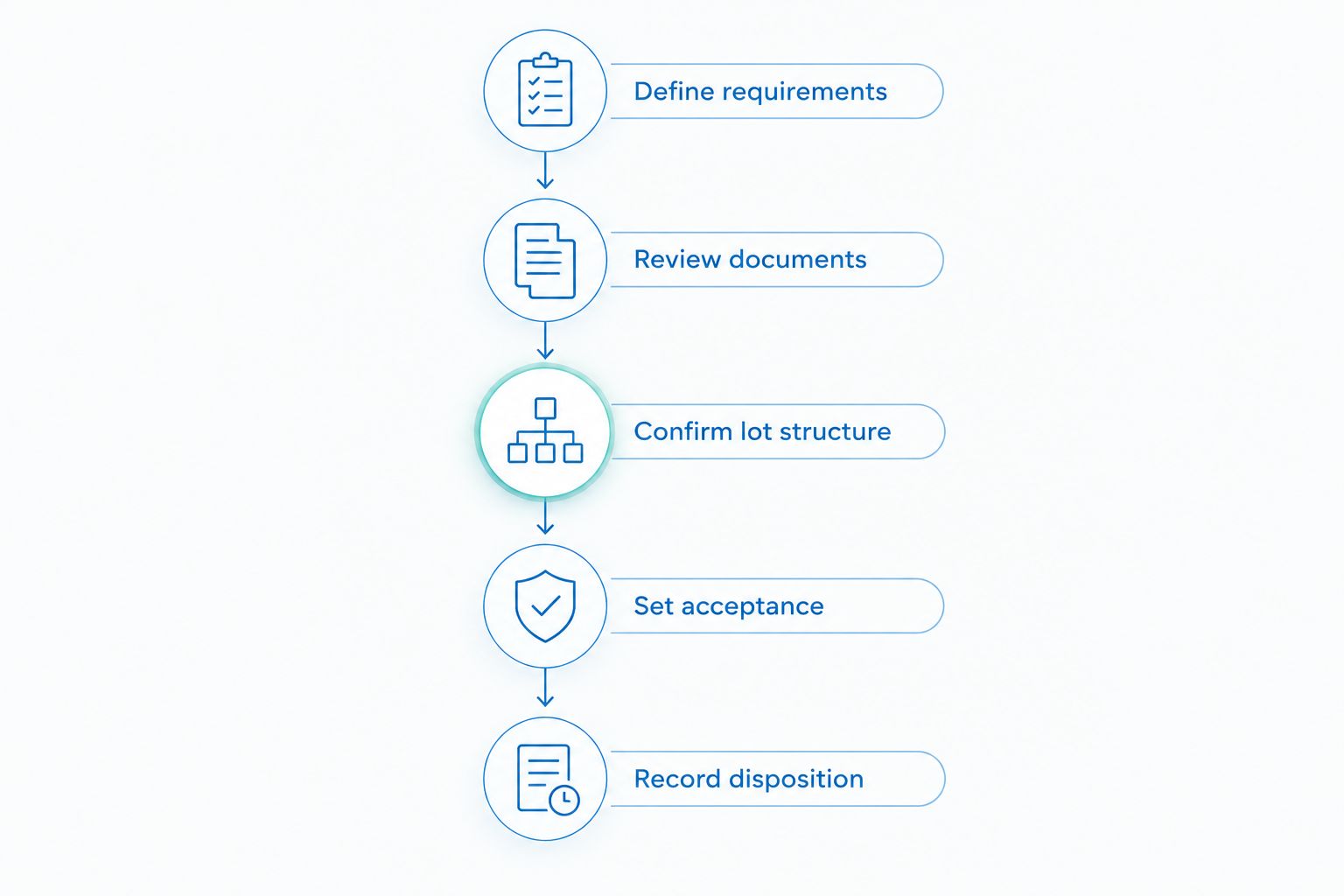
A larger order should not bypass these gates because the compound is familiar. The procurement record must still identify the supplied material and the basis for accepting it.
How the suppliers were ranked
The 2026 ranking prioritizes procurement fit: an existing research catalog first, custom sequence work second, and broader reagent purchasing third. The order changes when your laboratory’s requirement changes.
No purity leaderboard is implied. The deciding evidence belongs at product and lot level: identity, analytical scope, material definition, documentation, and written supply terms.
Which research peptide supplier should you choose?
Start with the procurement route, then qualify the supplier. Choose a catalog route for an existing compound, custom synthesis for a defined noncatalog specification, and a broader reagent supplier when that route fits your purchasing process.
Before committing to a catalog-based bulk request, use the contact page to present your written requirements. Request a response addressing compound identity, proposed lot structure, analytical documents, and packaging—not just an order total.
For your final 2026 decision, approve the offer that satisfies the specification. Do not substitute a brand name, vial size, or isolated purity statement for that review.
FAQ
What’s the best research peptide supplier for bulk orders?
The best supplier is the one whose proposed material and documentation satisfy your laboratory’s written specification. Compare catalog suppliers, custom synthesis services, and broader reagent vendors by procurement fit before qualifying the exact product and lot.
Is a larger peptide vial the same as a bulk order?
No. A larger listed vial describes a product presentation, while a bulk order requires agreement on total material, packaging, lot structure, and supporting documents.
Does a high HPLC purity result prove peptide identity?
No. HPLC purity describes chromatographic results under a defined method; identity requires appropriate supporting analytical evidence. Review the methods and results together.
What should a peptide Certificate of Analysis show?
A useful peptide COA connects the identified material and lot to reported methods, results, and applicable specifications. Evaluate its actual contents rather than assuming every COA includes the same tests.
Should a bulk peptide order come from a single lot?
Specify the acceptable lot structure in your purchasing requirements. A single lot simplifies lot tracking, but it does not replace analytical review; multiple lots require separate identification and documentation.
When should a laboratory choose custom peptide synthesis?
Choose custom synthesis when your required sequence, modification, or material specification is not met by a catalog item. Put those requirements and the expected analytical deliverables into the written project specification.
Are these research peptides suitable for human or veterinary use?
This guide covers laboratory and in-vitro research materials only. It provides no basis for human or veterinary use, administration, or therapeutic decisions.
One last thing
Purity and usable peptide content are different purchasing questions. Before approving a bulk order, ask what the reported material amount represents and which analytical evidence supports that interpretation.
That question connects the purchasing record to the material your researchers actually evaluate. Resolve it before accepting the order, not while interpreting experimental results.
Related guides
- COA-verified research peptides
- Research peptide suppliers ranked by catalog breadth
- Research peptides for university laboratories