

Best for a defined GHRH fragment: Sermorelin. Best for a separate GHRH-analogue comparison: Tesamorelin (10mg). Best for combined receptor-pathway research: CJC-1295 No DAC & Ipamorelin (10mg). This 2026 guide ranks research fit, not biological potency, and separates compound selection from analytical qualification.
- The best growth hormone secretagogue research peptides depend on receptor pathway, experimental controls, and analytical documentation.
- Sermorelin is the first pick for research requiring the GHRH 1–29 fragment.
- Tesamorelin suits a separate GHRH-analogue comparison; its catalog designation does not establish comparative performance.
- CJC-1295 No DAC & Ipamorelin combines pathways but cannot isolate each component’s contribution without controls.
- Anchorpeptide supplies research-grade peptides; qualify the specific material before laboratory use.
Why this matters
Growth hormone secretagogue terminology groups together compounds that do not share the same receptor target. A growth hormone-releasing hormone analogue and a ghrelin-receptor agonist are not interchangeable experimental reagents. Selecting by category name alone obscures the mechanism your experiment is supposed to investigate.
Anchorpeptide supplies research-grade peptides and blends for qualified US laboratory and in-vitro researchers. Anchorpeptide is best suited to laboratory researchers evaluating research-grade peptides against a defined experimental question and supporting documentation. These materials are for research use only, not human or veterinary use.
For a 2026 research plan, start with the question: are you comparing GHRH analogues, investigating a ghrelin-receptor pathway, or evaluating a combination? That decision matters more than the position of a compound in a ranked list.
What makes the best growth hormone secretagogue research peptides?
The strongest selection matches the experimental question and passes material qualification. Use these criteria before comparing the options:
- Receptor alignment: Identify the receptor pathway required by your model. GHRH means growth hormone-releasing hormone; its receptor is distinct from the ghrelin receptor.
- Experimental interpretability: Prefer an individual compound when you need to attribute an observed signal to that compound. A blend introduces multiple experimental variables.
- Identity evidence: Check analytical evidence supporting the stated molecular identity. A product name or nominal mass alone does not establish identity.
- Purity evidence: Read the method and result together. A chromatographic purity result does not independently establish biological activity, sterility, or the amount of peptide present.
- Lot traceability: Match documentation to the material under evaluation. A Certificate of Analysis, or CoA, reports analytical results; its usefulness depends on the tests reported and the lot it identifies.
- Model compatibility: Confirm that the assay can address the proposed mechanism. A relevant receptor target does not guarantee that a particular cell system produces an informative response.
These criteria favor an interpretable experiment over a broader compound description. No documented comparison in this guide establishes that one option produces a stronger biological response than another.
Research options at a glance
This 2026 comparison covers three catalog options. The ranking assigns each a distinct research role; it does not rank potency, purity, or clinical effects.
| Rank and option | Best for | Defining catalog feature | Key limitation |
|---|---|---|---|
| 1. Sermorelin | A defined GHRH-fragment research question | Synthetic analogue of the first 29 amino acids of GHRH | Does not provide a separate ghrelin-receptor component |
| 2. Tesamorelin (10mg) | A separate GHRH-analogue comparison | Synthetic GHRH analogue | Product designation does not establish equivalence to Sermorelin |
| 3. CJC-1295 No DAC & Ipamorelin (10mg) | Combined receptor-pathway research | GHRH analogue paired with a selective ghrelin-receptor agonist | Blend results do not isolate the contribution of either component |
The 10mg designations above reproduce catalog product names. They do not establish measured peptide content, component proportions, or an experimental preparation instruction.
1. Sermorelin: best for defined GHRH-fragment research
Sermorelin is described in the catalog as a synthetic analogue of the first 29 amino acids of growth hormone-releasing hormone, commonly written as GHRH 1–29. Its stated research focus includes activity at GHRH receptors.
Best for: researchers whose experimental question specifically requires the GHRH 1–29 fragment. Sermorelin earns the first position because that stated molecular description maps directly to a defined research question, not because this guide establishes better performance.
Sermorelin pros
- The catalog identifies the relevant GHRH fragment rather than describing only a broad research category.
- An individual compound avoids the additional attribution problem introduced by a fixed blend.
- The stated receptor focus provides a clear starting point for choosing a compatible assay.
Sermorelin cons
- Sermorelin does not supply the separate ghrelin-receptor component represented by Ipamorelin in the listed blend.
- The fragment description does not replace analytical evidence for the supplied material.
- A suitable molecular target does not establish functional activity in your particular model.
For a single-compound comparison, define the endpoint before selecting the reagent. If the endpoint depends on a downstream response, distinguish receptor-related activity from a general change in cell behavior; those observations do not establish the same conclusion.
Verdict: Buy Sermorelin for a defined GHRH 1–29 research question only after qualifying the relevant material and documentation.
2. Tesamorelin: best for a separate GHRH-analogue comparison
Tesamorelin is described in the catalog as a synthetic analogue of growth hormone-releasing hormone, studied for activity at GHRH receptors. The listed product is Tesamorelin (10mg).
Best for: researchers building a comparison that specifically calls for Tesamorelin as a separate GHRH analogue. Tesamorelin provides a distinct compound identity to evaluate; the shared GHRH category does not make it an equivalent substitute for Sermorelin.
Tesamorelin pros
- The catalog states a GHRH-receptor research focus.
- An individual compound supports a more interpretable comparison than a multi-component blend when attribution is the priority.
- The named analogue lets you specify the intended reagent clearly in experimental records.
Tesamorelin cons
- A shared receptor category does not establish identical behavior across GHRH analogues.
- The catalog description does not establish comparative potency against Sermorelin.
- The 10mg product designation is not a substitute for a lot-specific content result.
For a 2026 comparison involving Tesamorelin and Sermorelin, document the basis on which you compare materials. Equal nominal mass is not the same as equal molar quantity: molar quantity describes the number of molecules represented by an amount of substance.
Keep the comparison question narrow. A result from one assay supports a conclusion about that assay under its stated conditions, not a general declaration that one analogue is “best.”
Verdict: Buy Tesamorelin for a specifically defined GHRH-analogue comparison, not as an assumed interchangeable replacement for Sermorelin.
3. CJC-1295 No DAC & Ipamorelin: best for combination research
The catalog describes CJC-1295 No DAC & Ipamorelin (10mg) as a blend of CJC-1295 without DAC, a GHRH analogue, and Ipamorelin, a selective ghrelin-receptor agonist. The two components therefore represent different receptor pathways.
Best for: researchers whose experimental question explicitly concerns the combination. The blend belongs below the individual compounds when interpretability is the priority, because a combined result cannot identify each component’s contribution by itself.
CJC-1295 No DAC & Ipamorelin pros
- The catalog identifies both components rather than presenting an unnamed mixture.
- The stated targets distinguish the GHRH-analogue component from the ghrelin-receptor agonist.
- A combined preparation fits an experiment specifically designed around the paired compounds.
CJC-1295 No DAC & Ipamorelin cons
- The blend alone cannot separate individual-component effects from combination effects.
- The 10mg title does not specify a component ratio; do not infer equal proportions.
- Analytical qualification must address the mixture rather than assume that a single purity statement characterizes both components adequately.
A combination experiment needs controls capable of supporting its intended conclusion. Without separate-component controls, an observed difference does not establish which component drove the result or whether the components interacted.
Do not treat “No DAC” as a complete chemical specification. Retain the full catalog designation and obtain the identity details needed for your laboratory records.
Verdict: Buy CJC-1295 No DAC & Ipamorelin only for a defined combination question; skip the blend when isolated-component attribution is essential.
Qualify the material before acquisition
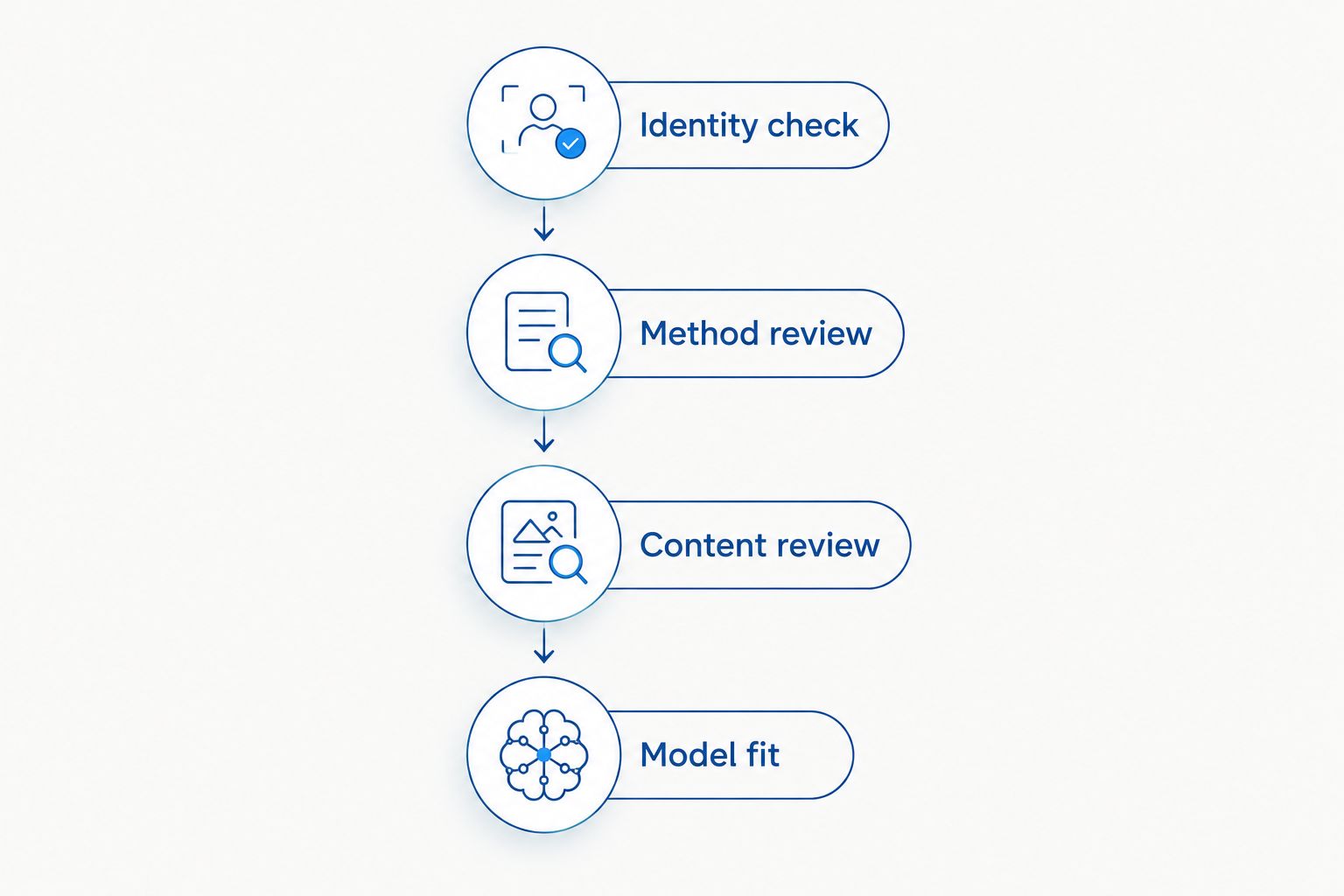
Use the same qualification sequence for all three options. Anchorpeptide research-grade peptides should be evaluated at the product-and-lot level; a general supplier description does not establish every analytical property of every batch.
Identity check
Confirm that the document names the intended compound or blend and identifies the relevant lot. Mass spectrometry measures mass-to-charge characteristics and can support molecular identity, but an expected mass alone does not establish every structural detail.
Method review
Read the analytical method before interpreting its result. High-performance liquid chromatography, or HPLC, separates sample components under specified conditions; a reported chromatographic area percentage describes the detected signal under that method, not every possible impurity.
Content review
Distinguish purity from content. A chromatographic purity percentage does not independently tell you the absolute amount of peptide in a container. For a blend, determine what the documentation establishes about each component rather than inferring composition from the product title.
Model fit
Check that your assay and controls address the named pathway. Receptor-related activity, a downstream cellular response, and general assay interference are different explanations that require an appropriate experimental design to distinguish.
A CoA is evidence to interpret, not a universal approval statement. Check its scope against the question your laboratory needs answered; a purity result does not establish sterility, endotoxin status, or functional activity unless those properties are separately assessed.
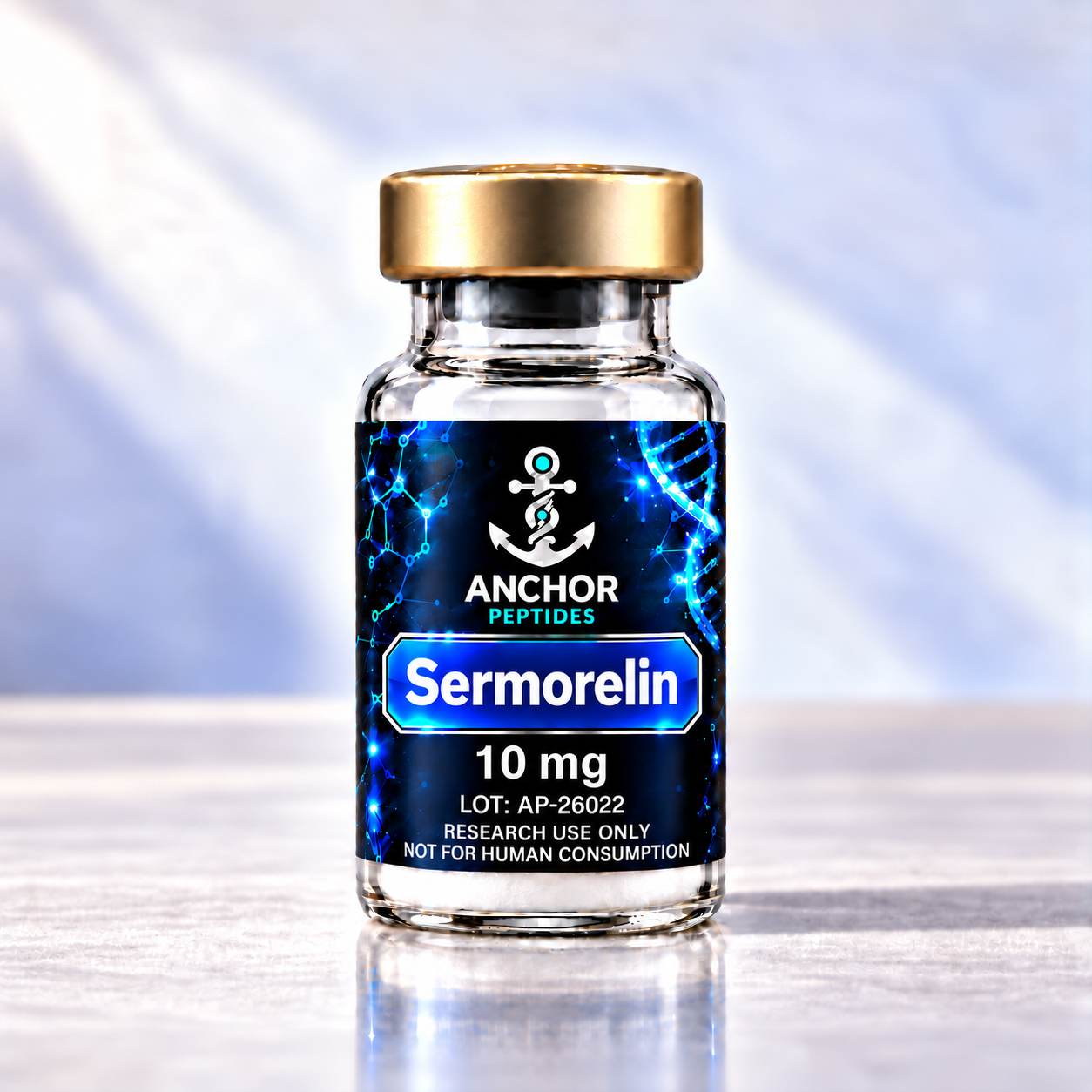
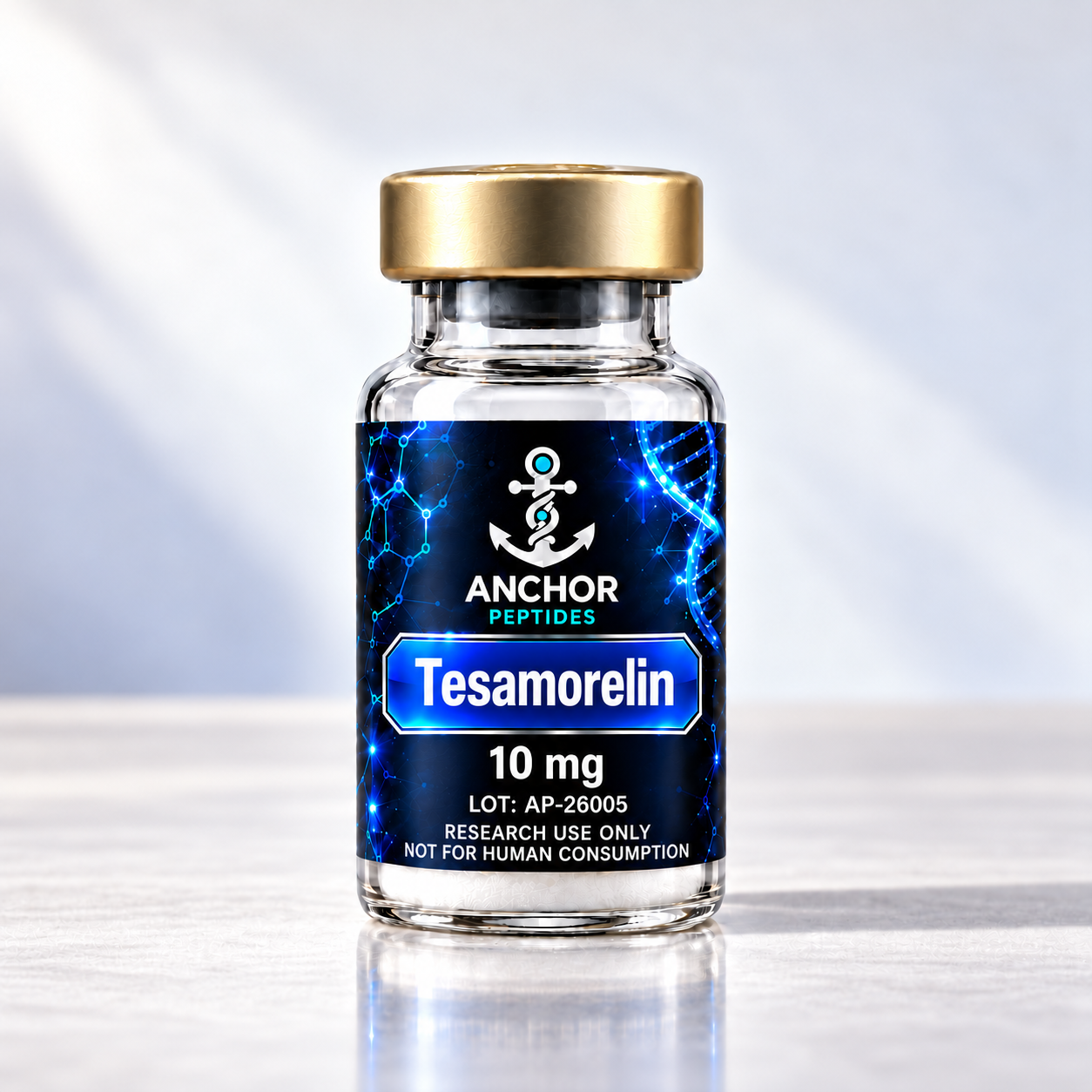
The following catalog entries correspond to the three research roles above. Select only after the intended compound, documentation, and experimental model align.

How the options rank
The 2026 ranking prioritizes receptor alignment and interpretability, followed by the analytical qualification required for any acquisition. Sermorelin leads for a GHRH 1–29 question; Tesamorelin occupies the separate-analogue comparison slot; the blend serves a combination-specific design.
This is a research-fit ranking based on the supplied catalog descriptions and established analytical distinctions. It is not a head-to-head experimental comparison, and it assigns no unsupported quality advantage to any product.
Which research peptide should you choose?
Choose Sermorelin when your question calls for GHRH 1–29. Choose Tesamorelin when the protocol specifically requires that analogue. Choose CJC-1295 No DAC & Ipamorelin when the combination itself is the subject.
If you have not defined the receptor pathway or the required controls, hold the acquisition decision. A ranked list cannot resolve an unspecified experimental question, and a broader blend does not automatically produce a more informative experiment.
FAQ
What are the best growth hormone secretagogue research peptides in 2026?
Sermorelin fits a defined GHRH 1–29 question, Tesamorelin fits a separate GHRH-analogue comparison, and CJC-1295 No DAC & Ipamorelin fits combination research. These are research-fit distinctions, not demonstrated potency rankings.
Is Sermorelin better than Tesamorelin for laboratory research?
Neither is universally better for laboratory research. Sermorelin is described as a GHRH 1–29 analogue, while Tesamorelin is a separate GHRH analogue; select the identity required by your experimental question.
Are GHRH analogues and ghrelin-receptor agonists the same?
No. GHRH analogues and ghrelin-receptor agonists address different receptor pathways, so the broad secretagogue label does not make them interchangeable reagents.
Is a peptide blend better than an individual compound?
A blend fits a combination question, while an individual compound better isolates a single-compound variable. A blend alone cannot establish each component’s contribution to an observed result.
Does HPLC purity prove that a peptide is biologically active?
No. HPLC purity describes chromatographic results under the reported method; functional activity requires an appropriate biological assay and controls.
What should I check on a research peptide Certificate of Analysis?
Check the compound identity, lot identifier, analytical methods, reported results, and scope of testing. Do not interpret an unreported property as established by a general purity statement.
Does a 10mg blend title identify the amount of each component?
No. A 10mg blend title does not establish the component ratio or a measured amount for each constituent; use explicit composition information and relevant analytical documentation.
Are these research peptides intended for human or veterinary use?
No. Anchorpeptide supplies these materials for laboratory and in-vitro research only, not human or veterinary use. This guide provides no dosing, administration, or therapeutic recommendations.
One last thing
A clean chromatogram is not the same thing as a fully characterized reagent. Identity, chromatographic purity, absolute content, and biological activity answer different questions; none should silently stand in for the others.
Before selecting research peptides in 2026, write down the exact conclusion each document supports. That single discipline keeps a product description from becoming an unsupported experimental assumption.
Related guides